
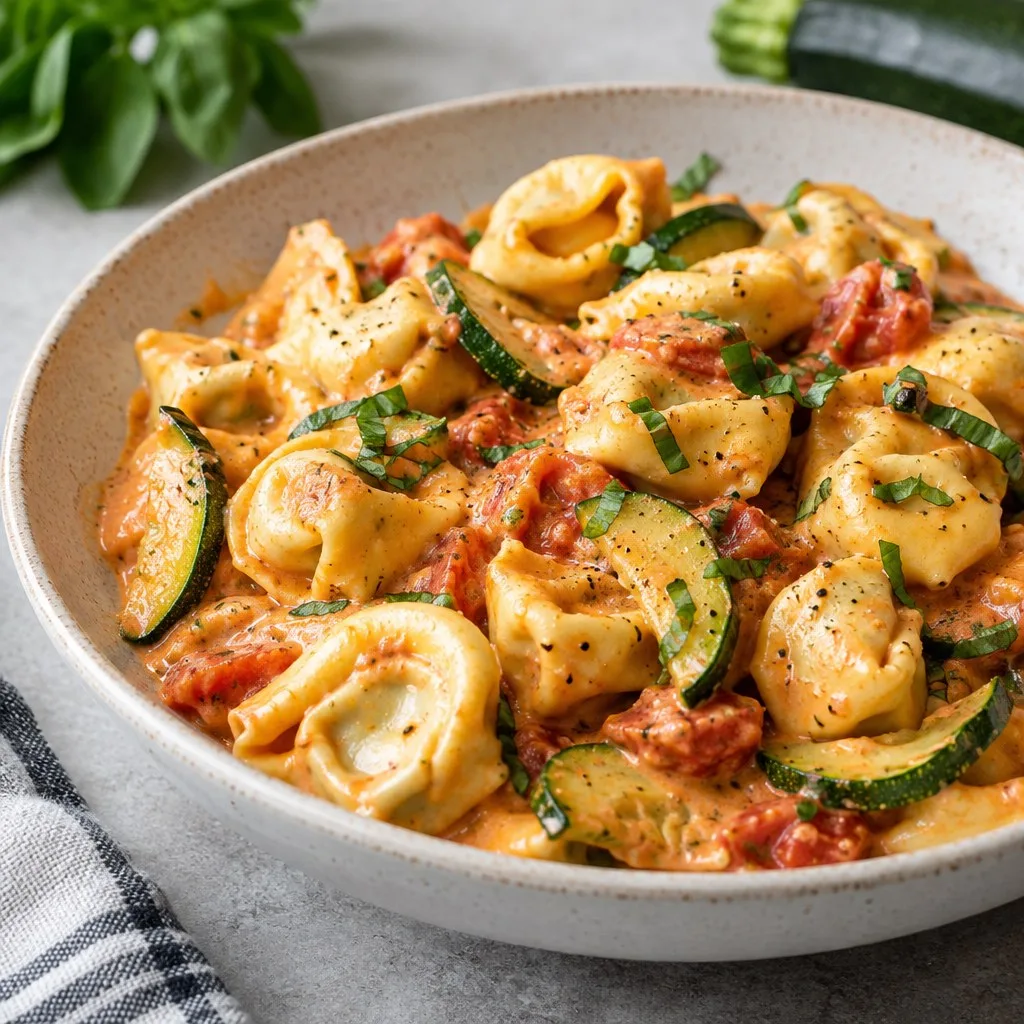
Welcome to your new favorite weeknight dinner solution! If you are searching for a meal that delivers maximum comfort with minimal cleanup, you have landed in the right place. Weeknights can feel wonderfully chaotic, filled with work deadlines, school pickups, and endless to-do lists. By the time evening rolls around, the last thing anyone wants to face is a towering stack of pots, pans, and mixing bowls. That is exactly why this incredible one-pan pasta dish was created. It brings together pillowy cheese tortellini, tender green zucchini, and a rich, creamy tomato sauce all in a single skillet. Best of all, it comes together in just fifteen minutes from start to finish, making it the ultimate fast and cozy comfort food.
When you need dinner on the table in a flash, simplifying your cooking process is the absolute key. While traditional pasta recipes require boiling noodles in a separate pot before draining and combining them with a separately simmered sauce, this streamlined method cooks the tortellini directly in the flavored sauce ingredients. As the pasta simmers away in a blend of milk and tomatoes, it releases its starches, which naturally thicken the liquid into a velvety coating. There is no draining, no fuss, and practically no cleanup. It is pure culinary magic that turns basic grocery store ingredients into a restaurant-quality meal right in your own kitchen.
Now, let us address the elephant in the room regarding recipe versatility. While this blog post focuses heavily on our beloved cheesy Italian skillet, we know that busy home cooks love having a variety of quick dinner formulas in their back pocket. For instance, when we are craving something savory and sweet on a hectic Tuesday, a fast beef or chicken stir-fry using a balanced blend of soy sauce, honey, minced garlic, and crisp seasonal vegetables always hits the spot. On other scorching summer afternoons when cooking feels like a chore, simple, refreshing wraps loaded with crisp leafy greens, juicy diced tomatoes, and a tangy complementary sauce offer a delightful, no-cook alternative. However, tonight calls for pure, cheesy warmth, so let us dive straight into our star recipe!
One-Pan Tortellini with Zucchini and Mozzarella
An effortless, creamy 15-minute skillet dinner featuring cheese tortellini, fresh zucchini, tomatoes, and gooey melted mozzarella cheese. Designed specifically for two hungry people.
- Prep time: 5 minutes
- Cook time: 10 minutes
- Total time: 15 minutes
- Servings: 2
Ingredients
- 1 tablespoon olive oil
- 1 medium zucchini, diced into half-moons
- 2 cloves garlic, minced
- 1 cup crushed or diced canned tomatoes
- ½ cup whole milk
- 2 ounces cream cheese, cubed
- 9 ounces refrigerated cheese tortellini
- ½ cup shredded low-moisture mozzarella cheese
- Salt and black pepper, to taste
- Fresh basil leaves for garnish (optional)
Instructions
- Heat the olive oil in a large, deep skillet over medium heat. Add the diced zucchini and cook for 3 to 4 minutes until the edges begin to turn golden and soften slightly.
- Add the minced garlic to the skillet and sauté for about 30 seconds until fragrant, taking care not to let it burn.
- Pour in the crushed tomatoes and whole milk, then drop in the cubed cream cheese. Stir the mixture continuously until the cream cheese melts into the liquid and creates a smooth, uniform sauce base. Bring the mixture to a gentle simmer.
- Add the refrigerated cheese tortellini directly into the simmering skillet sauce, stirring gently to ensure all the pasta is submerged. Cover the skillet with a lid and let it cook for the time specified on the package, or until the tortellini is tender and cooked through.
- Remove the lid and stir the contents. Season with salt and black pepper to taste. Sprinkle the shredded mozzarella cheese evenly across the top of the skillet.
- Cover the pan for an additional 1 to 2 minutes to allow the mozzarella cheese to melt completely into a gooey, bubbly layer. Garnish with fresh torn basil leaves if desired, and serve immediately straight from the pan.
Ingredient Swaps for What Is in Your Fridge
Cooking dinner on a busy weeknight often requires utilizing whatever items are currently lingering in the refrigerator, and this one-pan tortellini recipe adapts remarkably well to improvised substitutions. If fresh zucchini happens to be absent from your crisper drawer, you can easily swap it out for yellow summer squash, diced bell peppers, or even tender florets of broccoli. Similarly, if you find yourself without packaged cheese-filled tortellini, dried gnocchi, small pasta shapes like penne, or even ravioli will absorb the savory broth just as effectively. When the designated garlic cloves or fresh basil are missing, reach into the pantry for a generous dash of garlic powder, dried Italian seasoning, or crushed red pepper flakes to maintain the robust flavor profile of the dish.
Beyond the vegetables and pasta base, the liquid components and finishing cheeses offer equal flexibility for resourceful home cooks. While vegetable or chicken broth provides a deeply savory foundation for simmering the tortellini, water combined with a splash of heavy cream or a spoonful of bouillon paste makes an acceptable backup. If the specified fresh mozzarella balls are nowhere to be found, you can shred a block of low-moisture mozzarella, crumble some mild feta, or scatter leftover fontina and provolone over the top during the final melting stage. By embracing these pragmatic pantry swaps, you can effortlessly transform disparate refrigerated odds and ends into a cohesive, comforting meal without making an extra trip to the grocery store.
Vegetarian Gluten-Free Dairy-Free Modifications
Adapting this comforting skillet meal to accommodate specific dietary restrictions requires careful ingredient selection, yet the core concept of a quick one-pan dinner remains completely intact. To ensure the recipe stays strictly vegetarian, simply substitute standard vegetable broth or a rich mushroom stock in place of any meat-based broths, keeping a close eye on store-bought labels to guarantee no hidden animal byproducts are present. For those avoiding gluten, standard wheat tortellini must be replaced with certified gluten-free cheese or spinach tortellini, which are now widely available in the frozen aisle of most major supermarkets, though you should gently simmer them for slightly less time to prevent the delicate dough from dissolving entirely into the starchy cooking liquid.
Eliminating dairy from the equation poses a slightly greater challenge given the prominent role of cheese within the tortellini filling and the mozzarella topping, but excellent plant-based alternatives exist. Look for vegan tortellini stuffed with cashew-based cheeses or dairy-free ricotta substitutes, and swap the traditional fresh mozzarella for a meltable dairy-free mozzarella shreds product made from coconut or potato starch. When the recipe calls for dairy elements to create a creamy sauce texture, stirring in a splash of unsweetened canned coconut milk or a dollop of dairy-free cream cheese will yield that desirable velvety richness. By thoughtfully integrating these specialized substitutions, individuals managing multiple dietary needs can safely enjoy every comforting bite of this skillet supper.
Scaling from Two to Four Servings
Doubling this recipe to transition from an intimate meal for two into a hearty dinner that comfortably feeds four people requires thoughtful adjustments to both equipment and technique. The most critical hardware modification is stepping up from a standard ten-inch skillet to a much larger twelve-inch or fourteen-inch heavy-bottomed pan, ideally one equipped with high sides to comfortably accommodate the increased volume of liquid and pasta without messy overcrowding. When scaling the dry ingredients, double the amounts of tortellini, sliced zucchini, aromatics, and broth precisely, but keep a cautious eye on salt and dried spices, as doubling seasonings blindly can sometimes result in an overwhelmingly salty finish due to the concentrated reduction of the simmering liquids.
As you increase the portion sizes within a single pan, managing the cooking times and heat distribution becomes increasingly important for even results. Because a larger volume of liquid takes noticeably longer to come to a rolling boil over standard stovetop burners, you may need to increase the heat level temporarily during the initial reduction phase, then lower it promptly once the tortellini is added to prevent the bottom from scorching. Furthermore, ensure you distribute the extra zucchini slices and the doubled quantity of mozzarella evenly across the wider surface area so that every single portion receives an optimal balance of tender vegetables, perfectly cooked pasta, and gooey, melted cheese when plated.
Get a layer of melted mozzarella without using the broiler
Use low-moisture shredded mozzarella so the cheese melts evenly without releasing a pool of liquid. Spread it over the hot pasta in a thin layer and cover the skillet. Residual heat usually does the work. If the cheese needs more time, set the pan over low heat for another minute and check again. The tomato sauce should barely bubble under the cheese. For a firmer topping, lift the lid as soon as you see the shreds soften and let the surface rest for a minute before spooning the pasta into bowls.
Fresh mozzarella behaves differently because it carries more water. If it is the only kind you have, blot a few thin pieces before scattering them on top. Leave small gaps between them so diners can see the zucchini and tomato sauce beneath the cheese. A little finely grated vegetarian Parmesan-style cheese can add a savory finish when you are running short of mozzarella. Add it at the table and taste first, since both the tortellini filling and the tomato sauce can contribute plenty of salt.
How to tell when the tortellini are ready
Use the package time as your starting point. Lift one piece from the sauce with a slotted spoon and cut through the thick folded edge. The pasta should feel supple and the filling should be hot throughout. If the center needs another minute and the sauce has gone thick, add a tablespoon of hot water and cover again. Keep the simmer gentle so the edges hold their shape. Fold with a soft spatula once or twice during cooking, especially where the pasta touches the bottom of the skillet.
A wide pan gives the filled pasta a chance to cook in one even layer. In a narrow saucepan, the top layer may stay firm while the bottom pieces become too soft. Stir more frequently if you are using a small pan, or cook the pasta in two batches when you double the recipe. Keeping the zucchini in recognizable pieces is easier if you slice it into half-moons about a quarter inch thick. Smaller pieces taste fine, but they soften quickly and blend into the sauce.
Finish dinner with something fresh
Pick a side you can finish while the cheese melts. In summer, a bowl of sliced cucumbers, olive oil and red wine vinegar adds a cool bite next to the warm pasta. In colder weather, toss a few handfuls of bagged greens with lemon juice and black pepper. If you have a leftover heel of bread, toast it and cut it into fingers for catching the tomato sauce at the bottom of the bowl. The skillet already contains pasta and vegetables, so a small side is enough for most weeknights.
You might also like these recipes
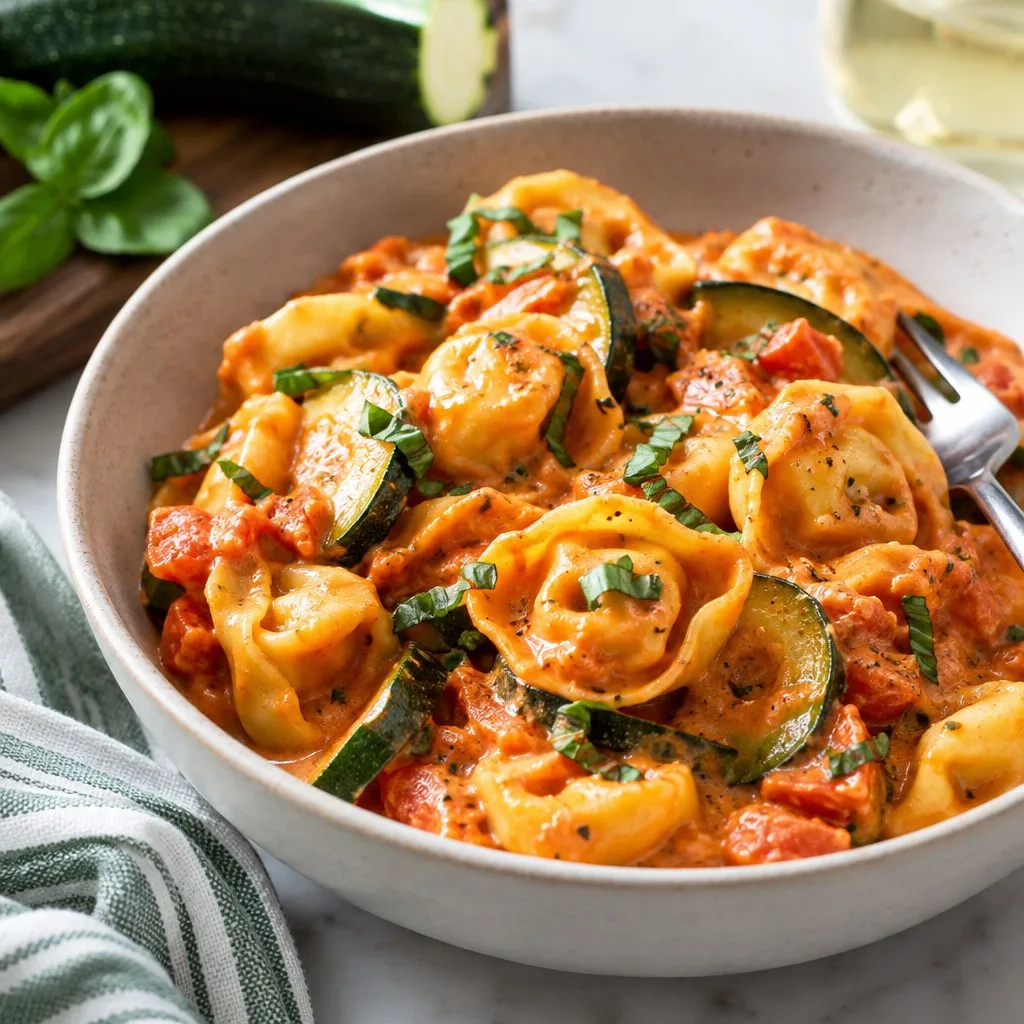
One-Pan Tortellini with Zucchini and Mozzarella
15-Minute Shrimp Stir-Fry with Broccoli and Peppers
Baked Garlic Parmesan Chicken Meatballs with Lemon Butter