
Garlic Parmesan chicken meatballs make a flexible dinner from ground chicken, breadcrumbs, an egg, and a handful of seasonings. They bake on a sheet pan and finish with a light coating of lemon garlic butter. Serve them with rice, pasta, vegetables, or a simple salad, keeping the same basic batch useful for several meals.
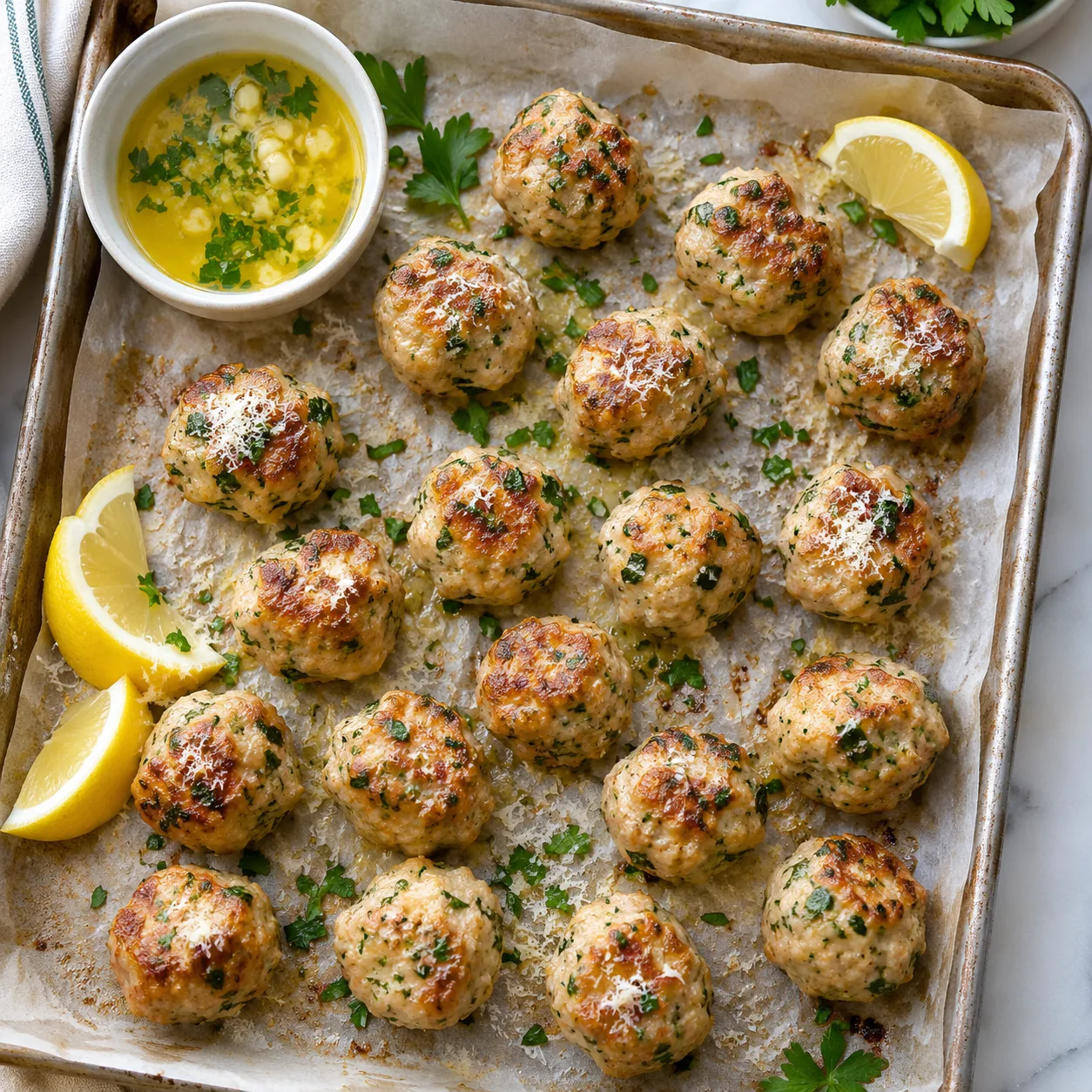
This original recipe draft makes about twenty small meatballs and takes approximately 40 minutes, including shaping and oven preheating. The mixture is gently combined and portioned evenly, then baked just until the centers reach 165°F / 74°C. A food thermometer matters more than chasing a dark brown exterior, especially with lean chicken.
Jump to the recipe · Texture troubleshooting · Frequently asked questions
A simple baked chicken meatball with a bright finish
The meatballs contain finely grated Parmesan for savory flavor, parsley for freshness, and a breadcrumb-and-milk mixture to help distribute moisture. The lemon butter is added after baking, so the garlic can be cooked gently in a small pan without scorching in the oven. You can leave the finish off individual portions if someone prefers a plainer meatball.
This is not a chicken Parmesan casserole with marinara and a mozzarella blanket. The base recipe stays lightly coated so it can be served in different ways. If you want tomato sauce, warm it separately and spoon it alongside. That lets you use the meatballs in a grain bowl one day and a pasta dinner the next.
Choose ground chicken with texture in mind
Plain ground chicken varies by brand and by the cuts included. A blend containing some dark meat often gives more margin for moisture than very lean ground breast. Read the package rather than assuming every product has the same fat percentage. The recipe can work with lean meat, but accurate temperature checks become particularly important.
Keep the chicken cold until mixing. Warm ground meat can become sticky and harder to shape neatly. Measure the other ingredients first, prepare the tray, and then open the meat package. Use clean utensils and wash hands and surfaces after handling raw poultry; avoid placing cooked meatballs onto a plate used for the raw mixture.
What the other ingredients do
Breadcrumbs and milk
Plain fine breadcrumbs absorb the measured milk to form a soft paste before the chicken is added. This distributes moisture more evenly than scattering dry crumbs into the meat and immediately shaping. Let the mixture stand briefly while you grate cheese and chop parsley. It should look damp, not like a bowl of loose milk.
Egg and Parmesan
One large egg helps hold the batch together. More egg is not automatically better and can make a small batch excessively loose. Finely grated Parmesan blends through the mixture and contributes salt. Large shreds can create uneven pockets, so use a fine grater and measure by weight where possible.
Garlic, herbs, and lemon
Garlic powder inside gives an even background flavor, while a small amount of fresh garlic in the finishing butter provides a more distinct aroma. Parsley keeps the seasoning fresh without making the meatballs strongly herbal. Lemon zest adds fragrance; a measured teaspoon or two of juice brings brightness without turning the finish into a watery sauce.
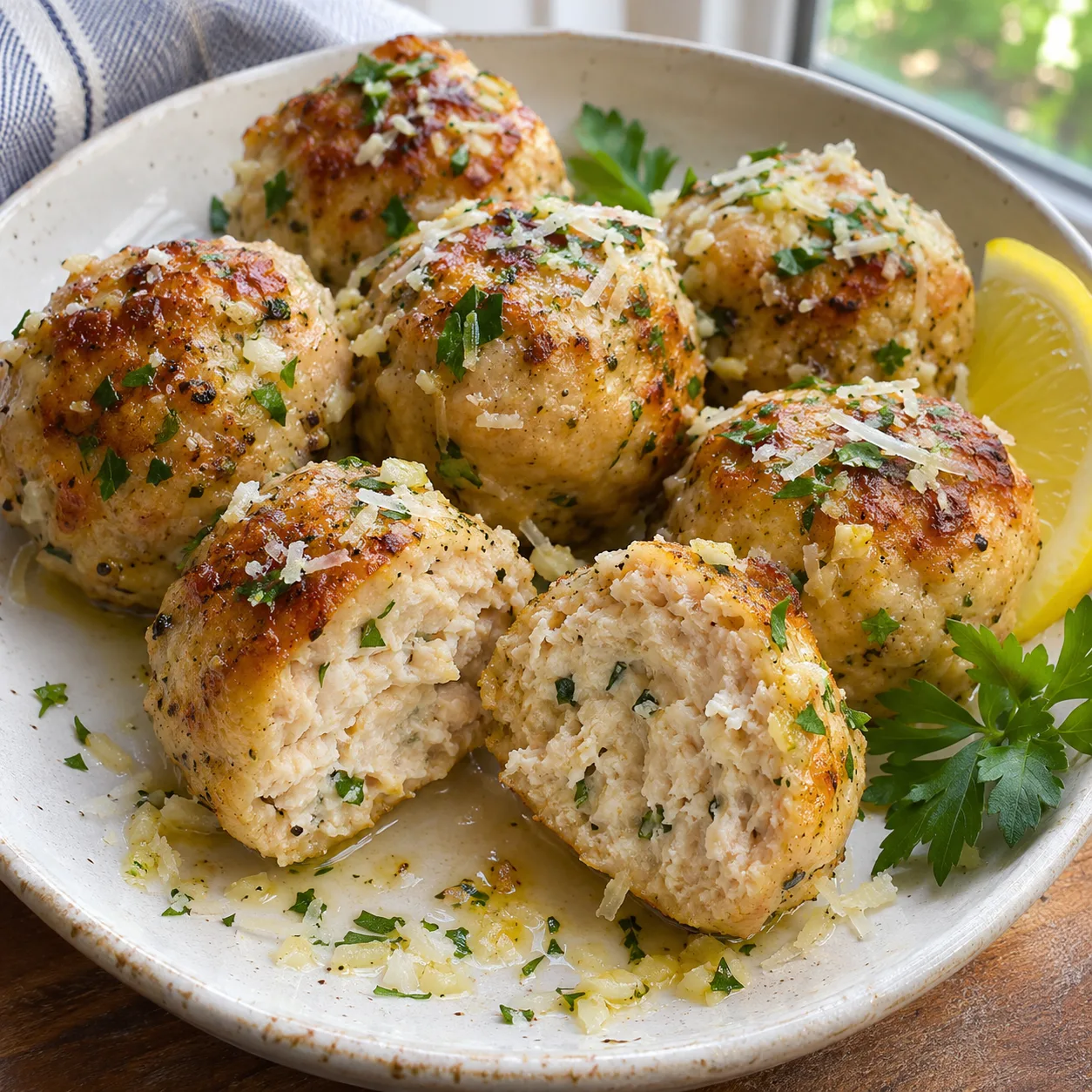
Baked Garlic Parmesan Chicken Meatballs Recipe
Yield: about 20 meatballs, 4 servings of 5 · Prep: 20 minutes, including oven preheating · Bake: about 18–22 minutes · Total: about 40–45 minutes.
Equipment: rimmed sheet pan, oven-safe parchment, mixing bowl, small scoop or spoon, fine grater, small saucepan, and instant-read thermometer.
Meatball ingredients
- 1 lb / 450 g plain ground chicken
- ⅓ cup / 35 g plain fine dry breadcrumbs
- 3 tablespoons / 45 ml milk
- 1 large egg
- ½ cup / 40 g finely grated Parmesan
- 2 tablespoons finely chopped parsley
- 1 tablespoon / 15 ml olive oil
- 1 teaspoon garlic powder
- ½ teaspoon onion powder
- ½ teaspoon dried oregano
- ½ teaspoon fine salt
- ¼ teaspoon black pepper
Lemon garlic butter
- 1½ tablespoons / 21 g unsalted butter
- 1 small garlic clove, finely minced
- 1 teaspoon finely grated lemon zest
- 1–2 teaspoons lemon juice, to taste
- 1 tablespoon chopped parsley
- Optional: 1 tablespoon finely grated Parmesan for serving
Instructions
- Prepare the oven. Heat a conventional oven to 400°F / 200°C. Line a rimmed sheet pan with parchment rated for that temperature. Set aside enough space to arrange meatballs without touching.
- Hydrate the crumbs. Stir breadcrumbs and milk in the mixing bowl. Let stand for about 2 minutes, then mix in egg, Parmesan, parsley, oil, garlic powder, onion powder, oregano, salt, and pepper.
- Add chicken gently. Fold the chicken into the seasoned mixture with a fork, spatula, or clean hands just until evenly combined. Avoid kneading repeatedly. If very soft, refrigerate for 10 minutes; include that extra time in your schedule.
- Portion. Divide into about twenty pieces, roughly 35 g each, and shape gently with lightly dampened hands. Arrange in one layer, leaving about 1 inch / 2.5 cm between meatballs. Do not compress them into tightly packed balls.
- Bake. Bake for approximately 18–22 minutes, checking early if your meatballs are smaller. Test several, including the largest, with a thermometer inserted into the center. They are ready at 165°F / 74°C; pale spots do not mean they need prolonged baking.
- Make the finish. During the final few baking minutes, melt butter in the small saucepan over low heat. Add fresh garlic and cook gently for 30–60 seconds, just until fragrant. Remove from heat and stir in lemon zest, 1 teaspoon juice, and parsley.
- Coat and serve. Transfer cooked meatballs to a clean serving bowl and gently toss or brush with the butter. Taste the finish before adding more lemon. Sprinkle optional Parmesan over the top and serve with your chosen sides.
How to shape evenly without overworking
A small scoop helps keep portions similar. If you do not have one, divide the mixture into four sections, then make five meatballs from each section. Slightly uneven shapes are fine; large differences in size are more important because they change cooking time. A scale is useful when you want freezer portions or predictable serving counts.
Chicken mixtures are usually softer than many beef mixtures. Lightly dampened hands reduce sticking without requiring a large amount of extra breadcrumbs. If the mixture feels unmanageable, chilling briefly can help. Adding handful after handful of crumbs may make shaping easier but can also turn the cooked center dense and bready.
Space the meatballs apart so hot air reaches their sides. A crowded tray can collect moisture and reduce browning. If doubling the recipe, use two trays and allow for differences between oven racks. Rotate positions if your oven cooks unevenly, and check temperatures in both batches rather than assuming every piece finishes simultaneously.
Troubleshooting dry or soft meatballs
The meatballs are dry
Check the package’s leanness, portion size, and final temperature. Very lean chicken and extra oven time both reduce your margin for moisture. Stop baking once the centers reach 165°F. The lemon butter adds surface richness but cannot fully reverse an overcooked interior. For the next batch, keep the listed hydration and check earlier.
The raw mixture is too wet
First let the crumbs absorb moisture and chill the mixture briefly. If it still cannot hold a loose shape, add breadcrumbs one teaspoon at a time and reassess. Ingredient weights, egg size, and ground-chicken moisture can vary. Avoid draining the raw mixture or squeezing it through a cloth; small controlled adjustments are easier to track.
The bottoms brown too quickly
A dark tray or a low oven rack can cause stronger bottom browning. Move the tray toward the center and use properly rated parchment. If the bottoms are dark while the centers remain undercooked, reduce heat slightly and continue checking temperature. For future batches, note the tray and rack combination that produced the problem.
The garlic butter tastes bitter
Fresh minced garlic burns quickly in a small amount of butter. Use low heat and stop when fragrant, before the pieces turn dark. If burned, remake the small sauce rather than coating every meatball with it. Lemon can brighten a balanced finish, but it will not remove the bitterness of scorched garlic.
Substitutions and dietary changes
| Ingredient | Possible swap | Important adjustment |
|---|---|---|
| Ground chicken | Ground turkey | Use the same weight and cook to 165°F; moisture varies with leanness. |
| Fine breadcrumbs | Fine gluten-free breadcrumbs | Check absorption and all other ingredient labels. |
| Milk | Unsweetened suitable plant milk | Choose a neutral flavor and retain the measured quantity initially. |
| Butter finish | Olive oil with gently warmed garlic | A different flavor with no buttery richness. |
Removing Parmesan is a larger change than swapping the finishing butter. The cheese contributes salt, solids, and flavor to the meatball mixture. A dairy-free version needs an appropriate alternative and a fresh texture check. Do not simply inherit any nutrition estimate from a dairy-containing batch after making substitutions.
An egg-free version also needs separate development because the binder affects how the mixture holds together. If an allergy is involved, use a recipe designed for that requirement rather than assuming an arbitrary spoonful of liquid can replace the egg. Check breadcrumbs and cheese alternatives for other relevant allergens as well.
Serving ideas beyond spaghetti
For a simple dinner, pair five meatballs with cooked rice and green beans, spooning any remaining lemon butter over the vegetables. They also work with plain pasta, a cucumber salad, or roasted potatoes. If serving them as appetizers, make the portions easy to pick up and keep a suitable dipping sauce separate.
For another chicken dinner with a different preparation, save herbed garlic Parmesan chicken breasts. If you want a complete skillet meal for another night, chicken thighs with broccoli cheddar orzo adds vegetables and pasta in a different format.
Meal prep, refrigeration, and freezing
Prepare sides while the meatballs bake, keeping raw-poultry utensils away from ready-to-eat food. After serving, refrigerate leftovers promptly in shallow containers. Keep the refrigerator at 40°F / 4°C or below and use cooked leftovers within 3–4 days. Do not leave them out beyond two hours, or one hour above 90°F / 32°C.
For freezer portions, chill cooked meatballs promptly, freeze in a single layer until firm, then transfer to a labeled freezer container. Plan to use within about three months for quality. Freezing them without the lemon butter gives you more serving flexibility later. Thaw in the refrigerator rather than leaving a bag on the counter.
Reheat covered with a splash of broth or water, using a skillet, oven, or microwave as appropriate. Check that the center reaches 165°F. Add fresh lemon or a little finishing butter after reheating if desired. Repeatedly heating the entire batch can dry it out, so take only the number of portions needed.
Frequently asked questions
Can I use ground chicken breast?
Yes, but it is typically very lean and has less margin for overcooking. Keep the measured milk, breadcrumbs, and oil, avoid compacting the mixture, and begin checking temperature early. Stop baking at 165°F in the center. A blend with some dark meat may produce a different texture, so compare labels rather than treating every package as identical.
Can I cook these in an air fryer?
An air fryer can work, but capacity and airflow vary. Arrange evenly sized meatballs without crowding, use a temperature and accessories suitable for your appliance, and check early because they may cook faster than in the oven. Turn gently if needed for even coloring. Regardless of timing, verify 165°F in several centers before serving.
What vegetables can I hide in the mixture?
A small amount of finely grated carrot or well-squeezed cooked spinach can be tested, but vegetables introduce moisture and change binding. Start with a modest addition rather than replacing a large portion of chicken. For the most predictable batch, keep the base recipe unchanged and offer vegetables as a side or blend them into a separate sauce.
Can I make the meatballs ahead for lunch boxes?
Yes. Cook them fully, refrigerate promptly, and portion with sides in shallow containers. Keep food chilled during transport and reheat the meatballs to 165°F when eating hot. Pack a fresh salad separately so it stays crisp. A small splash of broth during reheating helps limit drying without needing a large amount of sauce.
Do I need pasta or can I serve lower-carb sides?
Pasta is optional. Try roasted broccoli, sautéed green beans, or a generous salad if you prefer a vegetable-focused plate. Remember that the meatballs themselves contain breadcrumbs, so changing the side does not make the recipe automatically keto or suitable for every carbohydrate target. Assess the full ingredients and portions against your own dietary requirements.
Can I make the chicken meatballs lower-carb or keto-friendly?
The breadcrumbs contribute carbohydrates, so the base recipe is not automatically keto-friendly. A lower-carb adaptation needs a suitable binder and a texture check; almond flour is not an exact breadcrumb replacement and adds a nut allergen. Test a small batch before changing the whole recipe. Serve with non-starchy vegetables and assess the complete portion against your carbohydrate target.
Can I freeze these meatballs for weeknight meal prep?
Yes. Fully cook the meatballs, chill promptly, and freeze in a single layer before transferring to a labeled freezer container. Use within about three months for quality. Freeze without the lemon butter for more serving flexibility, thaw in the refrigerator, and reheat to 165°F / 74°C. Add a splash of broth during reheating and finish with fresh lemon butter afterward.
Food-safety reference
FoodSafety.gov lists 165°F / 74°C for poultry and reheated leftovers. Its cold storage chart provides further refrigerator and freezer guidance. This proposed recipe has not been represented as kitchen-tested; use the temperature cues and adjust for your equipment.
You might also like these recipes
Cheeseburger Quesadillas with Easy Burger Sauce
Marry Me Chickpeas with Spinach and Sun-Dried Tomatoes
Chocolate Ricotta Protein Pudding Without Protein Powder