
Chocolate ricotta protein pudding is a chilled, spoonable dessert made by blending ricotta, plain Greek yogurt and cocoa. It needs no eggs, gelatin or protein powder. The dairy supplies the body, while cocoa and vanilla create a chocolate flavor without melting a bar of chocolate or cooking a custard.
This version uses part-skim ricotta, a little yogurt and a measured amount of optional non-sugar sweetener. It is thicker than a drink and less airy than whipped mousse. It makes four small kitchen portions, but those recipe divisions are not a recommended serving size for every person.
After bariatric surgery: the ingredients, texture and amount still need to fit your team’s instructions. A blended dairy dessert is not automatically appropriate at a particular post-operative week, and it does not promise weight loss or freedom from dumping symptoms.
Jump to the recipe or read the FAQ about food stages, protein and dairy tolerance.
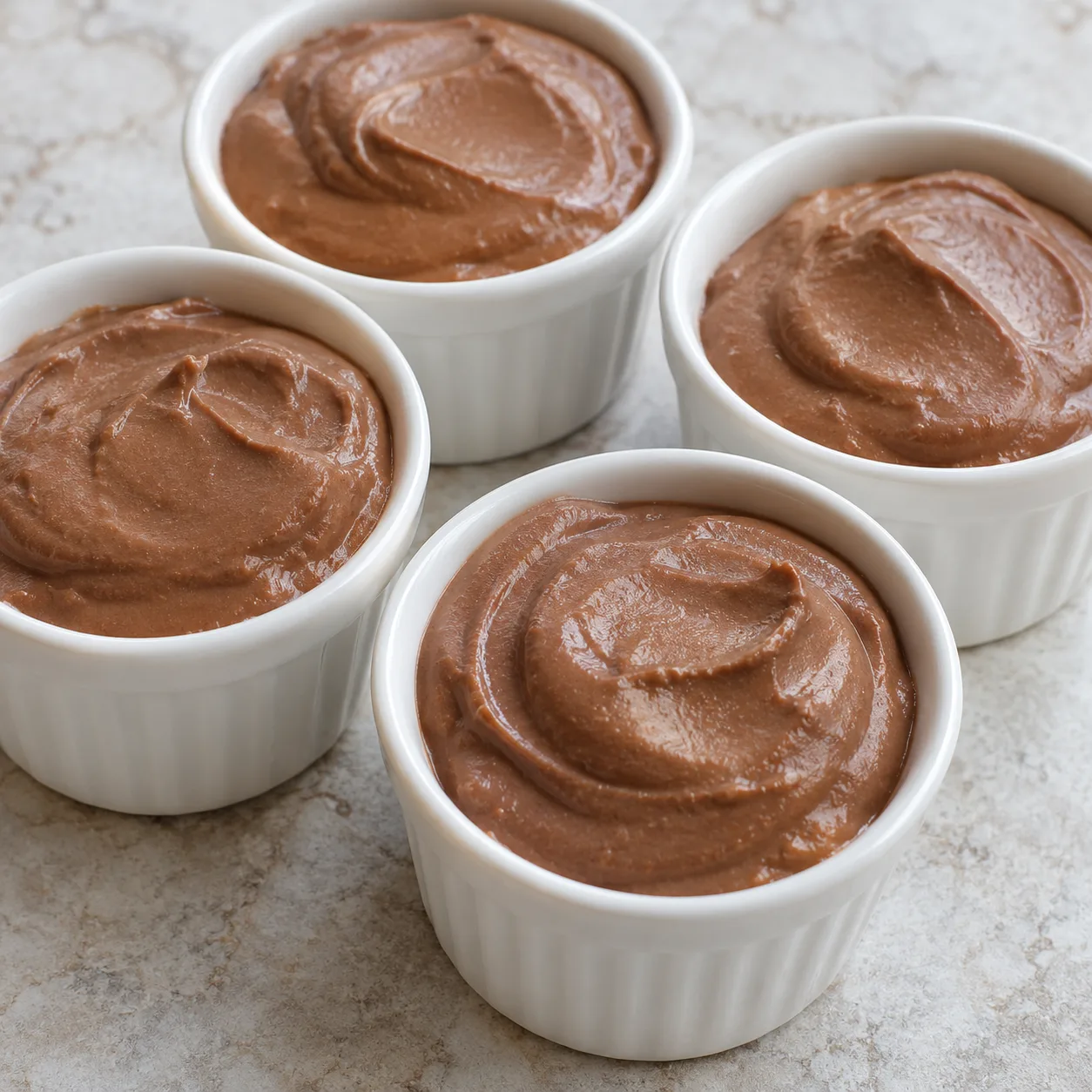
What thickens a no-cook ricotta pudding?
Ricotta already contains soft milk curds that give the mixture substance. Blending reduces the noticeable graininess, and Greek yogurt adds moisture and tang. Cocoa contributes flavor and absorbs some moisture. Refrigeration firms the mixture slightly, but this is not a starch pudding that needs a cooking stage.
Because there is no gelatin, the pudding will not hold a sharply cut shape. Serve it from a cup or bowl rather than trying to unmold it. Its final thickness depends on the ricotta’s moisture, the yogurt brand and any extra milk added during blending.
Choose ricotta by moisture as well as fat percentage
Look for plain pasteurized part-skim ricotta without sweet flavorings. Some tubs contain visible whey, while others are quite dry. If there is a pool of liquid on top, pour off that loose liquid before weighing the ricotta. Do not squeeze it until it becomes a dry cheese paste.
Using full-fat ricotta makes a richer dessert and changes the nutrition. Fat-free ricotta may have a different ingredient list and blending texture. Neither substitution should carry over the original nutrition estimate unchanged. Read the actual product label and choose according to the person eating and any dietary instructions.
A small food processor often handles this thick mixture better than a large blender jar. With a large jar, a tiny batch can sit below the blades. Use a suitable appliance and stop to scrape safely rather than adding a large amount of milk just to force circulation.
Chocolate Ricotta Protein Pudding Recipe
Prep: about 10 minutes. Chill: 1 hour. Total: about 1 hour 10 minutes. Yield: 4 kitchen portions of roughly 100 g each. Equipment: small food processor, spatula, scale and covered cups.
Ingredients
- 1 cup (250 g) plain pasteurized part-skim ricotta, loose surface whey drained
- ½ cup (120 g) plain unsweetened nonfat Greek yogurt
- 2 tablespoons (10 g) unsweetened cocoa powder
- ½ teaspoon vanilla extract
- Optional non-sugar sweetener equivalent in sweetness to 1–2 tablespoons sugar, according to its label
- 1–3 teaspoons milk, only if needed for blending
Instructions
- Prepare the dairy. Remove loose whey from the ricotta and measure the listed weight. Add ricotta and yogurt to the processor. Blend for about 30 seconds, then stop and scrape the sides with the appliance switched off.
- Add chocolate flavor. Add cocoa and vanilla. Begin with the smaller suggested sweetness equivalent if using sweetener. Pulse briefly to incorporate the cocoa without sending powder around the bowl, then blend until evenly colored.
- Refine the texture. Process in short bursts, scraping between them. If the mixture cannot circulate, add milk one teaspoon at a time. Use only what is needed; extra liquid makes the chilled pudding softer.
- Taste a small spoonful. Assess sweetness and texture before adding more. If the cocoa tastes harsh, adjust a little sweetener rather than doubling several ingredients at once.
- Portion and chill. Divide into clean covered containers and refrigerate for about 1 hour. Stir a portion before serving if a small amount of whey has collected. Serve in an amount appropriate to your needs.
Recipe note: This is a culinary development formula rather than a tested clinical feeding protocol. Product moisture and sweetener concentration vary. Keep notes on the first batch before making larger changes.
How to get a smoother pudding
Start by blending the dairy alone. Cocoa makes the mixture thicker, so smoothing the ricotta first gives the processor an easier task. Scrape around the base and under the blade area only as your appliance instructions allow. Never insert a utensil while the motor is running.
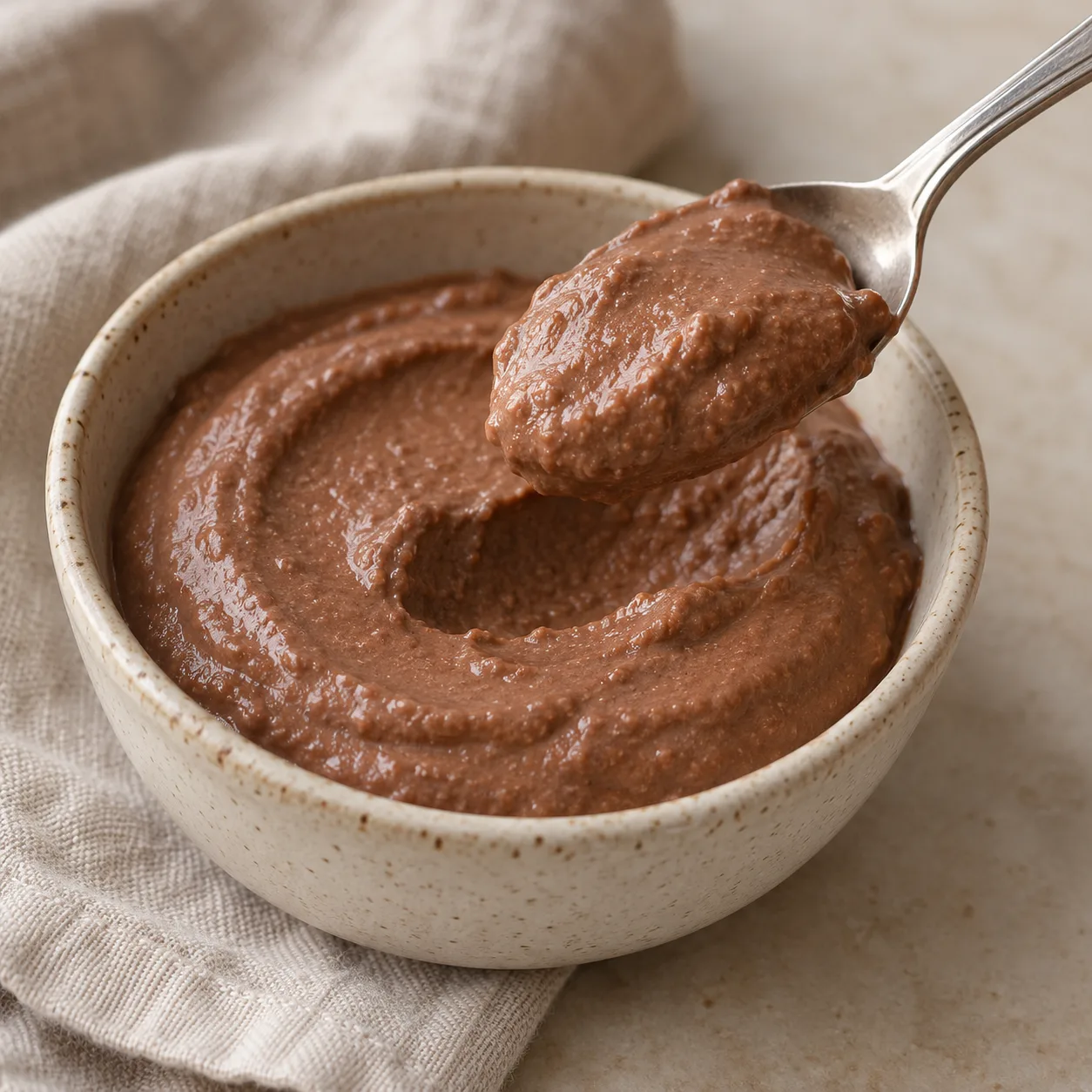
A longer blending time does not necessarily fix every ricotta. Some brands retain a slightly fine-grained texture even after processing. Choose a naturally smooth product when that matters, and do not describe the result as completely puréed simply because it has been through a machine.
If a few visible cocoa specks remain, scrape the dry powder from the wall and blend again. Large dry pockets often mean the processor needed scraping, not that the recipe needs more milk. Let the pudding chill before deciding that it is permanently too thin.
Natural cocoa or Dutch-process cocoa?
Either can supply chocolate flavor here because the recipe does not use a leavening reaction. Natural cocoa often tastes sharper, while Dutch-process cocoa can taste rounder. The exact difference depends on the product. Use unsweetened cocoa rather than a sweetened drinking chocolate mix.
Two tablespoons produce a moderate chocolate flavor against the dairy. For a darker version, add a small extra amount to one test portion first. More cocoa absorbs moisture and may require additional sweetness; changing the entire batch before tasting can leave you with an unexpectedly bitter dessert.
Sweeten gradually and read the label
Non-sugar sweeteners have very different concentrations. A tablespoon of one granulated product may be far sweeter than a tablespoon of another. Follow the label’s sweetness conversion rather than treating every powder or liquid as a one-for-one sugar replacement.
Some products include sugar alcohols or other bulking ingredients that people tolerate differently. A “sugar-free” label does not tell you how a specific person will feel after eating it. Use an ingredient already tolerated when possible, and include the actual product in the nutrition calculation.
Honey, maple syrup and ordinary sugar can sweeten ricotta, but they change this version’s added-sugar profile. If a post-operative plan limits concentrated sweets, do not assume a natural-sounding sweetener is exempt. Use the plan and the ingredient label rather than a marketing description.
Protein estimates without an invented nutrition panel
Ricotta and Greek yogurt contribute most of the protein. For an illustrative calculation, assume the measured ricotta contains 25 grams and the yogurt contains 12 grams. That gives 37 grams before counting cocoa and optional milk, or about 9.25 grams in one quarter of that batch.
Those numbers are an example, not a verified panel for your brands. If your ricotta provides a different amount, replace the example with the amount on its label. Calculate based on grams used rather than assuming two brands have identical cup weights or nutrition.
For a smaller amount, multiply the batch total by the fraction eaten. A person eating one eighth of the example batch would get about 4.6 grams from those dairy ingredients. The word protein in a recipe title does not mean a small spoonful covers a personal daily target.
Do you need protein powder?
No powder is required for the base recipe. That can be useful if you dislike the flavor or texture of a particular supplement. It does not mean powder is unsuitable in general or that this dessert replaces a supplement prescribed by a clinician.
If you want to add an approved powder, test it in one small portion first. Mix carefully and allow time for it to hydrate before adding liquid. Vanilla and chocolate powders can change sweetness substantially. A powder-free recipe is often easier to troubleshoot because there are fewer brand-dependent ingredients.
Flavor variations that keep the method simple
For a vanilla version, omit cocoa and increase vanilla only slightly, tasting as you go. It will be a little softer because cocoa is no longer absorbing moisture. This is a different flavor and texture, so record it as a variation rather than expecting the chocolate instructions to describe every detail.
For a cinnamon-chocolate version, add a small pinch of ground cinnamon to one serving. For a coffee note, use a tiny amount of dissolved decaffeinated instant coffee, counting it as added liquid. Avoid adding multiple strong flavors together before you know the balance of the basic pudding.
Fruit, chopped nuts and chocolate chips are optional toppings for people whose diets allow them. They are not needed to make the pudding work. For a smooth-texture plan, leave textured toppings out unless specifically cleared; a blended base does not soften crunchy additions.
What not to substitute directly
Cottage cheese can be blended into a chocolate dessert, but it has a different salt level, moisture and curd structure. It is not an exact ricotta replacement. Likewise, cream cheese is denser and more strongly flavored, while ordinary yogurt makes a thinner mixture than strained Greek yogurt.
Plant-based ricotta alternatives vary widely in their protein and ingredient composition. Some are nut-based and introduce a new allergen. A dairy-free adaptation needs its own ingredient checks and nutrition calculation rather than inheriting the dairy recipe’s protein estimate.
Common texture problems
| Problem | Possible explanation | Practical adjustment |
|---|---|---|
| Too grainy | Ricotta texture or insufficient scraping | Blend the dairy first and choose a smoother brand next time. |
| Too thin | Extra whey or too much milk | Chill before judging; reduce added liquid in the next batch. |
| Too bitter | Strong cocoa or too little sweetness | Adjust a small portion gradually before changing the batch. |
| Artificial aftertaste | Sweetener type or concentration | Use less or a previously tolerated alternative. |
Storage and small-batch planning
Keep pudding covered at 40°F (4°C) or below and plan to use it within three days, respecting any earlier limit on opened dairy. Use clean utensils for serving rather than returning a tasted spoon to the shared container. Make a half batch if four portions are more than you will use.
Refrigerate perishable food within two hours, or within one hour when the temperature exceeds 90°F (32°C). Freezing may produce a grainier, separated mixture, so it is not the preferred approach for this texture. The preparation is short enough that smaller fresh batches are often more practical.
Frequently Asked Questions
Is this a bariatric recipe for week thirteen?
It is a dairy dessert that some readers may discuss with their team, not a universal stage-specific prescription. At thirteen weeks, surgery type, complications, food progression and tolerance still matter. Confirm the consistency, ingredients and portion rather than using the week number alone.
Can I eat it if dairy causes discomfort?
Do not assume blending removes lactose or milk proteins. Mayo Clinic notes that lactose can worsen symptoms in some people with dumping syndrome. Discuss persistent problems with your clinician, and distinguish lactose intolerance from a milk allergy before choosing substitutes.
What daily protein target should I use?
Use your team’s target. The recipe calculation tells you what a measured portion contributes; it does not establish your requirement. Record the actual amount eaten and any other food or supplement rather than counting an entire recipe portion you did not finish.
Does this help me meet my water goal?
Do not let dessert replace your prescribed drinking plan. UCSF’s bariatric guidance emphasizes fluids between meals. Ask your team how thick dairy foods fit your own tracking system rather than assigning them a fluid credit based on guesswork.
What if I prefer savory snacks?
Choose a separate savory recipe rather than forcing this cocoa formula into something it is not. Plain whipped cottage cheese is one option to discuss within your food plan. Sweetness preference is useful information when planning a rotation you actually want to eat.
Can I use collagen instead of the dairy?
No. Collagen powder does not replace ricotta’s structure or yogurt’s moisture, and it is not nutritionally interchangeable with complete protein foods. Keep any supplement choice separate from a culinary substitution and follow the advice given for your own protein plan.
Do I need an oven or special appliance?
No oven is needed, but a small processor is helpful for smoothing the ricotta. Whisking alone makes a more visibly curdy dessert. If your plan requires a particular smooth consistency, do not assume hand-mixing produces the same result as blending.
Sources
Mayo Clinic: dumping syndrome and dietary tolerance; UCSF: bariatric dietary guidance; Temple Health: protein sources; USDA: handling refrigerated foods.
You might also like these recipes
Savory Whipped Cottage Cheese with Dill: A Smooth Protein Snack
Greek Yogurt Jello Fluff: A Creamy No-Added-Sugar Recipe
Anti-Inflammatory Dinners for Beginners: A Simple Sheet Pan Recipe and Weekly Plan