
Crispy Parmesan Brussels sprouts bring browned edges, tender centers, and a savory cheese finish to the Thanksgiving table. The method is straightforward: dry and halve the sprouts, roast them cut-side down, and add finely grated Parmesan near the end. Lemon goes on after roasting so the vegetables finish bright rather than wet.
This recipe serves six as one of several Thanksgiving vegetable sides. Allow about fifteen minutes to prepare the sprouts and twenty-five to thirty minutes to roast, depending on their size and your oven. The recipe is an original proposed formula, not a kitchen-tested claim. Use the browning and tenderness cues to decide when your batch is ready.
The word crispy describes the browned outer leaves and cheese, not a promise that every part of the vegetable becomes brittle. The center should remain tender and pleasant to eat. Keeping that distinction in mind helps prevent overcooking the sprouts while trying to make the whole vegetable resemble a chip.
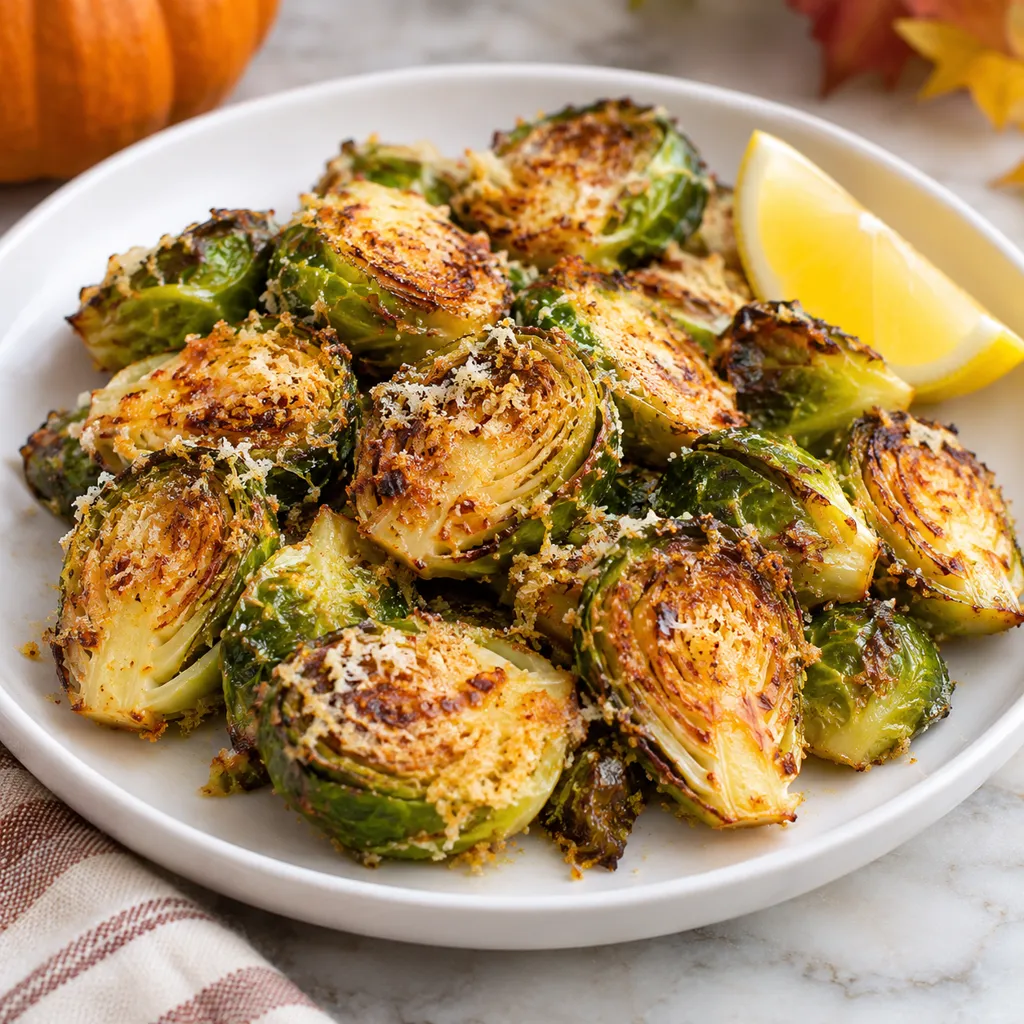
Why this side works with a rich holiday meal
Brussels sprouts provide a savory green vegetable beside sweeter squash, cranberry sauce, and mashed potatoes. Parmesan contributes concentrated flavor without turning the dish into a deep cream casserole. A small lemon finish keeps the plate lively while leaving gravy and stuffing to supply their own richness.
The short ingredient list also makes the dish easier to coordinate. You do not need a separate sauce, a stovetop reduction, or a topping prepared in another pan. The main demands are enough sheet-pan space and a high-heat oven window. Plan those two things before deciding this will be your last-minute vegetable.
For a smaller Thanksgiving meal, serve the sprouts with roast chicken or a vegetarian main and one potato side. For a large buffet, avoid making every vegetable cheesy. Pairing these with simple carrots or a fresh salad creates more contrast than repeating the same creamy texture across the whole menu.
Choose sprouts with similar sizes
Look for firm Brussels sprouts with tightly layered leaves. Remove damaged outer leaves and trim only the dry stem end. Cutting too much from the stem can make the halves fall apart before roasting. Wash the sprouts, then dry them thoroughly before adding the oil and seasoning.
Halve medium sprouts through the stem so both pieces stay together. Very large ones can be quartered, while exceptionally tiny sprouts may cook more quickly than the rest. Sort them into reasonably similar groups instead of assuming one timer will correct major differences in size. Loose healthy leaves can roast quickly, so watch them separately.
Moisture matters as much as size. Water left between the leaves encourages steaming, especially when the pan is crowded. Give washed sprouts time to drain, then pat them dry. If you are preparing them the day before, refrigerate the trimmed halves covered and check for collected moisture before seasoning on the day of cooking.
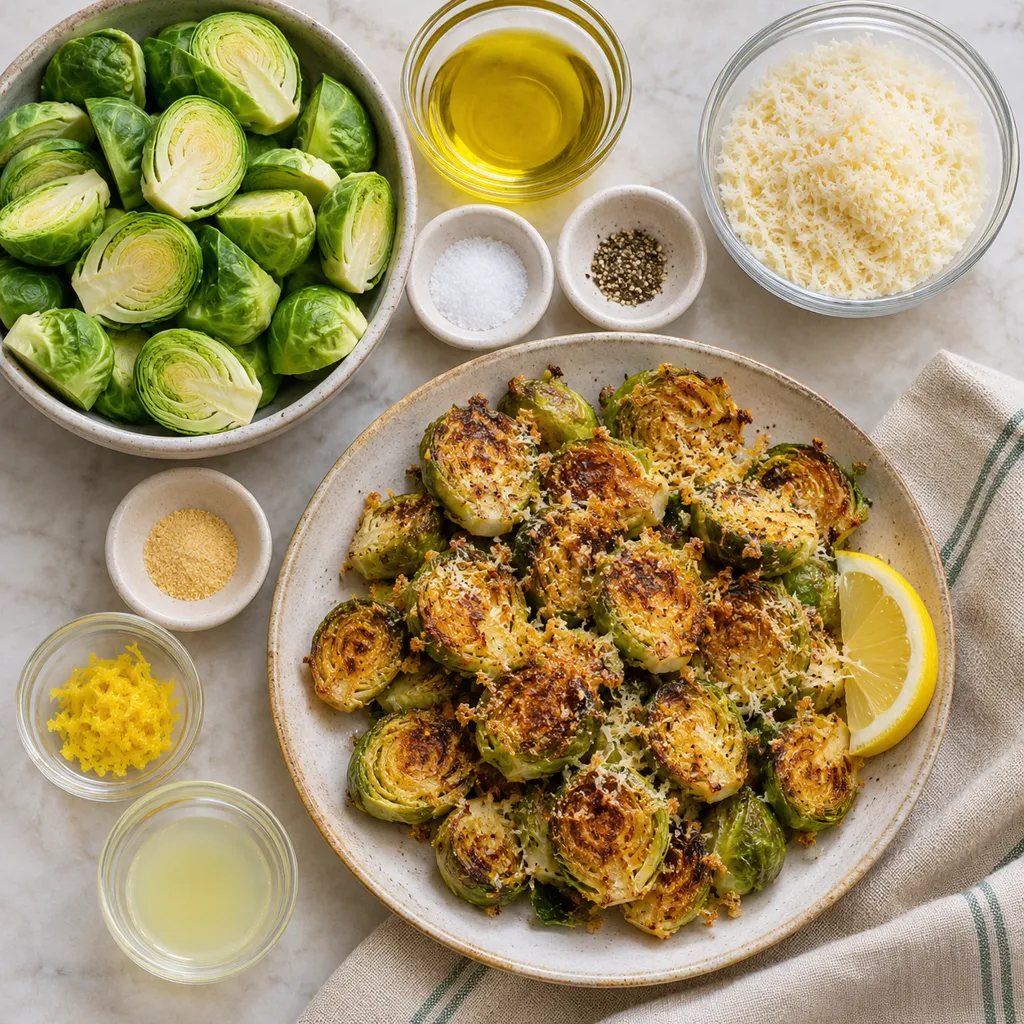
Oil, seasoning, and the Parmesan choice
The measured olive oil should lightly coat the sprouts without leaving a deep pool on the pan. Toss in a bowl so the seasonings reach more than the top surfaces. Salt, pepper, and garlic powder form a simple base. Garlic powder is convenient here because tiny pieces of fresh garlic can scorch during high-heat roasting.
Finely grated Parmesan distributes across the sprouts and creates small golden patches. Large shreds can melt unevenly, while a very powdery product may form a different coating. Use the listed amount as a starting point and avoid burying the vegetables beneath cheese. You should still be able to see and taste the sprouts.
Parmesan contributes salt, so taste before adding more after roasting. If serving strict vegetarians, choose a suitable cheese made with vegetarian enzymes. Read labels for the guests you are feeding rather than assuming every Parmesan-style product meets the same dietary requirements. The base recipe contains dairy and is not dairy-free.
Give the sheet pan enough room
Use a large rimmed metal sheet pan. Arrange the halves cut-side down with a little space around them. The flat surface gives them steady contact with the hot pan, which helps browning. A deep dish or a pile of overlapping sprouts holds steam around the vegetables and produces a different result.
If your pan cannot hold the batch comfortably, use two sheets. More pan space is usually more useful than extra cooking time applied to a crowded tray. With two racks, rotate the pans as needed for your oven's hot spots. Check the lower and upper pans independently rather than assuming they finish together.
Avoid adding water or covering the tray during roasting. Those steps may help cook a vegetable through, but they work against the dry exterior this recipe seeks. If you discover that large sprouts are browned outside and still hard inside, reduce the heat and continue carefully; cut the next batch into more consistent sizes.
Roast first, then add the cheese
Heat the oven to 425°F, or 220°C. Roast the seasoned sprouts for about twenty minutes before assessing them. Lift one or two with a thin spatula to inspect the cut surface. They should be developing clear brown areas, and a knife should begin entering the center with less resistance.
Turn the sprouts and scatter Parmesan over them. Return the tray for approximately five to ten minutes, watching the cheese closely toward the end. The finishing stage is long enough to color the cheese without exposing it to the whole initial roasting period. Loose cheese on the pan may brown sooner than cheese resting on the sprouts.
Use the vegetable and cheese together as your doneness cues. If the sprouts are tender and the Parmesan is golden, stop. Do not wait for every loose leaf to look identical. Small dark spots can be normal; an acrid smell and blackened cheese signal that the batch has gone too far.
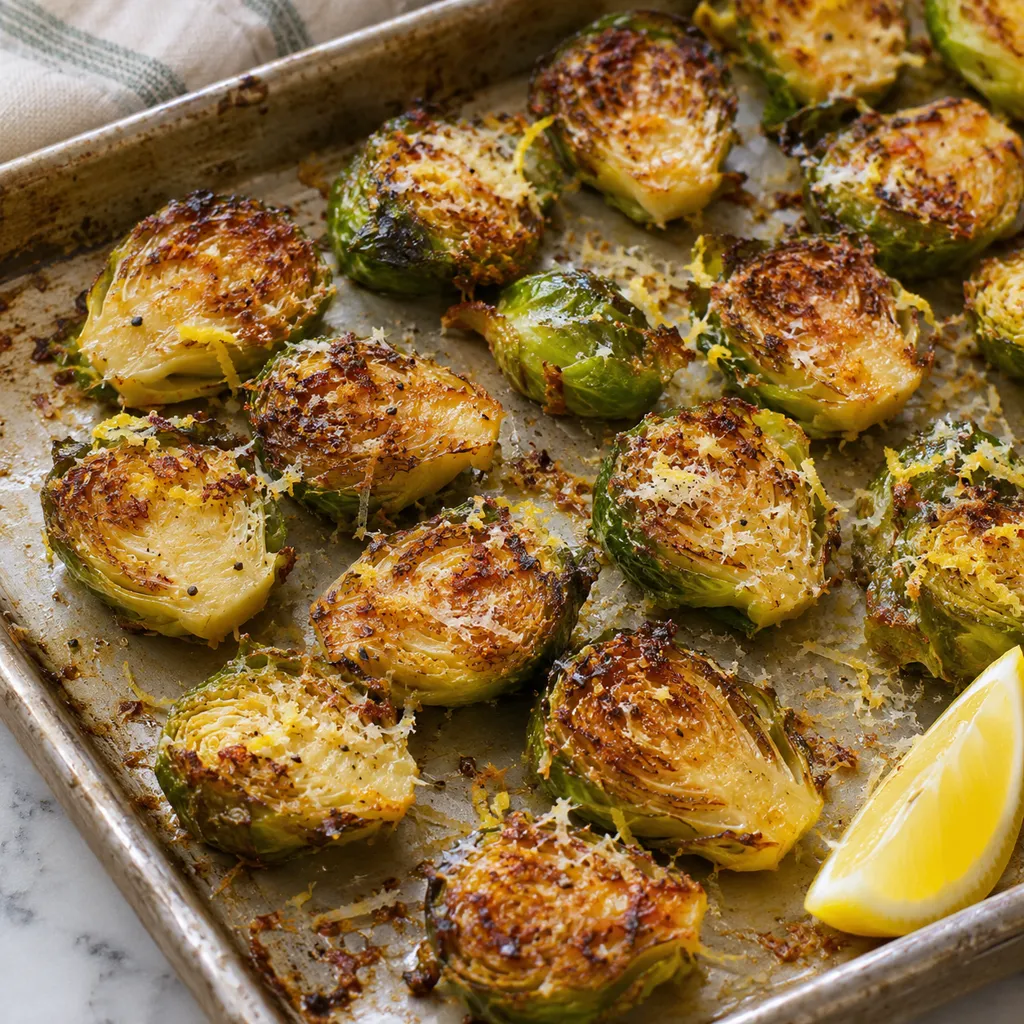
Finish with lemon after roasting
Add the measured lemon zest and juice once the sprouts are out of the oven. The zest brings aroma, while the juice supplies a small amount of acidity. Toss gently so the browned leaves and cheese remain attached as much as possible. A heavy-handed stir can break the sprouts and leave the best crust behind on the tray.
Serve on a shallow platter rather than immediately sealing them under a tight lid. Trapped steam softens the exterior. If the table is not ready, a short uncovered pause is usually better for texture than a long covered hold, while appropriate safe holding still needs to be maintained for an extended delay.
Offer an extra lemon wedge separately if desired. Adding a large quantity of juice to the whole batch can make the finish wet. The intent is to balance the Parmesan, not to create a pool of lemon dressing under the vegetables. Taste one complete bite before changing the seasoning.
A realistic Thanksgiving preparation schedule
Trim and halve the sprouts a day ahead, grate the cheese, and prepare the lemon zest. Refrigerate the components separately. This removes most of the knife work from serving day while leaving roasting for the time when it gives the best texture. Do not toss the sprouts in lemon juice overnight and expect the same dry roast.
Reserve a genuine high-heat oven interval. If the turkey is roasting at a lower temperature, these sprouts will need a separate window or an adjusted plan. A roasting temperature printed in a recipe is not interchangeable with any available oven temperature. Coordinate with the main dish's safe cooking and holding requirements.
For a double batch, double ingredients and increase sheet-pan space. Keep the same approximate layer depth, check the pans early, and do not simply double the roasting time. Large holiday batches often need more attention to airflow and oven recovery, so build some flexibility into the schedule.
Variations that preserve the basic technique
For a dairy-free variation, omit the Parmesan and roast until the sprouts themselves are browned and tender. Add the lemon finish afterward. A dairy-free cheese alternative may behave differently at high heat, so follow its instructions and try a modest amount rather than assuming it will form the same crust.
A small pinch of chili flakes can add heat. If you prefer a sweeter finish, offer a little balsamic glaze at the table rather than coating the raw sprouts in a sugary liquid for the full roast. Keeping optional finishes separate lets guests choose and avoids changing the browning behavior of the whole pan.
Frozen sprouts can be roasted, but this fresh-sprout method should not be expected to produce an identical texture with them. Follow the package's handling directions, account for extra moisture, and use a spacious tray. Their exterior and cut surfaces may differ from fresh halves, so evaluate them as a variation rather than a guaranteed equal substitution.
Troubleshooting before serving
If the sprouts are soggy, check crowding, surface moisture, and whether the tray was covered. Spreading them onto an additional pan may help more than raising the temperature sharply. If the cut faces are pale, they may not have had enough contact with the pan or the oven may have cooled substantially when other dishes were added.
If the cheese burns while the centers remain firm, the sprouts may be oversized or the cheese was added too early. Finish the vegetables more fully before adding Parmesan next time. If loose leaves become dark while the halves are still cooking, remove those leaves and continue with the larger pieces.
If the flavor seems bitter, consider overbrowning rather than immediately adding more cheese. Lemon can brighten the dish, but it cannot remove burnt flavors. If the sprouts taste bland, a careful salt adjustment and a little zest may be more effective than adding another large handful of Parmesan.
Leftovers and serving safety
Leftovers are softer than freshly roasted sprouts but still useful in grain bowls, salads assembled after reheating, or a simple lunch with eggs. Reheat only the portion you need rather than warming the entire container repeatedly. A shallow oven tray generally preserves more texture than a long covered microwave cycle.
Refrigerate in shallow containers within two hours, or within one hour above 90°F. Keep at 40°F or below and use within three to four days. Reheat leftovers to 165°F, checking the centers. Watch the cheese as the sprouts warm; a dark crust is not proof that the inside has reached the intended temperature.
Frequently asked questions
Why are my Brussels sprouts soggy rather than crisp?
They may be wet, crowded, or held under a tight cover. Dry them before seasoning, leave space on the pan, and serve promptly after roasting. The outer leaves can be crisp while the centers remain tender; trying to dry the entire vegetable into a chip usually leads to overcooking.
Can I prepare the sprouts ahead?
Yes. Trim, halve, and refrigerate them a day ahead, with Parmesan and lemon stored separately. Roast close to serving for the strongest texture. Fully roasted sprouts can be reheated safely, but their exterior will usually be softer than a fresh batch.
When should I add the Parmesan?
Add it after the initial twenty-minute roasting stage, once the cut faces have browned and the centers are approaching tenderness. Finish until the cheese is golden. Adding it from the beginning exposes it to more high heat and can burn the cheese before larger sprouts cook through.
Can I use frozen Brussels sprouts?
You can use them as a variation, following the package guidance and allowing for extra moisture. Do not promise the same texture as dry fresh halves. Use enough pan space, check doneness carefully, and avoid extending cooking solely to imitate the exact appearance of a fresh-sprout photograph.
Crispy Parmesan Brussels Sprouts for Thanksgiving
By Raelynn · Original proposed recipe
Ingredients
Instructions
- Heat oven to 425°F (220°C). Dry sprouts thoroughly. Toss with oil, salt, pepper, and garlic powder.
- Arrange cut-side down with space on a large rimmed sheet pan. Roast 20 minutes, until cut surfaces are browned and centers nearly tender.
- Turn sprouts, sprinkle Parmesan over them, and roast 5–10 minutes more, watching for a golden cheese crust.
- Finish with lemon zest and juice after roasting and serve promptly.
Original proposed recipe; not kitchen-tested. All times are estimates. Scaling changes ingredients only; cooking time, temperature, pan space, and doneness still need attention.
Food safety references
FoodSafety.gov: safe cooking and reheating temperatures; FDA: egg safety.
You might also like these recipes
Cheddar Corn Pudding: A Creamy Thanksgiving Side Dish
Crispy Parmesan Brussels Sprouts for Thanksgiving
One-Pan Chicken Pesto Gnocchi with Spinach