
Classic homemade Thanksgiving stuffing is all about golden bread cubes, buttery onion and celery, fragrant sage and a crisp top. This traditional baked dressing uses everyday ingredients and lets the bread flavor shine rather than hiding it under too many extras. It is a dependable choice for a holiday table because you can prepare the bread ahead, adjust the broth to the texture you prefer and bake the casserole separately from the turkey for easier temperature control.
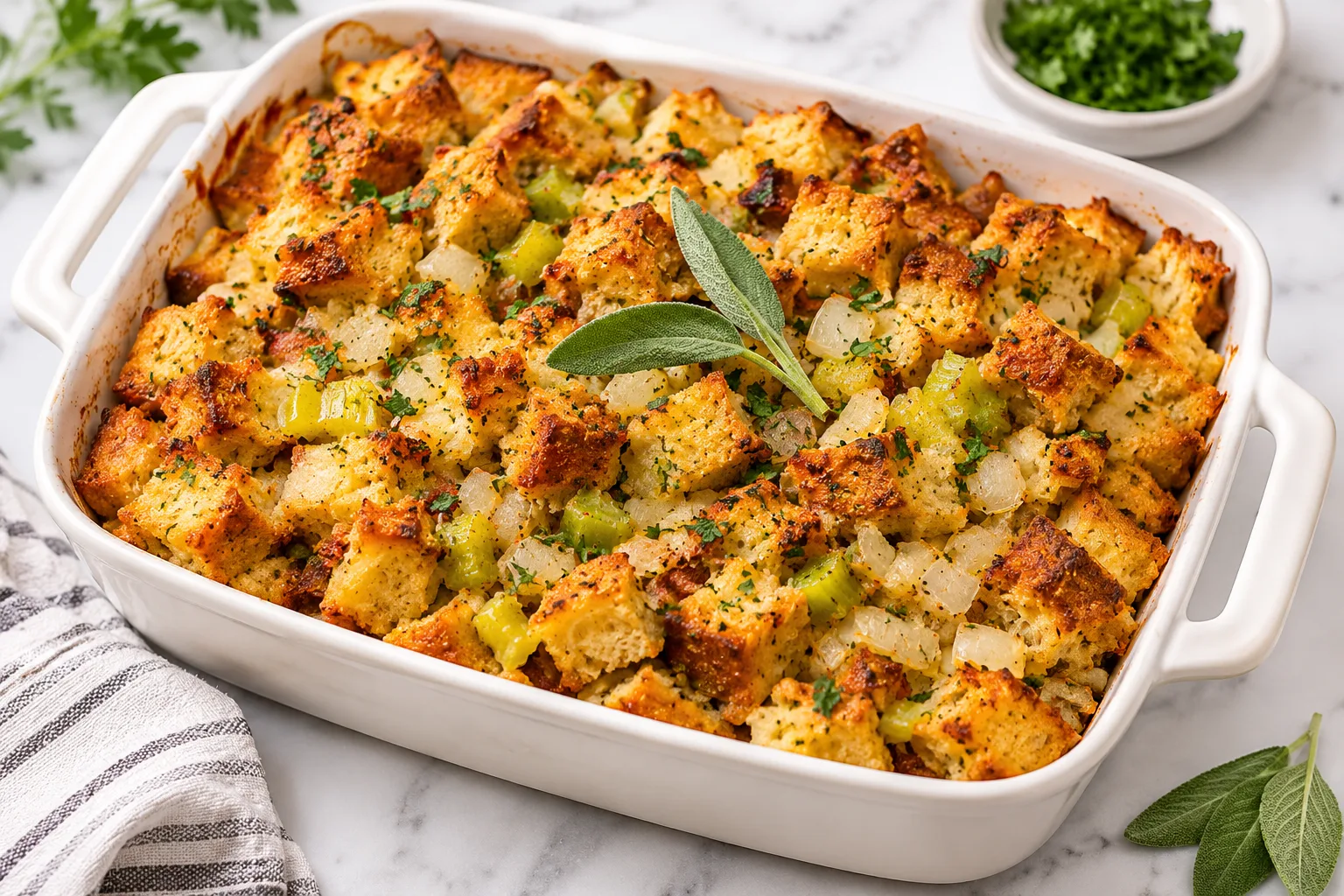
Image note: photos are illustrative food photography, not a verified photo of the exact finished recipe.
Recipe Snapshot
Recipe: Classic Homemade Thanksgiving Stuffing with Butter, Celery and Sage. Primary keyword: classic homemade thanksgiving stuffing recipe. Prep: 25–35 minutes plus bread drying. Bake: 40–45 minutes. Serves: 8–10. Safety: stuffing center must reach 165°F (74°C).
Ingredients
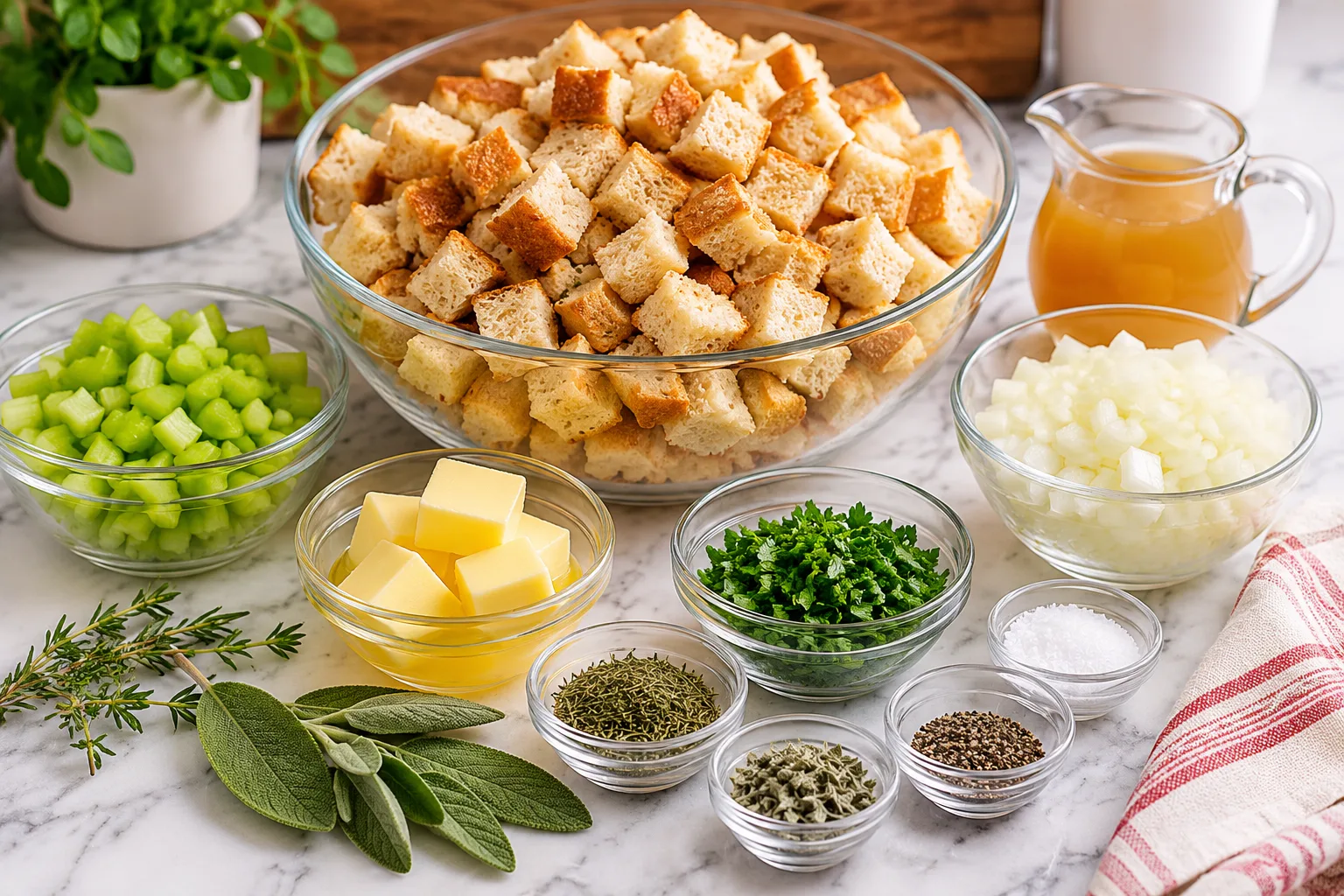
- 12 cups dry white or country bread cubes
- 3/4 cup unsalted butter, plus more for the dish
- 2 large yellow onions, diced
- 4 celery stalks, diced
- 3 tablespoons chopped fresh sage
- 1 tablespoon chopped fresh thyme
- 1/2 cup chopped parsley
- 2 to 3 cups low-sodium chicken or vegetable broth
- 2 large eggs, lightly beaten, optional
- 1 teaspoon kosher salt, adjust to taste
- 1/2 teaspoon black pepper
Step-by-Step Instructions
- Dry the bread cubes at 275°F for 25–35 minutes, stirring once. Remove and increase the oven temperature to 350°F. Grease a 9-by-13-inch baking dish.
- Melt butter in a large skillet over medium heat. Add onions and celery, stirring until tender and translucent, around 10–12 minutes.
- Stir in sage, thyme, salt and pepper. Cook for another minute until fragrant, then remove the skillet from heat.
- Place the dried bread in a large mixing bowl. Add the buttered vegetables and parsley, tossing gently to distribute the seasoning.
- Pour in 2 cups of broth gradually, tossing until the bread is moist but not wet. Add more broth in small amounts as needed. Stir in beaten eggs only if using.
- Transfer to the prepared dish without pressing down hard. Cover with foil and bake 25 minutes, then uncover and bake another 15–20 minutes until the top is golden and the center reaches 165°F.
- Rest for 10 minutes before serving with turkey and gravy. Refrigerate leftovers within two hours.
The Heart of a Traditional Stuffing
A classic recipe does not need a long list of extras to taste special. Onion, celery, sage and butter create a familiar aroma that many families associate with the holiday. The bread absorbs those flavors while maintaining enough structure to produce crisp edges. This version intentionally leaves out sausage, apples and mushrooms so it can pair with almost any Thanksgiving main dish. Its simplicity also makes it easy to adapt for vegetarian guests by using vegetable broth and checking the bread ingredients.
Choosing Butter for the Best Flavor
Unsalted butter gives you control over the final seasoning, especially when broth contains sodium. Melt it gently rather than letting it brown aggressively; the aim is to soften the vegetables and distribute richness through the bread. If you use salted butter, reduce added salt and taste the cooked onion mixture before combining it with bread. A small extra pat on the top of the casserole encourages browning, but too much butter can leave the bottom greasy. The right balance is savory and rich without feeling heavy.
How to Get the Onion-Celery Ratio Right
Onion adds sweetness and depth while celery contributes a clean herbal note and gentle crunch. Using two onions and four celery stalks creates a classic balance for a large casserole. Dice them evenly so they cook at the same rate, and do not rush the sauté. Raw onion can taste harsh in finished stuffing, while overbrowned celery may become bitter. Cook until tender and translucent before adding the herbs. The vegetables should smell fragrant and buttery, not scorched.
Optional Eggs: What They Change
Some families add beaten eggs to stuffing because they prefer a cohesive, sliceable casserole. Others leave them out so the bread remains looser and more spoonable. Both styles are valid. If you use eggs, let the hot vegetable mixture cool slightly before mixing so the eggs do not scramble prematurely. Once eggs are added, treat the mixture as perishable and bake promptly or refrigerate safely. The center must reach 165°F. Without eggs, use broth carefully so the bread still holds together.
Making a Vegetarian Classic
To make this stuffing suitable for a vegetarian holiday menu, replace chicken broth with a flavorful low-sodium vegetable broth. Choose a bread that contains no unwanted animal ingredients and check butter alternatives if cooking for vegan guests. Sauté onion and celery in olive oil or a plant-based butter when needed. The classic sage-and-thyme flavor remains delicious without meat. Serve it alongside roasted squash, green beans and cranberry sauce for a balanced meatless holiday plate.
How to Choose Bread for Stuffing
The best stuffing begins with bread that can absorb seasoned broth without collapsing into paste. A sturdy country loaf, sourdough or good-quality sandwich bread can work, but the texture changes with each choice. Bread with a firm crumb keeps distinct cubes, while very soft packaged bread makes a more cohesive casserole. Cut the loaf into pieces around three-quarters of an inch so they absorb moisture evenly. Avoid bread that is already moldy or stale in an unpleasant way; you want dry bread, not spoiled bread. If the crust is particularly tough, remove some of it, but leaving a little adds character and crunch to the finished dish.
Why Drying the Bread Matters
Fresh bread contains moisture that makes it easy to compress when mixed with stock. Drying the cubes creates room for the flavorful liquid to soak in without immediately turning them mushy. Spread cubes in a single layer on baking sheets and bake at 275°F for approximately 25–35 minutes, tossing once, until dry but not deeply browned. Let them cool before mixing. You can also cut bread a day ahead and leave it to air-dry in a clean, dry place, although the oven is more predictable. Do not confuse drying with toasting until dark; the bread will brown again during the final bake.
Building Flavor with Onion and Celery
Onion and celery are the aromatic foundation of classic American stuffing. Dice them into similarly sized pieces so they soften at the same rate. Cook slowly in butter or another suitable fat until the onion looks translucent and the celery loses its raw crunch. This usually takes around eight to twelve minutes over medium heat. Stir frequently and lower the heat if the vegetables begin to brown before they soften. The goal is sweetness and aroma, not the bitter taste of scorched onions. A little garlic can be added near the end, when there is less risk of burning.
The Role of Sage, Thyme and Parsley
Sage contributes the recognizable holiday flavor that many people associate with Thanksgiving stuffing. Thyme gives a gentler savory note, while parsley brings freshness and a touch of color. Fresh herbs are lovely, but dried herbs are useful when shopping close to a busy holiday. As a starting point, use about one-third as much dried herb as fresh, then taste and adjust. Add dried herbs to the warm vegetables to wake up their aroma. Add delicate parsley nearer the end so it stays bright. Avoid overpowering the bread with too much rosemary, which can dominate other flavors.
Choosing the Right Broth
Low-sodium chicken or vegetable broth gives you control over the final seasoning. Homemade stock is excellent if it tastes clean and is properly stored, but a good packaged broth is completely practical. Warm the broth slightly before adding it so it distributes evenly through the bread. Pour in part of the amount first, fold gently, and add more only where the cubes still look dry. The exact quantity depends on the loaf, how thoroughly you dried it and whether the vegetables or other additions release moisture. A measured range is more useful than forcing every batch to take precisely the same amount.
How Wet Should Stuffing Be Before Baking?
The bread should be evenly moistened but not submerged in a pool of broth. Pick up a spoonful: the cubes should hold together lightly when pressed, then separate with a gentle nudge. If they crumble into dry pieces, add a little more broth. If liquid collects at the bottom of the bowl, pause before adding more. A well-balanced mixture develops a tender center and a crisp golden top. Different bread varieties absorb different amounts of liquid, so use the visual cues rather than following a volume blindly. This single adjustment often makes the biggest difference in texture.
Why a Shallow Baking Dish Works
A shallow casserole exposes more of the stuffing to oven heat and produces a larger area of crisp, browned bread. A deep dish creates a softer center and may need more time to heat through. A standard 9-by-13-inch baking dish is a dependable choice for a family-size batch. Grease it lightly before adding the bread mixture so serving is easy. Spread the mixture loosely rather than compressing it into a solid block. If you prefer a very crunchy top, uncover the dish for the last portion of baking. If the surface browns too quickly, cover it loosely with foil.
Keeping the Center Safe and Hot
Whether stuffing is cooked in a casserole or inside a turkey, the center should reach 165°F (74°C) on a food thermometer. This is especially important when the mixture includes meat, eggs or poultry drippings. Insert the thermometer into the thickest central section, not against the hot baking dish. If the top is golden but the middle is not hot enough, cover loosely with foil and continue baking. Do not rely on surface color to judge doneness. Cooking stuffing separately from the bird is generally easier to manage because the turkey and stuffing can reach their safe temperatures independently.
The Difference Between Stuffing and Dressing
In many American kitchens, the names stuffing and dressing are used interchangeably. Traditionally, stuffing refers to a bread mixture cooked inside poultry, while dressing is baked in its own dish. Regional habits vary, and the same ingredient mixture can be called either name. This recipe uses a separate baking dish because it is easier to achieve a browned top and verify the center temperature. You can serve it beside turkey, chicken or a vegetarian main dish. The important part is the texture and flavor, not which of the two names your family prefers.
Preparing for a Busy Holiday Kitchen
Read the recipe completely before beginning and check that your baking dish will fit beside the other Thanksgiving sides. Dry bread and chop vegetables in advance to reduce last-minute work. Measure herbs into a small bowl and label your broth if you have several pots going. Keep raw meat and its utensils separate from ready-to-eat food. If you plan to assemble ahead, follow safe chilling practices and bake the casserole until the center reaches 165°F. A written oven schedule helps you coordinate the stuffing with turkey resting time and vegetable reheating.
Adjusting the Recipe for More Guests
To feed a crowd, double the ingredients but use two baking dishes rather than one extremely deep pan. This gives each batch enough surface area to develop a crisp top. The oven may need a few additional minutes when both pans are cold or the racks are crowded, so rely on the center temperature instead of the clock. Taste the cooked aromatics before adding them to the bread, particularly if using salty sausage or broth. For a smaller meal, halve the ingredients and use an 8-inch baking dish. The temperature target stays the same.
Flavor Variations That Still Taste Like Thanksgiving
Once you understand the bread-to-broth balance, you can adjust the flavor with familiar ingredients. Toasted pecans add crunch, diced apples bring a sweet-tart note and sautéed mushrooms add savory depth. A little dried cranberry can brighten a rich sausage version, while fresh lemon zest lifts a vegetable-focused stuffing. Add only one or two extras at a time so the mixture still tastes like stuffing rather than an overloaded casserole. If adding wet ingredients, reduce the broth slightly at first. If adding salty ingredients, taste before adding more salt.
How to Prevent a Soggy Bottom
A soggy bottom usually comes from excess liquid, a very deep pan or bread that was not dried sufficiently. Start with a sturdy loaf and dry the cubes before mixing. Cook vegetables until much of their moisture evaporates, especially mushrooms. Add broth gradually and stop when the bread is moist but not swimming. Bake in a relatively shallow dish and leave the top uncovered for part of the cooking time. After removing the casserole from the oven, rest it for several minutes before serving so the moisture settles and the portions lift out cleanly.
How to Avoid a Dry Casserole
Dry stuffing can happen when bread cubes are extremely hard, the broth amount is too low or the dish stays uncovered too long. Before baking, taste and feel the mixture, adding broth in small splashes until the bread is evenly moistened. Cover with foil for the first part of baking if your oven tends to dry food quickly. If the casserole looks dry during cooking, drizzle a little warm broth around the edges and cover briefly. Do not pour a large amount over the crisp top just before serving, because that removes the texture you worked to create.
Getting a Golden, Crispy Top
For an appealing golden surface, spread the mixture loosely and dot the top with a little butter or drizzle with olive oil. Bake covered initially if the casserole is cold from the refrigerator, then remove the foil to let the exposed cubes brown. Watch the last ten minutes closely, especially near the edges. If the surface is already dark but the center has not reached 165°F, cover it again and continue baking. A few irregular bread corners are desirable; they provide a contrast to the tender center and make the dish look homemade.
Serving Suggestions for a Balanced Plate
Stuffing is rich and savory, so it pairs well with tart cranberry sauce, simply cooked green beans and roasted carrots. Turkey gravy is a familiar addition, but serve it on the side if guests enjoy crisp stuffing. For a smaller dinner, the casserole can accompany roast chicken or a meatless main dish. Add a bright salad or citrusy vegetable to balance the meal. Use a large serving spoon and a warm dish, and keep the casserole covered lightly if it must wait a few minutes before dinner. Do not leave perishable dishes sitting out for hours.
Storage and Leftover Safety
Refrigerate cooked stuffing within two hours in shallow, covered containers. Use it within three to four days or freeze it for longer storage. Reheat leftovers to 165°F (74°C) in the center. For better texture, spread the stuffing in a baking dish, add a spoonful of broth if needed, cover while heating and uncover briefly to restore the crisp top. The microwave is convenient for a small portion but produces a softer result. Avoid reheating the same large container repeatedly; remove only the amount you plan to eat.
Freezing and Reheating Tips
Fully cooked stuffing can be frozen in portions after it has cooled safely and been refrigerated promptly. Wrap it tightly or use freezer-safe containers, pressing out excess air to limit freezer burn. Label the date and thaw in the refrigerator before reheating. Add a little broth if the mixture seems dry, then heat until the center reaches 165°F. For the best texture, uncover the dish near the end of reheating. A frozen portion may lose some of its original crispness, but the herbs and savory flavors usually remain appealing.
Common Mistakes and How to Fix Them
The most common mistakes are skipping the bread-drying step, pouring in all the broth at once, undercooking the onion and celery, and packing the casserole too tightly. These choices make the mixture either soggy or unevenly seasoned. Taste the vegetable mixture before combining it with bread, but never taste raw sausage or uncooked egg mixtures. If the top browns early, use foil; if the center seems dry, add a little warm broth. A thermometer and a flexible approach to moisture produce more consistent results than rigid timing alone.
Frequently Asked Questions
What bread is best for classic Thanksgiving stuffing?
A sturdy white or country loaf dried into cubes gives a tender center with distinct, crisp edges.
Can I make stuffing without eggs?
Yes. Eggs are optional; omit them for a looser, more traditional bread-cube texture.
How do I get a crispy top?
Use a shallow dish and uncover for the final part of baking, while verifying the center reaches 165°F.
How much broth should I add?
Start with 2 cups for 12 cups dried bread and add more gradually until the cubes are evenly moist but not submerged.
Can I make Thanksgiving stuffing vegetarian?
Yes. Use vegetable broth and check that the bread and other ingredients meet your dietary needs.
Quick Recipe Card
Classic Homemade Thanksgiving Stuffing with Butter, Celery and Sage — serves 8–10; bake at 350°F until the center reaches 165°F.
Ingredients Checklist
- 12 cups dry white or country bread cubes
- 3/4 cup unsalted butter, plus more for the dish
- 2 large yellow onions, diced
- 4 celery stalks, diced
- 3 tablespoons chopped fresh sage
- 1 tablespoon chopped fresh thyme
- 1/2 cup chopped parsley
- 2 to 3 cups low-sodium chicken or vegetable broth
- 2 large eggs, lightly beaten, optional
- 1 teaspoon kosher salt, adjust to taste
- 1/2 teaspoon black pepper
Directions at a Glance
- Dry the bread cubes at 275°F for 25–35 minutes, stirring once. Remove and increase the oven temperature to 350°F. Grease a 9-by-13-inch baking dish.
- Melt butter in a large skillet over medium heat. Add onions and celery, stirring until tender and translucent, around 10–12 minutes.
- Stir in sage, thyme, salt and pepper. Cook for another minute until fragrant, then remove the skillet from heat.
- Place the dried bread in a large mixing bowl. Add the buttered vegetables and parsley, tossing gently to distribute the seasoning.
- Pour in 2 cups of broth gradually, tossing until the bread is moist but not wet. Add more broth in small amounts as needed. Stir in beaten eggs only if using.
- Transfer to the prepared dish without pressing down hard. Cover with foil and bake 25 minutes, then uncover and bake another 15–20 minutes until the top is golden and the center reaches 165°F.
- Rest for 10 minutes before serving with turkey and gravy. Refrigerate leftovers within two hours.
Final Thoughts
Classic homemade Thanksgiving stuffing is all about golden bread cubes, buttery onion and celery, fragrant sage and a crisp top. This traditional baked dressing uses everyday ingredients and lets the bread flavor shine rather than hiding it under too many extras. It is a dependable choice for a holiday table because you can prepare the bread ahead, adjust the broth to the texture you prefer and bake the casserole separately from the turkey for easier temperature control. The best stuffing comes from dried bread, well-cooked aromatics, broth added gradually and a final temperature check. Adjust the seasoning to your family’s taste and keep the casserole safely chilled until it is time to bake.
You might also like these recipes
Classic Homemade Thanksgiving Stuffing with Butter, Celery and Sage
Pear and Grape Thanksgiving Fruit Turkey Platter: Festive Holiday Centerpiece
Juicy Herb Roasted Turkey Breast: Easy Thanksgiving Dinner