
A juicy herb roasted turkey breast is an inviting centerpiece for a smaller Thanksgiving dinner. Instead of handling a whole turkey, you roast one bone-in breast with garlic butter, rosemary, thyme and lemon. The skin turns golden while the meat stays tender when you use a thermometer and allow enough resting time.
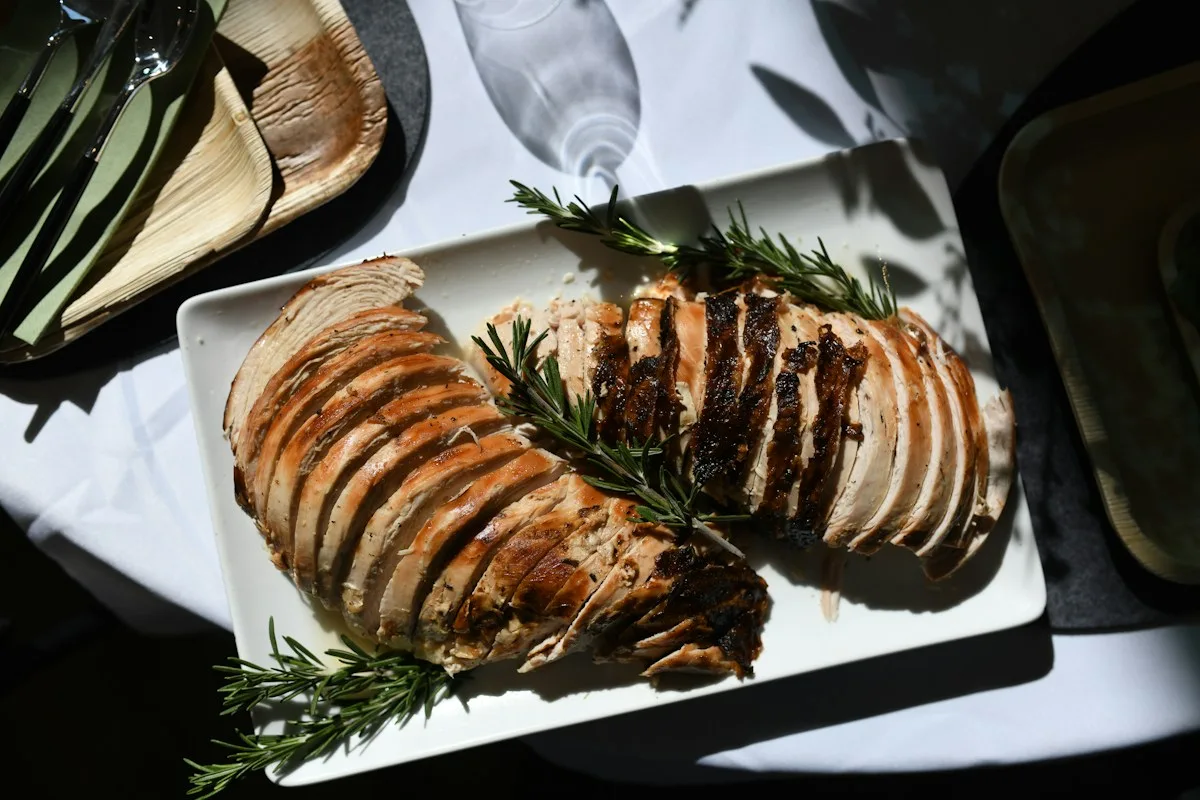
This detailed guide explains the ingredients, step-by-step method, make-ahead timing, storage and easy variations so you can prepare the dish with confidence. The photos are illustrative stock imagery and may not show the exact finished recipe.
Recipe Snapshot
Prep and cook: about 2 hours including rest · Yield: 6 servings · Occasion: Thanksgiving · Keyword: juicy herb roasted turkey breast
Ingredients
- 1 bone-in, skin-on turkey breast, about 4–5 pounds, fully thawed
- 4 tablespoons unsalted butter, softened
- 3 garlic cloves, finely minced
- 1 tablespoon chopped fresh rosemary
- 1 tablespoon chopped fresh thyme
- 1 teaspoon kosher salt, or to taste
- 1/2 teaspoon black pepper
- 1 teaspoon lemon zest
- 1 tablespoon olive oil
- 1 onion, cut into thick wedges
- 1 cup low-sodium chicken or turkey broth
- 1 lemon, cut into wedges
- Fresh parsley for serving, optional
Step-by-Step Instructions
- If frozen, thaw the turkey breast safely in the refrigerator until fully thawed. Pat the skin dry with paper towels; do not rinse raw poultry.
- Preheat the oven to 350°F. Arrange onion wedges in a roasting pan and add broth to the bottom of the pan.
- Mix softened butter with garlic, rosemary, thyme, salt, pepper and lemon zest. Carefully loosen the skin and rub some butter underneath; spread the rest over the outside.
- Place the turkey breast skin-side up on the onions or on a rack in the roasting pan. Rub with olive oil and add lemon wedges around it.
- Roast uncovered, checking periodically. A 4–5-pound bone-in breast may take roughly 1 1/2 to 2 hours, but time varies significantly by shape and oven.
- Insert an instant-read thermometer into the thickest part of the breast without touching bone. Continue roasting until the center reaches 165°F (74°C). If the skin browns too quickly, tent loosely with foil.
- Transfer the turkey to a clean carving board and rest for 15–20 minutes. Slice across the grain and serve with warm pan juices that have been brought to a safe simmer.
Why Roast a Turkey Breast Instead of a Whole Bird?
A turkey breast is practical when you want a traditional Thanksgiving centerpiece without feeding a very large crowd. It fits in a smaller roasting pan, takes less refrigerator space and is easier to carve. Bone-in, skin-on breast offers a familiar holiday presentation and can stay moist when cooked carefully. It also leaves room in the oven for potatoes and vegetables, especially when you plan the cooking schedule.
Bone-In Versus Boneless Turkey Breast
Bone-in turkey breast is often sold with skin and a substantial breastbone, which can support even roasting and an attractive finished shape. Boneless turkey breast is convenient for slicing and may cook faster, depending on thickness. Both should be cooked to a safe internal temperature of 165°F. If you choose boneless, follow its weight and shape rather than assuming the same roasting time listed for bone-in.
Thawing Turkey Safely
A frozen turkey breast must thaw completely before this recipe. The safest easy method is to place it on a tray in the refrigerator, allowing enough time based on its size and package guidance. Keep raw juices contained and separate from ready-to-eat foods. Do not thaw poultry on the kitchen counter. If you use the cold-water method, follow official food-safety instructions and cook promptly afterward.
Why Dry Skin Browns Better
Moisture on the surface of turkey creates steam and slows browning. Pat the skin thoroughly dry with clean paper towels before adding butter and herbs. Do not rinse raw turkey, because splashing water can spread bacteria around the sink. Dry skin, a fully preheated oven and a light coating of fat help develop a golden finish. Browning is appealing, but it is not a reliable sign that the meat is fully cooked.
Making Garlic Herb Butter
Softened butter spreads easily and carries the flavor of minced garlic, rosemary, thyme and lemon zest. Finely chop the herbs so they distribute evenly instead of collecting in clumps. Taste the butter before it touches raw poultry, then use a clean spoon for any remaining mixture. If you prefer a stronger herb flavor, add a little sage. Avoid packing large pieces of garlic onto exposed skin where they may burn.
How to Season Under the Skin
Carefully slide your fingers between the skin and breast meat, working slowly so the skin does not tear. Spread a portion of herb butter underneath and smooth it across the surface. This places seasoning close to the meat and protects some of the herbs from direct oven heat. Rub the rest over the outside for color. If the skin is difficult to loosen, do not force it; seasoning the exterior is still useful.
Why a Thermometer Is Essential
Turkey roasting time varies with oven calibration, starting temperature, pan size and the shape of the breast. A food thermometer removes the guesswork. Insert it into the thickest section of the breast, avoiding bone, and check more than one spot if the roast is uneven. The turkey is safely cooked when the center reaches 165°F (74°C). Never rely only on the color of the juices or the skin.
Preventing Dry Turkey Breast
Overcooking is a common cause of dry turkey. Begin checking the temperature before the estimated cooking time ends, especially if your roast is smaller. Do not repeatedly pierce the meat or cut it open to check. Keep some broth in the bottom of the roasting pan so drippings do not scorch. Rest the finished turkey before slicing, and cut across the grain into moderately thick slices.
What to Do If the Skin Browns Too Fast
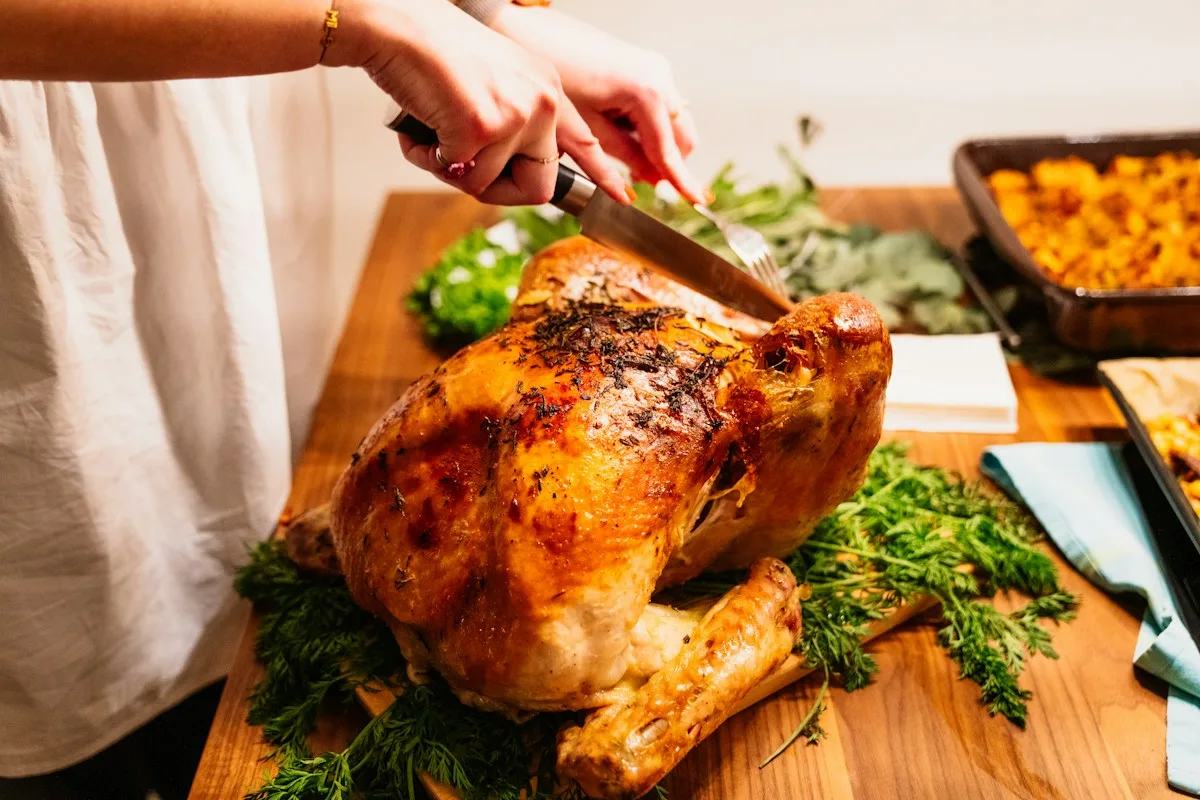
Some ovens brown the top of a roast faster than the center cooks. If the skin is deeply golden before the breast reaches 165°F, loosely tent the top with aluminum foil. Avoid wrapping tightly, which traps steam against the skin. Continue roasting and checking temperature. A lower oven rack may help if the turkey sits close to the top heating element. The thermometer remains the final guide.
How Long Should Turkey Rest?
Let the cooked turkey breast rest for about 15–20 minutes before carving. This gives the meat time to settle and makes slicing more manageable. Place it on a clean board and tent loosely if desired. Do not leave it at room temperature for extended periods. Use the resting time to warm the gravy, finish green beans or transfer roasted vegetables to serving platters.
Simple Pan Juices and Gravy
The onion wedges and broth help collect flavorful drippings beneath the roast. Once the turkey is safely cooked, pour the pan juices into a small saucepan, skim excess fat and bring them to a simmer. For gravy, whisk a little flour into melted butter in a separate pan, then slowly add the hot strained juices until smooth. Taste before salting because the drippings may already be seasoned.
A Thanksgiving Cooking Timeline
The day before dinner, thaw the turkey fully, chop herbs and prepare side-dish ingredients. On Thanksgiving Day, bring out the roasting pan, mix the herb butter and preheat the oven. Roast according to thermometer readings rather than a rigid schedule. While the turkey rests, reheat vegetables and finish the gravy. This staggered approach keeps the oven from becoming overcrowded at the busiest moment.
Carving the Turkey Breast
Use a sharp carving knife and a stable cutting board. For bone-in breast, cut along the breastbone to remove the large breast sections, then slice each section across the grain. If you prefer to carve directly from the bone, use slow, steady strokes. Arrange slices slightly overlapping on a warm platter. Spoon a little hot pan juice over the slices just before serving to keep them inviting.
Storage and Leftover Ideas
Refrigerate cooked turkey within two hours in shallow, covered containers. Use within three to four days or freeze for longer storage. Reheat until hot throughout, adding a splash of broth to help prevent drying. Leftover slices make sandwiches, turkey noodle soup or a quick skillet meal with vegetables. Store stuffing and gravy separately so each component can be reheated appropriately.
Common Turkey Roasting Mistakes
Do not put a partly frozen breast into the oven and expect the usual timing. Do not rinse raw poultry, and avoid reusing plates that held raw turkey. Do not depend on roasting minutes alone; check for 165°F in the thickest center. Avoid overpacking the roasting pan with vegetables, which can slow cooking. Finally, do not carve immediately after roasting, because a short rest improves the serving texture.
How to Shop for the Best Ingredients
Start with the freshest produce and meat you can reasonably find, but do not assume that expensive ingredients always make a better recipe. Read labels for added salt, sugar and allergens, especially when buying packaged sauces or seasonings. Check the size of the vegetables or roast because dimensions affect cooking time. Buy only the amount you need for your guests and plan how leftovers will be stored. This small amount of preparation saves time and helps the finished dish taste consistent.
Getting Organized Before Cooking
Read the entire recipe once, then set out measuring spoons, cutting boards, mixing bowls and the appropriate pan. Wash produce and prepare ingredients before you begin heating the oven. Keep raw poultry on a separate surface and wash hands and utensils thoroughly after contact. Measure seasonings into a small bowl so nothing gets forgotten at a busy moment. Good organization is especially valuable on Thanksgiving, when several dishes may need attention at the same time.
Scaling the Recipe for Guests
When cooking for a larger crowd, scale the ingredients based on the number of servings you actually need. Doubling the food does not mean doubling the cooking time. More crowded pans may need extra space, additional batches or a second oven rack. Taste seasonings carefully as you increase quantities, particularly salty ingredients. For smaller gatherings, halve a side dish or choose a smaller roast while keeping safe cooking temperatures unchanged. Plan serving dishes and refrigerator space in advance.
Serving a Balanced Holiday Meal
Thanksgiving meals often include several rich dishes, so balance the menu with something bright, crisp or acidic. A fresh salad, cranberry relish or simply cooked vegetable can make the plate more interesting. Serve hot dishes hot and chilled dishes cold, and avoid leaving perishable food on the table for hours. Put sauces in separate bowls so guests can choose their preferred amount. Thoughtful contrasts in texture and flavor make a familiar menu feel more complete.
Helpful Equipment and Kitchen Tips
A sturdy baking sheet or roasting pan, a reliable oven thermometer and a sharp knife are useful investments for holiday cooking. An instant-read food thermometer is particularly important for poultry. Use a large enough pan to allow heat to circulate, and place hot cookware on a heat-safe surface. Keep a clean towel nearby for drying vegetables, but use separate towels for hands and raw-food cleanup. Simple equipment used carefully is often more dependable than complicated gadgets.
How to Plan Leftovers
Prepare shallow containers before the meal so you can refrigerate leftovers promptly rather than waiting until the kitchen is cleaned. Separate sauces and crisp toppings when possible. Label containers with the date and aim to use refrigerated cooked leftovers within three to four days. Freeze portions you will not eat soon. When reheating, warm food thoroughly and add a little liquid if needed to protect texture. A leftover plan makes holiday cooking more practical and reduces waste.
Making This Recipe Part of Your Holiday Tradition
A dependable Thanksgiving recipe becomes easier each time you make it. After serving, write down any useful details: which pan browned best, whether your guests preferred more or less sweetness, and how long your oven actually took. Keep the base technique the same and adjust only one or two flavors next time. Invite family members to help with safe, age-appropriate tasks such as arranging vegetables or garnishing a platter. These small rituals make cooking more enjoyable.
Frequently Asked Questions
How long does a 4-pound turkey breast take to roast?
At 350°F, a bone-in turkey breast may take roughly 1 1/2 to 2 hours, but the exact time varies. Always verify 165°F in the thickest part.
What internal temperature is safe for turkey breast?
The center must reach 165°F (74°C), measured with a food thermometer away from bone.
Should I cover turkey breast with foil while roasting?
Roast uncovered initially for browning; tent loosely with foil if the skin becomes too dark before the center is done.
Can I prepare herb butter the day before?
Yes. Mix and refrigerate the butter in a covered container, then soften it slightly before applying to fully thawed turkey.
How do I keep leftover turkey moist?
Store promptly, then reheat gently with a little broth until hot throughout. Avoid prolonged high heat.
Printable-Style Recipe Summary
Juicy Herb Roasted Turkey Breast: Easy Thanksgiving Dinner · 6 servings · about 2 hours including rest. Use the complete method and notes above for ingredient preparation, food safety and troubleshooting.
Ingredients at a Glance
- 1 bone-in, skin-on turkey breast, about 4–5 pounds, fully thawed
- 4 tablespoons unsalted butter, softened
- 3 garlic cloves, finely minced
- 1 tablespoon chopped fresh rosemary
- 1 tablespoon chopped fresh thyme
- 1 teaspoon kosher salt, or to taste
- 1/2 teaspoon black pepper
- 1 teaspoon lemon zest
- 1 tablespoon olive oil
- 1 onion, cut into thick wedges
- 1 cup low-sodium chicken or turkey broth
- 1 lemon, cut into wedges
- Fresh parsley for serving, optional
Quick Directions
- If frozen, thaw the turkey breast safely in the refrigerator until fully thawed. Pat the skin dry with paper towels; do not rinse raw poultry.
- Preheat the oven to 350°F. Arrange onion wedges in a roasting pan and add broth to the bottom of the pan.
- Mix softened butter with garlic, rosemary, thyme, salt, pepper and lemon zest. Carefully loosen the skin and rub some butter underneath; spread the rest over the outside.
- Place the turkey breast skin-side up on the onions or on a rack in the roasting pan. Rub with olive oil and add lemon wedges around it.
- Roast uncovered, checking periodically. A 4–5-pound bone-in breast may take roughly 1 1/2 to 2 hours, but time varies significantly by shape and oven.
- Insert an instant-read thermometer into the thickest part of the breast without touching bone. Continue roasting until the center reaches 165°F (74°C). If the skin browns too quickly, tent loosely with foil.
- Transfer the turkey to a clean carving board and rest for 15–20 minutes. Slice across the grain and serve with warm pan juices that have been brought to a safe simmer.
Final Thoughts
A juicy herb roasted turkey breast is an inviting centerpiece for a smaller Thanksgiving dinner. Instead of handling a whole turkey, you roast one bone-in breast with garlic butter, rosemary, thyme and lemon. The skin turns golden while the meat stays tender when you use a thermometer and allow enough resting time. Make this recipe your own by choosing sides and garnishes that suit your family. Keep an eye on texture and temperature rather than relying on the clock alone, and save the notes that work well for your kitchen.
You might also like these recipes
Juicy Herb Roasted Turkey Breast: Easy Thanksgiving Dinner
Maple Roasted Thanksgiving Vegetables: Easy Holiday Sheet Pan Side
Crack Green Beans with Bacon: Sweet and Savory Thanksgiving Side