
Autumn chicken tortellini combines cheese-filled pasta, sweet roasted butternut squash, browned Brussels sprouts, and tender shredded chicken in one generous dinner bowl. A light butter, broth, and Parmesan sauce brings everything together without hiding the vegetables under a heavy layer of cream. It is a practical way to turn a package of tortellini and cooked chicken into a meal that feels especially welcome on a cool evening.
The most important choice is to roast the vegetables before tossing them with the pasta. Squash needs time to soften, and Brussels sprouts taste better when their cut surfaces have a chance to brown. Boiling everything together would be quicker on paper, but it would produce a softer, wetter dish with much less contrast. While the vegetables roast, you can prepare the sauce ingredients and set a pot of water on the stove.
This version serves four generous portions. Allow about twenty minutes for preparation and thirty minutes for roasting, with the pasta and sauce prepared during that oven time. The overall schedule is roughly fifty minutes, depending on how quickly you cut the squash and whether your chicken is already cooked. Precut squash makes the preparation easier, but evenly sized pieces still matter.
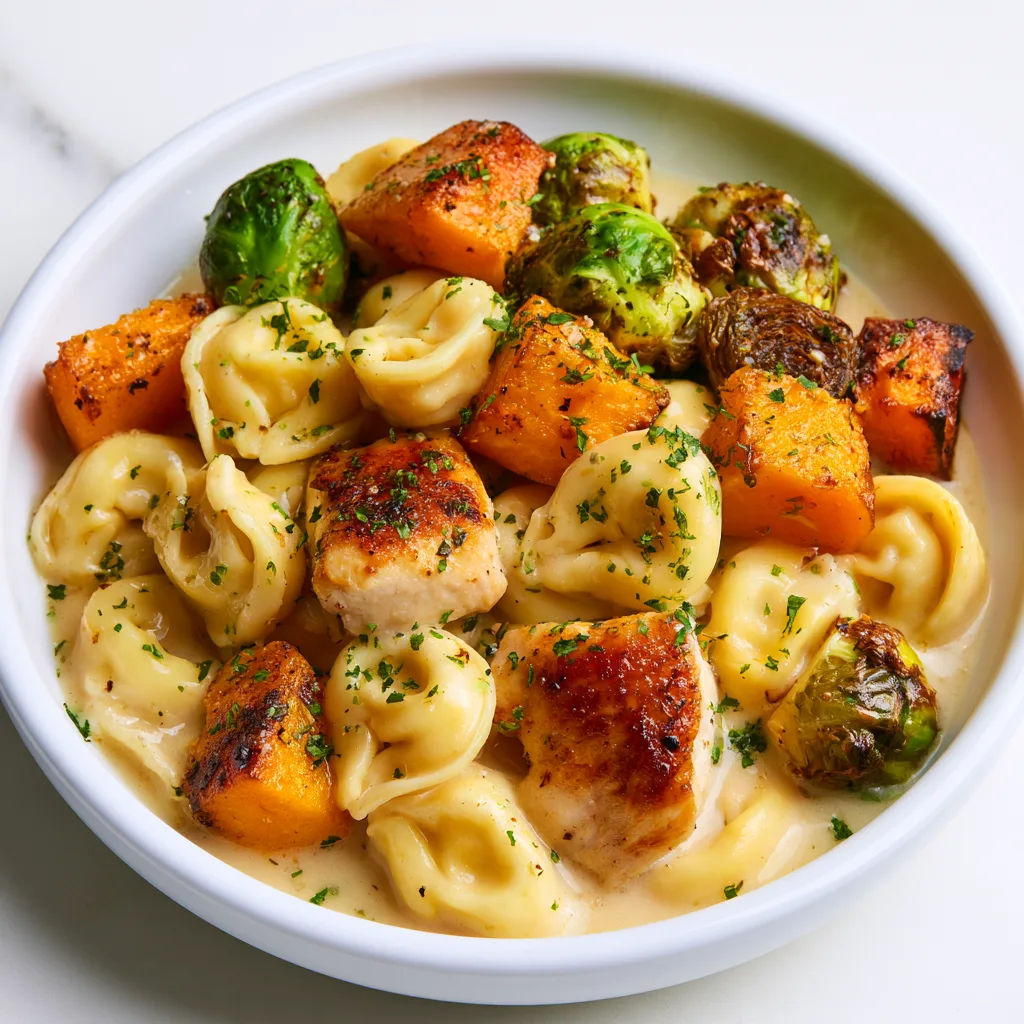
Why this fall tortellini dinner works
The ingredients contribute different qualities. Tortellini gives the meal a soft, cheesy center, squash brings sweetness, Brussels sprouts add a savory roasted edge, and chicken makes the bowl more substantial. Lemon supplies a small but useful bright finish. Because the pasta already contains cheese, the sauce needs only enough Parmesan to coat everything rather than a thick layer of melted cheese.
Cooked chicken is a deliberate convenience here. You can use carefully stored leftover roast chicken or a purchased cooked chicken, removing the skin and cutting the meat into manageable pieces. Raw chicken is not interchangeable at the final tossing stage. If you start with raw chicken, cook it separately until its thickest part reaches 165°F or 74°C, then shred or slice it before following the assembly steps.
Ingredients for four servings
- 12 ounces refrigerated cheese tortellini, cooked according to its package
- 3 cups peeled butternut squash, cut into approximately 3/4-inch cubes
- 1 pound Brussels sprouts, trimmed and halved; quarter very large sprouts
- 2 cups cooked shredded chicken
- 2 tablespoons olive oil, for the vegetables
- 3/4 teaspoon kosher salt, divided, plus more only if needed
- 1/2 teaspoon black pepper, divided
- 2 tablespoons unsalted butter
- 3 garlic cloves, minced
- 1 teaspoon finely chopped fresh sage, or 1/4 teaspoon dried rubbed sage
- 3/4 cup low-sodium chicken broth
- 1/2 cup finely grated Parmesan, plus an optional small amount for serving
- 1 teaspoon finely grated lemon zest
- 1 tablespoon lemon juice, with more available to taste
- Up to 1/2 cup reserved pasta cooking water, as needed
- 2 tablespoons chopped parsley, optional
The salt amount is a starting point because broth, cooked chicken, and tortellini vary in seasoning. Taste a spoonful of the combined dish before adding more. If using table salt instead of kosher salt, start with less because crystal size changes how much salt fits into a spoon. Parmesan is also salty, so do not season the sauce aggressively before the cheese goes in.
Choose a cheese tortellini whose package timing fits the preparation schedule. Frozen tortellini can work, but its cooking instructions may differ. Meat-filled pasta changes the overall flavor and may require different handling. This recipe uses plain cheese tortellini so the chicken and roasted vegetables remain the main flavors. Check labels if cooking for people with wheat, dairy, or egg restrictions.
Prepare the squash and Brussels sprouts
Use a stable cutting board and a sharp knife. Cut the squash into manageable sections, peel it, remove the seeds, and then cut the flesh into cubes. The exact shape is less important than keeping the pieces similar in size. Very large cubes may stay firm while smaller ones begin to collapse, which makes the roasting time harder to judge.
Trim only the dry ends from the Brussels sprouts and remove damaged outer leaves. Halve the sprouts through the stem so the layers stay together. Quarter any particularly large ones. Pat washed sprouts dry before adding oil; wet vegetables release extra steam on the tray and make it harder to develop the browned surfaces that give this dinner its flavor.
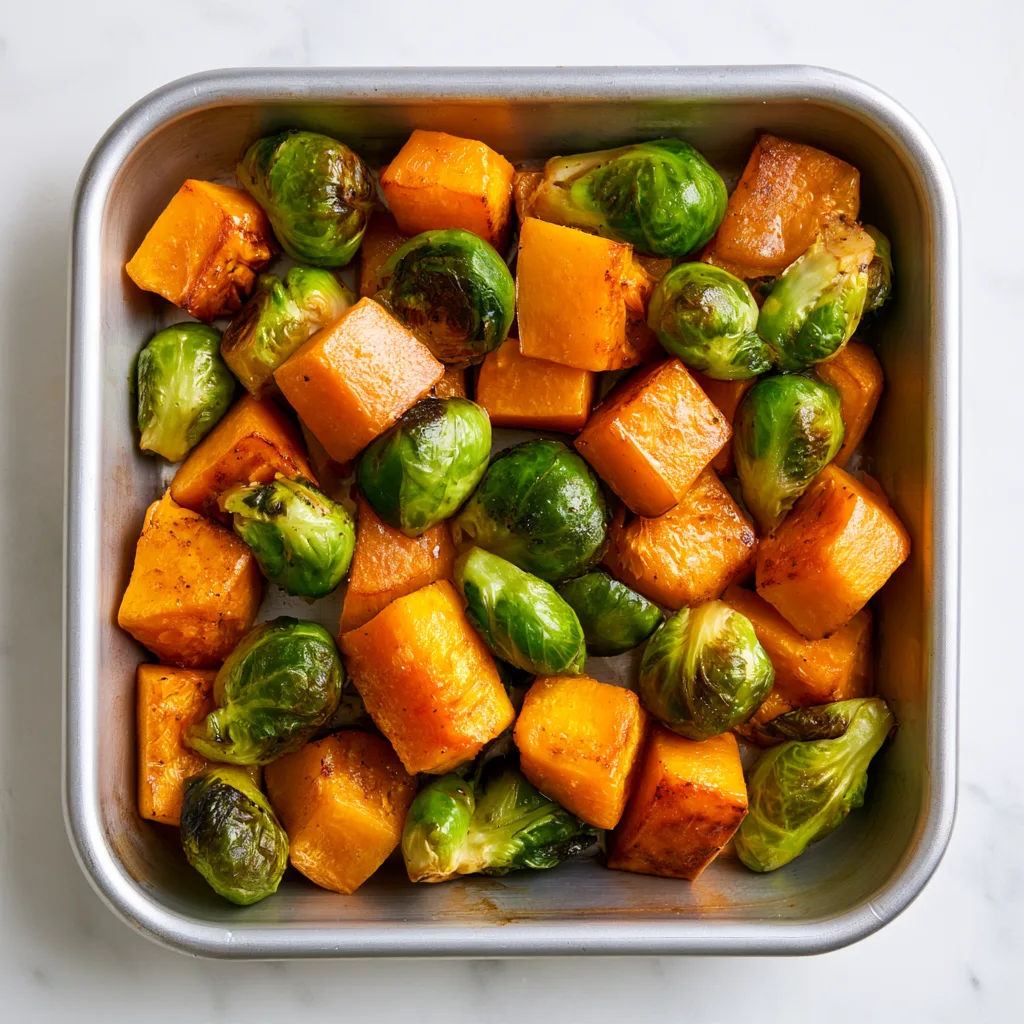
How to make autumn chicken tortellini
1. Roast the vegetables
Heat the oven to 425°F or 220°C. Toss the squash and Brussels sprouts with olive oil, about half the salt, and half the pepper. Spread them across a large rimmed baking sheet with the sprouts cut-side down where possible. Roast for twenty-five to thirty-five minutes, turning the squash once, until both vegetables are tender and browned in places. Use two trays if one would be crowded.
Roasting time is a guide rather than a guarantee. Check a squash cube with the tip of a knife; it should feel tender through the center. If the sprouts finish first, move them to a bowl while the squash continues cooking. This is preferable to leaving tender sprouts in the oven until their leaves become dark and dry.
2. Cook the tortellini
As the vegetables approach tenderness, bring a pot of water to a boil and cook the tortellini according to the package directions. Stir gently so the pieces do not stick together. Before draining, reserve a mug of the cooking water. Drain the pasta when it is just tender, and avoid leaving it sitting in the colander for a long period before assembly.
3. Make the light garlic sage sauce
Melt the butter in a wide skillet over medium-low heat. Add the garlic and sage, stirring for about thirty seconds until fragrant. Pour in the broth and let it warm at a gentle simmer. Add the cooked chicken and heat it through. If the garlic begins browning quickly before the broth goes in, lower the heat immediately rather than letting it scorch.
4. Bring the dinner together
Add the tortellini and roasted vegetables to the skillet. Toss carefully with a broad spoon so the stuffed pasta remains intact. Reduce the heat to low and add Parmesan a little at a time, along with a splash of reserved pasta water. Continue folding until the cheese melts and the sauce lightly coats the pasta. Add liquid gradually; you want a glossy coating, not a soup.
5. Finish and serve
Add lemon zest and lemon juice, then taste with all the components together. Adjust pepper and salt only if needed. Scatter parsley over the skillet and serve promptly. If the sauce tightens while you set the table, stir in another small splash of warm cooking water. Extra Parmesan belongs on individual portions so diners can choose how rich they want the bowl.
Troubleshooting the texture
If the sauce looks greasy, the cheese may have been added over heat that was too high or without enough liquid. Lower the heat and fold in warm pasta water, a tablespoon at a time. Do not try to fix the problem by adding a large handful of more cheese. A modest amount of liquid and gentle mixing usually gives you a better coating.
If the vegetables are watery, they may have crowded the tray or entered the oven while wet. Let visible moisture evaporate before combining them with the pasta. For the next batch, use a wider roasting area and dry the sprouts well. If squash is still firm, return it to the oven rather than expecting the final skillet toss to finish dense cubes evenly.
If the chicken tastes dry, it may have spent too long simmering. Already cooked chicken only needs to become thoroughly hot. Add it later in the sauce-making stage when using very lean breast meat, and keep a little extra broth available. Mixing cold shredded chicken into a fully finished dish can cool everything down, so warming it separately in the broth remains useful.
Autumn Chicken Tortellini with Butternut Squash & Brussels Sprouts
By Raelynn
Cheese tortellini, tender chicken, and roasted vegetables tossed in a light garlic sage butter and Parmesan sauce.
Ingredients
Instructions
- Roast the vegetables. Heat the oven to 425°F (220°C). Toss squash and Brussels sprouts with olive oil, about half the salt, and half the pepper. Spread on a large rimmed baking sheet, placing sprouts cut-side down. Roast for 25–35 minutes, turning the squash once, until tender and browned. Use two trays if crowded.
- Cook the tortellini. As the vegetables approach tenderness, cook tortellini according to package directions. Reserve a mug of pasta cooking water, then drain when just tender.
- Make the garlic sage sauce. Melt butter in a wide skillet over medium-low heat. Stir in garlic and sage for about 30 seconds. Add broth and bring to a gentle simmer. Add cooked chicken and heat through.
- Combine gently. Add tortellini and roasted vegetables. Reduce heat to low. Fold in Parmesan gradually with small splashes of reserved pasta water until the sauce lightly coats the pasta.
- Finish and serve. Add lemon zest and lemon juice. Taste and adjust salt and pepper only if needed. Sprinkle with optional parsley and serve promptly. Loosen a tightening sauce with a small splash of warm pasta water.
Variations that keep the method reliable
For a meatless version, replace chicken with drained white beans and use vegetable broth. The beans should enter the sauce gently so they warm without breaking apart. The cheese tortellini still contains dairy, so this substitution makes the recipe meatless rather than vegan. A genuinely dairy-free version requires different pasta and a different sauce, not simply removing the Parmesan garnish.
You can replace the Brussels sprouts with broccoli florets or use sweet potato instead of butternut squash. Keep the roasting times separate in your mind: broccoli may finish earlier, while sweet potato cubes may need a different window depending on their size. Mushrooms are another good addition, but roast or sauté them until their moisture evaporates before combining them with the sauce.
For a more pronounced sage flavor, add a little additional fresh sage to the butter, but increase it cautiously. The herb can dominate the mild pasta filling. A pinch of crushed red pepper adds gentle heat without changing the method. Walnuts can contribute crunch at serving, provided they suit the diners’ allergies and preferences; keep them out of portions intended for storage.
Serving suggestions and preparation ahead
This bowl already includes pasta, vegetables, and chicken, so a large additional side is unnecessary. A green salad with a tangy vinaigrette offers a fresh contrast. Bread is optional and useful mainly for catching the last sauce. Serve in warm shallow bowls so the roasted vegetables remain visible and the tortellini does not become compressed under a deep pile of toppings.
You can cube the squash, trim the sprouts, grate the cheese, and shred the chicken earlier in the day. Refrigerate prepared ingredients appropriately and keep raw ingredients separate from cooked chicken. Roast the vegetables near serving for their best edges. Cook the tortellini close to assembly because stuffed pasta loses its pleasant texture when it waits in sauce for too long.
Leftovers and reheating
Refrigerate leftovers promptly in shallow, covered containers and use within three to four days under proper refrigeration. Reheat individual portions with a splash of broth, stirring gently until thoroughly hot. Cooked leftovers should reach 165°F or 74°C when reheated. The pasta will soften somewhat, and the sprouts will lose crispness, so expect a softer second-day bowl rather than an identical freshly roasted result.
Freezing the complete dish is possible, but it is not the best choice for preserving tortellini texture. A more useful make-ahead approach is to freeze cooked chicken and roasted squash separately, then cook fresh tortellini and prepare the sprouts when needed. Label every container with its contents and date. This keeps the quick preparation benefit without storing the stuffed pasta in sauce for a long period.
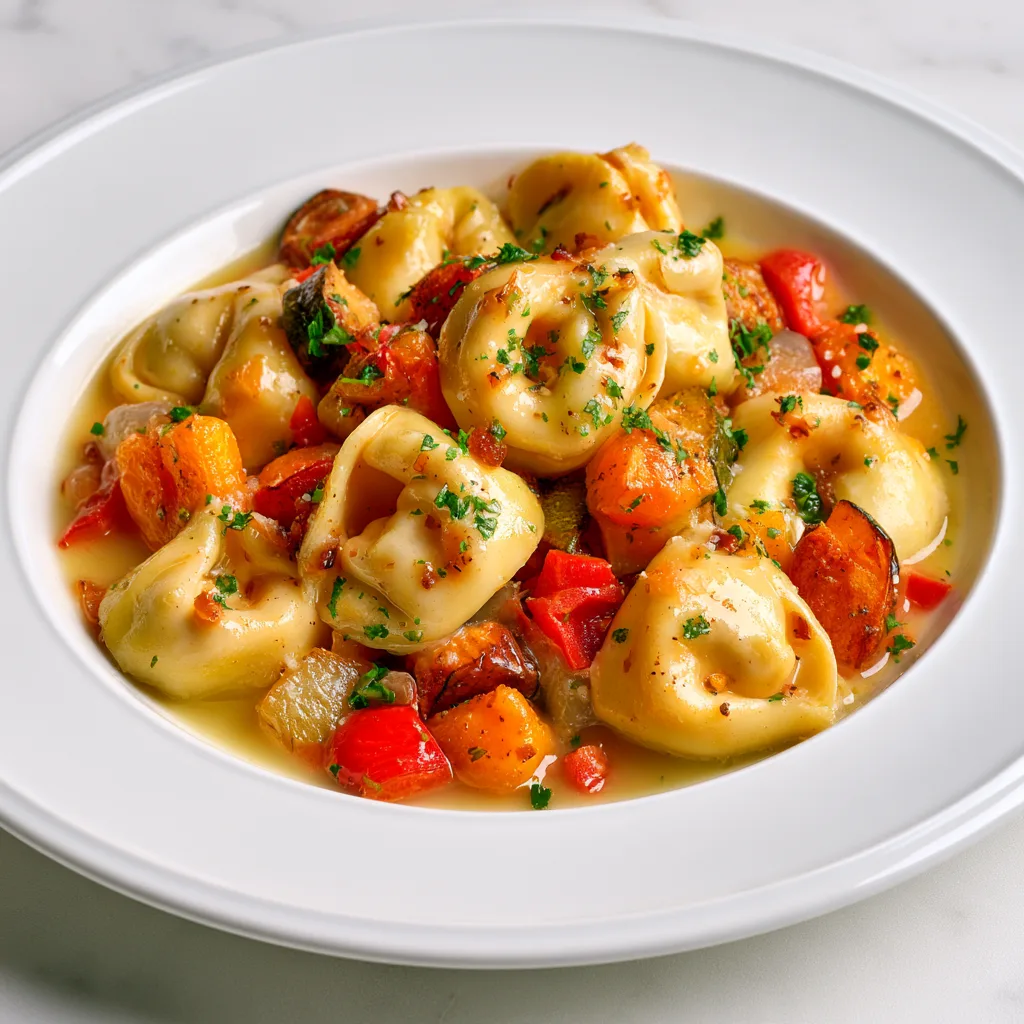
More cozy dinner recipes
For complete ingredient lists and detailed methods, explore Creamy tomato white bean tortellini soup, Apple sausage and cabbage skillet, Sheet pan balsamic chicken and pears. Choose the recipe that matches your available cooking time, and check the ingredient list before adding it to your weekly shopping plan.
You might also like these recipes
Easy Autumn Chicken Tortellini with Butternut Squash & Brussels Sprouts
Lemon Dill Chicken Orzo with Spinach – Easy One-Pot Dinner
Coconut Chicken Rice Bowls with Ginger and Lime