
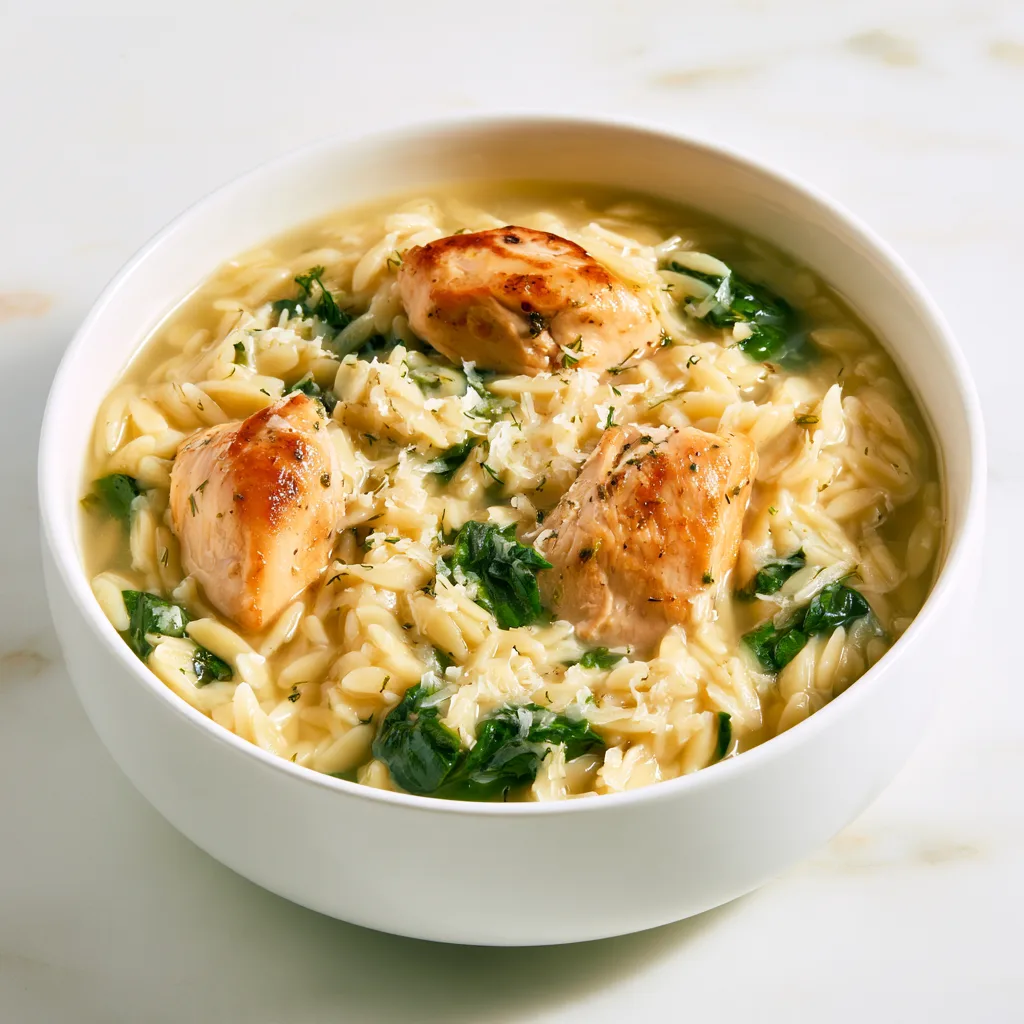
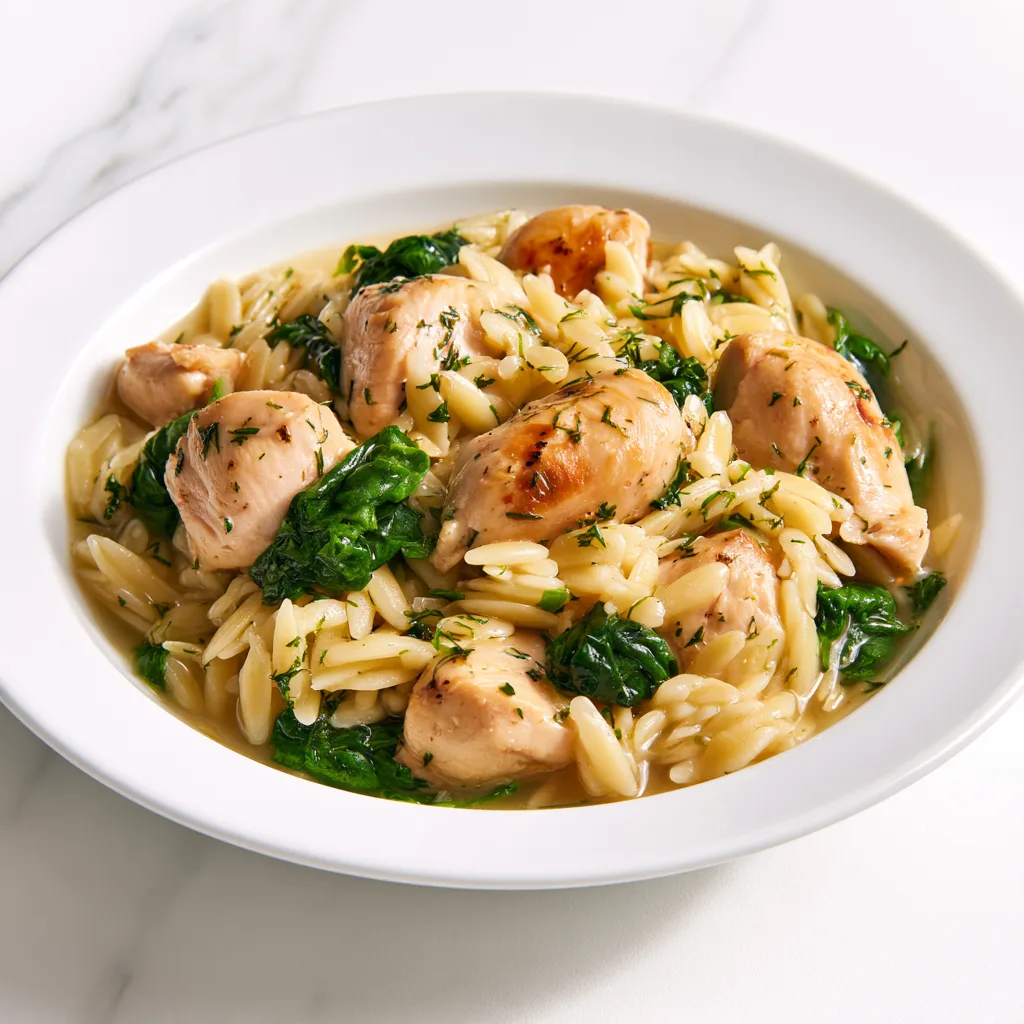
Lemon dill chicken orzo brings tender chicken, small pasta, and fresh spinach together in a bright, savory pan. The orzo cooks directly in broth, releasing enough starch to create a lightly creamy texture without a heavy cream sauce. Lemon zest supplies fragrance, while juice and dill give the finished dinner its fresh character.
This is a useful meal when you want something comforting that still feels lively. It has the spoonable appeal of a pasta bowl, but the flavor comes from a short ingredient list rather than a complicated sauce. A little Parmesan rounds out the broth, and the spinach folds through the pasta just before serving.
The order of cooking matters. Brown the chicken first, set it aside, and then soften the onion in the same pan. That sequence builds flavor while giving you control over the chicken’s cooking time. The pasta needs occasional stirring, so this is a dinner to make while you are already near the stove.
Jump to the recipe for the complete measurements and method.
Recipe Snapshot
Prep: 15 minutes · Cook: 25–30 minutes · Total: about 45 minutes · Serves: 4
Why This One-Pot Dinner Works
Orzo looks like rice, but it is wheat pasta. Its small shape lets it cook relatively quickly in a measured amount of broth. As you stir, the pasta releases starch that gives the liquid a silky finish. You are aiming for a loose, glossy coating rather than a thick sauce that stands in a mound.
Chicken contributes substance, and spinach provides a fresh contrast to the tender pasta. Dill pairs naturally with lemon, but neither needs to overpower the pan. Add those ingredients late so their aroma remains noticeable. If you enjoy another skillet supper, the turkey meatballs with mushroom gravy offer a richer direction for a different evening.
Ingredient Notes and Useful Substitutions
Choose boneless chicken thighs for a forgiving texture, or use breasts cut into similarly sized pieces. Keep the pieces around one inch so they cook evenly. Very tiny bits can become dry while the pasta finishes. Pat the meat dry, then season immediately before it goes into the hot skillet.
Use regular dry orzo and look at its package cooking range. Different brands absorb broth at different rates, so keep a little extra hot broth nearby. Whole-wheat orzo may require more liquid and a longer simmer. Rice, couscous, and large pasta shapes cannot replace orzo without changing the method.
Fresh dill gives this dish its clearest herbal flavor. Remove tough stems before chopping the feathery leaves. Baby spinach needs little preparation beyond washing and drying. If substituting mature spinach, chop it and remove coarse stems. Wash the lemon before zesting, and avoid taking the bitter white pith beneath its yellow skin.
Lemon Dill Chicken Orzo with Spinach Recipe
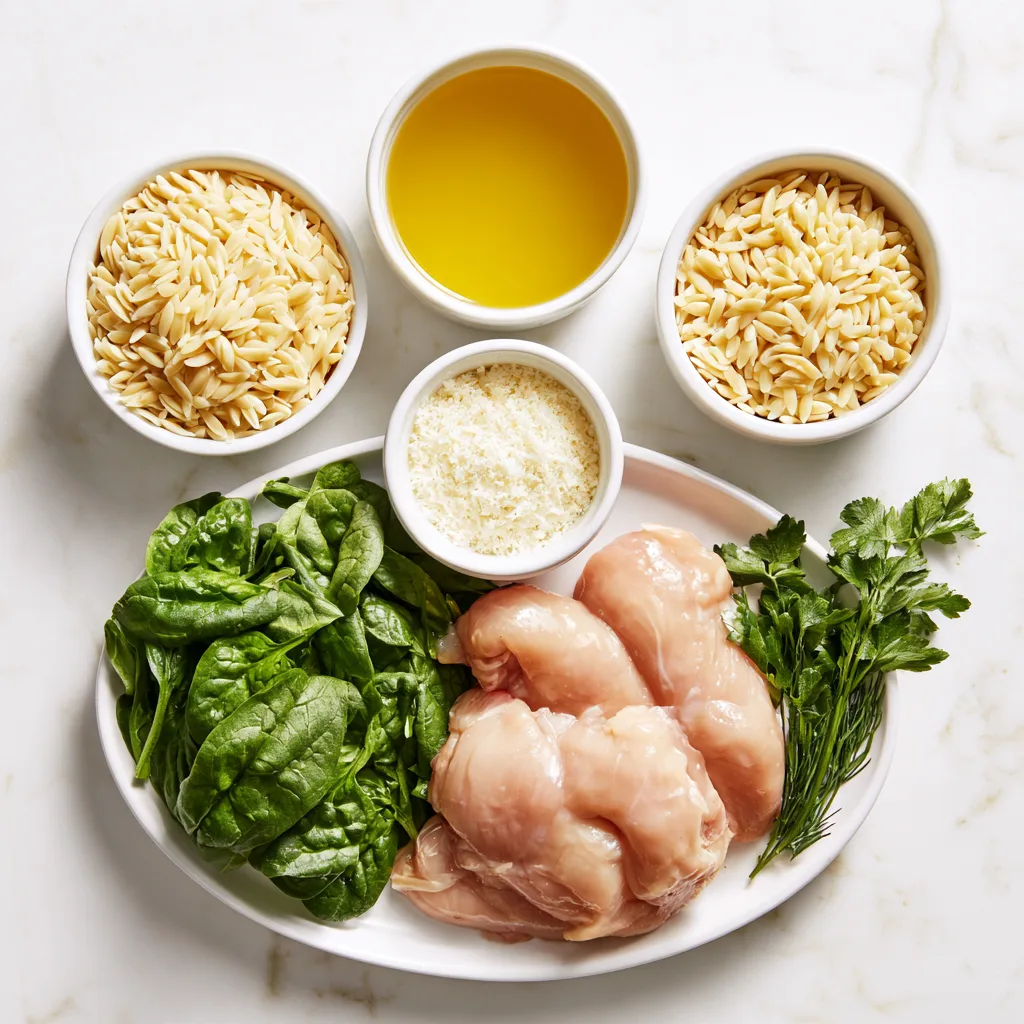
Ingredients
- 1¼ lb (565 g) boneless skinless chicken thighs or breasts, cut into 1-inch pieces
- 1 tablespoon olive oil
- ¾ teaspoon fine salt, divided, plus more to taste
- ¼ teaspoon black pepper
- 1 small yellow onion, finely diced
- 3 garlic cloves, minced
- 1 cup (200 g) dry orzo
- 2½ cups (600 ml) low-sodium chicken broth, plus extra as needed
- 1 teaspoon finely grated lemon zest
- 2 tablespoons lemon juice, plus more to taste
- 3 cups (90 g) baby spinach
- ⅓ cup (30 g) finely grated Parmesan
- 3 tablespoons chopped fresh dill
How to Make Lemon Dill Chicken Orzo with Spinach
1. Brown the chicken
Heat the oil in a wide, deep skillet over medium-high heat. Season chicken with ½ teaspoon salt and the pepper. Add in a single layer and cook for 5–7 minutes, turning occasionally, until lightly browned. The chicken may not yet be cooked through. Transfer it to a clean plate, leaving the flavorful browned bits in the pan.
2. Soften the aromatics
Reduce heat to medium. Add onion and cook for 4 minutes, stirring. If the pan looks dry, add a tablespoon of broth. Stir in garlic for 30 seconds, then add orzo and stir for another minute. Avoid letting the garlic turn dark; the goal is a fragrant base rather than a strongly toasted one.
3. Simmer the orzo
Pour in the measured broth and add the remaining ¼ teaspoon salt. Scrape the base with a wooden spoon to loosen browned bits. Bring to a gentle simmer, return chicken and accumulated juices, and partially cover. Cook for 10–15 minutes, stirring every few minutes, until the orzo is tender and the chicken reaches 165°F (74°C).
4. Adjust the consistency
If the skillet becomes dry before the pasta softens, add hot broth a few tablespoons at a time. If the orzo is tender but the mixture is soupy, simmer uncovered briefly. Check several pieces of pasta rather than relying on one spoonful from the edge. The final mixture should remain slightly loose because it thickens while resting.
5. Finish with greens and lemon
Reduce heat to low and fold in spinach until wilted. Remove from heat, then stir in Parmesan, zest, lemon juice, and dill. Rest for 2 minutes. Taste a spoonful containing both chicken and pasta, and adjust salt or lemon carefully. Serve promptly in shallow bowls.
Keeping the Pasta Tender and the Chicken Juicy
Use gentle bubbling rather than a vigorous boil. Hard boiling evaporates broth rapidly and can leave the pasta firm while the chicken overcooks. A wide skillet also loses liquid faster than a narrow pot. The additional broth is an adjustment tool, not an instruction to pour in a large amount at once.
Stir across the bottom, especially around the center of the skillet. Orzo can settle and stick there before the surface appears dry. Use a spoon that reaches the corners, and keep the lid slightly ajar during the main simmer. If a few grains begin catching, reduce the heat and add broth before scraping aggressively.
One-Pot Dinner · By Raelynn
Lemon Dill Chicken Orzo with Spinach
Tender chicken and orzo simmer together in broth, then finish with spinach, Parmesan, lemon, and fresh dill. Lightly creamy without a heavy cream sauce.
Ingredients for 4 servings.
Ingredients
Instructions
- Brown the chicken. Heat the oil in a wide, deep skillet over medium-high heat. Season the chicken with two-thirds of the measured salt and all the pepper. Cook in a single layer for 5–7 minutes, turning occasionally, until lightly browned. The chicken may not yet be cooked through. Transfer to a clean plate.
- Soften the aromatics. Reduce the heat to medium. Add the onion and cook for 4 minutes, stirring. If the pan looks dry, add a little broth. Stir in the garlic for 30 seconds, then add the orzo and stir for another minute.
- Simmer the orzo. Pour in the measured broth and add the remaining salt. Scrape up the browned bits. Bring to a gentle simmer, return the chicken and accumulated juices, and partially cover. Cook for 10–15 minutes, stirring every few minutes, until the orzo is tender and the chicken reaches 165°F (74°C).
- Adjust the consistency. If the pasta needs more liquid, add hot broth a few tablespoons at a time. If tender but soupy, simmer uncovered briefly. Keep the mixture slightly loose because it thickens as it rests.
- Finish with spinach, lemon, and dill. Reduce the heat to low and fold in the spinach until wilted. Remove from the heat, then stir in the Parmesan, lemon zest, lemon juice, and dill. Rest for 2 minutes, taste, and adjust salt or lemon as needed. Serve promptly.
Balancing Lemon, Dill, and Parmesan
Lemon zest and lemon juice do different jobs. Zest supplies the aroma of the peel without much acidity, while juice changes the flavor balance. Measure them separately rather than squeezing an entire large lemon into the pan. Start with the listed quantity, then add a teaspoon more only after tasting the finished pasta.
Parmesan brings salt as well as savory flavor. Finely grate it so it dissolves readily in the warm liquid. Add the cheese off the heat to reduce clumping, and avoid combining cheese with a rapidly boiling pan. Dill should be the final herb addition; a prolonged simmer dulls the fresh finish that makes this recipe distinctive.
Serving Ideas for a Complete Meal
A crisp cucumber salad, sliced tomatoes, or simple dressed greens work well beside this pasta. Choose something cool and crunchy to contrast with the warm, soft orzo. Bread is optional because the pasta already provides a substantial base. Serve lemon wedges separately for people who enjoy a sharper finish.
For a family table, bring the skillet out only if its handle and base can rest safely on a heatproof mat. Otherwise, transfer the orzo to a warmed serving bowl. A little dill on top adds freshness without changing the seasoning. For another gentle comfort meal, try the slow cooker chicken barley soup on a day when you prefer a hands-off simmer.
Make-Ahead, Storage, and Reheating
Dice the onion, mince the garlic, and measure the broth before starting. Store prepared chicken separately from vegetables in the refrigerator, and cook it within the time recommended on its package. Grate the cheese ahead if convenient, but chop dill shortly before serving for its best aroma.
Refrigerate leftovers in shallow covered containers within two hours and use within 3–4 days. The orzo absorbs sauce as it sits, so add a splash of water or broth when reheating. Warm gently, stirring, until steaming throughout; leftovers containing chicken should reach 165°F (74°C). Add a little fresh dill after reheating rather than cooking the stored herbs harder.
Easy Variations
Replace half the spinach with thawed peas, adding them during the final few minutes of the pasta simmer. Their sweetness works well with dill. For a dairy-free pan, omit Parmesan and use a little extra lemon zest and olive oil at the finish. The texture will be less creamy, so keep the broth adjustment modest.
To cook two servings, halve the ingredients and choose a smaller skillet so the liquid does not evaporate too quickly. For a larger batch, brown chicken in stages. Doubling the quantity does not automatically double the pasta’s cooking time; tenderness, broth level, and the chicken’s temperature remain your useful checks.
A Useful First-Batch Check
Before you serve the whole skillet, taste one piece of orzo and one piece of chicken together. Pasta absorbs broth and salt differently from chicken, so tasting sauce alone does not show the final balance. Look for a tender center in the pasta without a hard white core. Then check a thicker chicken piece with a thermometer rather than assuming every piece finished simultaneously.
Keep a note of the broth adjustment your pan needed. A broad skillet on a strong burner often requires a few extra spoonfuls, while a deeper pot may retain more liquid. That observation helps you repeat the texture next time without changing the core ingredients.
Frequently Asked Questions
Can I use cooked rotisserie chicken?
Yes. Cook the onion and orzo first, then stir in about two cups of shredded cooked chicken during the last few minutes. Heat it thoroughly without simmering it for the entire pasta stage. Use the remaining seasonings cautiously because rotisserie chicken can already contain substantial salt.
Why is my orzo sticky?
It may have absorbed too much broth or sat for too long before serving. Stir in a little hot broth until the pasta loosens. Sticky does not always mean overcooked; a lack of remaining liquid can make tender pasta look thick. Serve immediately after the short rest.
Can I use dried dill?
Use about one teaspoon in place of the fresh dill, adding it with the broth so it can hydrate. The flavor will be less fresh and more concentrated. Do not replace three tablespoons of fresh dill with the same volume of dried herb.
Does this recipe need cream?
No. The starch from orzo and the small Parmesan finish create the intended texture. Adding cream is optional, but it changes the balance. Try the original broth-based version first, especially if you want the lemon and dill to remain noticeable.
More Recipes to Try
Pair your weekly menu with broccoli cheddar brown rice bake, or browse Quick & Easy Meals for another straightforward supper.
A Recipe Worth Keeping
Lemon dill chicken orzo is most rewarding when you keep the pasta loose, check the chicken carefully, and finish with fresh herbs after the heat goes off. Those simple decisions give you a comforting bowl with a bright flavor that works well beyond one season.
You might also like these recipes
Coconut Chicken Rice Bowls with Ginger and Lime
Healthy Beef and Potato Bake with Broccoli and Cheddar
Asian-Style Ground Beef Lettuce Wraps with Sesame Carrots