
Jump to the recipe for the full ingredient amounts and method.
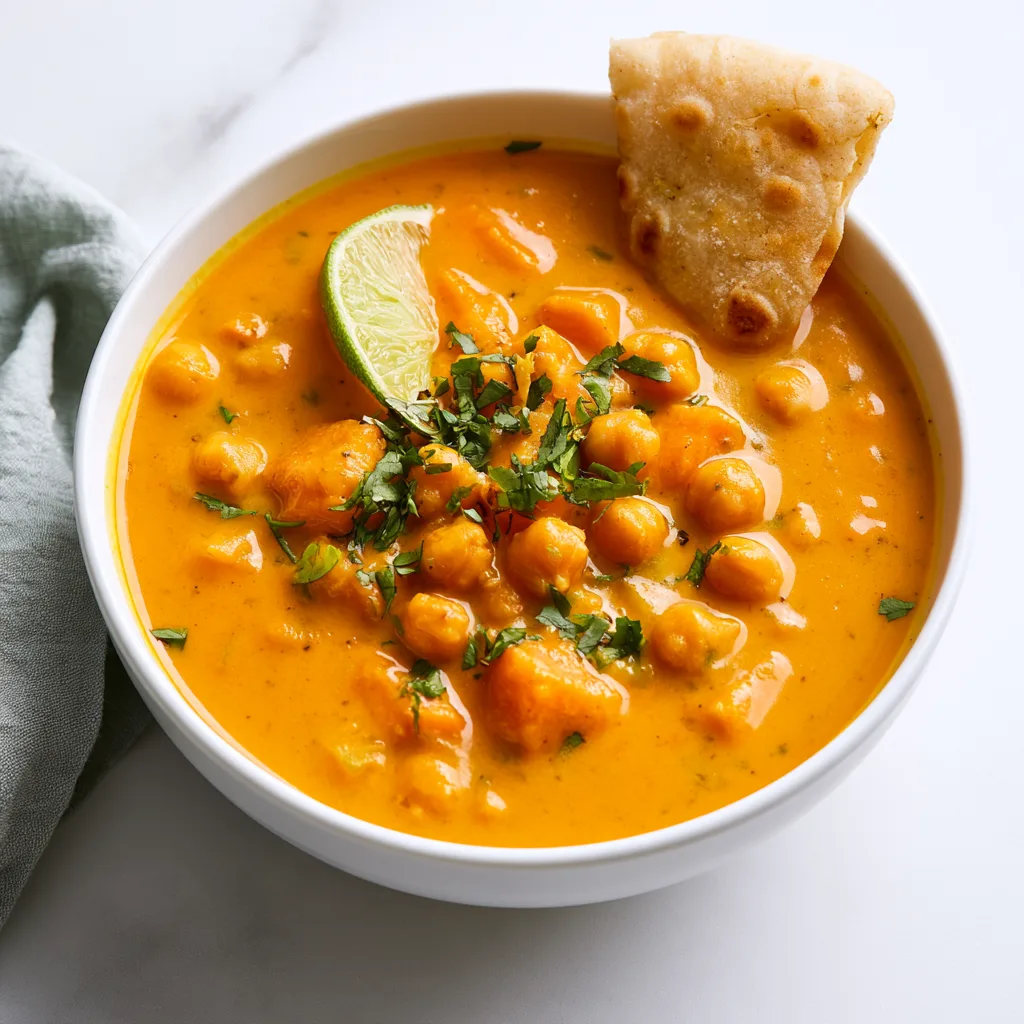
Creamy carrot ginger chickpea soup blends sweet carrots, fresh ginger, chickpeas, and coconut milk into a warming meatless dinner. Lime brightens the finish, while cumin provides a savory background. The vegetables simmer directly in broth, so there is no roasting step and only one main pot to wash.
Recipe Snapshot
Prep: 15 minutes. Cook: 30 minutes. Total: 45 minutes. Servings: 4.
Ingredient Notes and Substitutions
Oil
Warm before adding onion so the first stage softens aromatics rather than boiling them.
Onion
Small pieces soften quickly and provide a mellow background under the carrots.
Carrots
Use thin, even slices so they become fully tender within the simmering time.
Ginger and garlic
Grate ginger finely to avoid fibrous pieces. Cook briefly without scorching.
Spices
Measured spices deepen the flavor. Stir briefly in oil and add broth before they darken.
Chickpeas
Beans provide substance and thicken the blended soup. Reserve a few for garnish if desired.
Broth
Adjust after blending rather than making the soup too thin at the beginning.
Coconut milk
Stir the can before measuring. Sweetened coconut drinks are different and unsuitable here.
Finish
Add lime after blending and taste before increasing salt or acidity.
Creamy Carrot Ginger Chickpea Soup Recipe
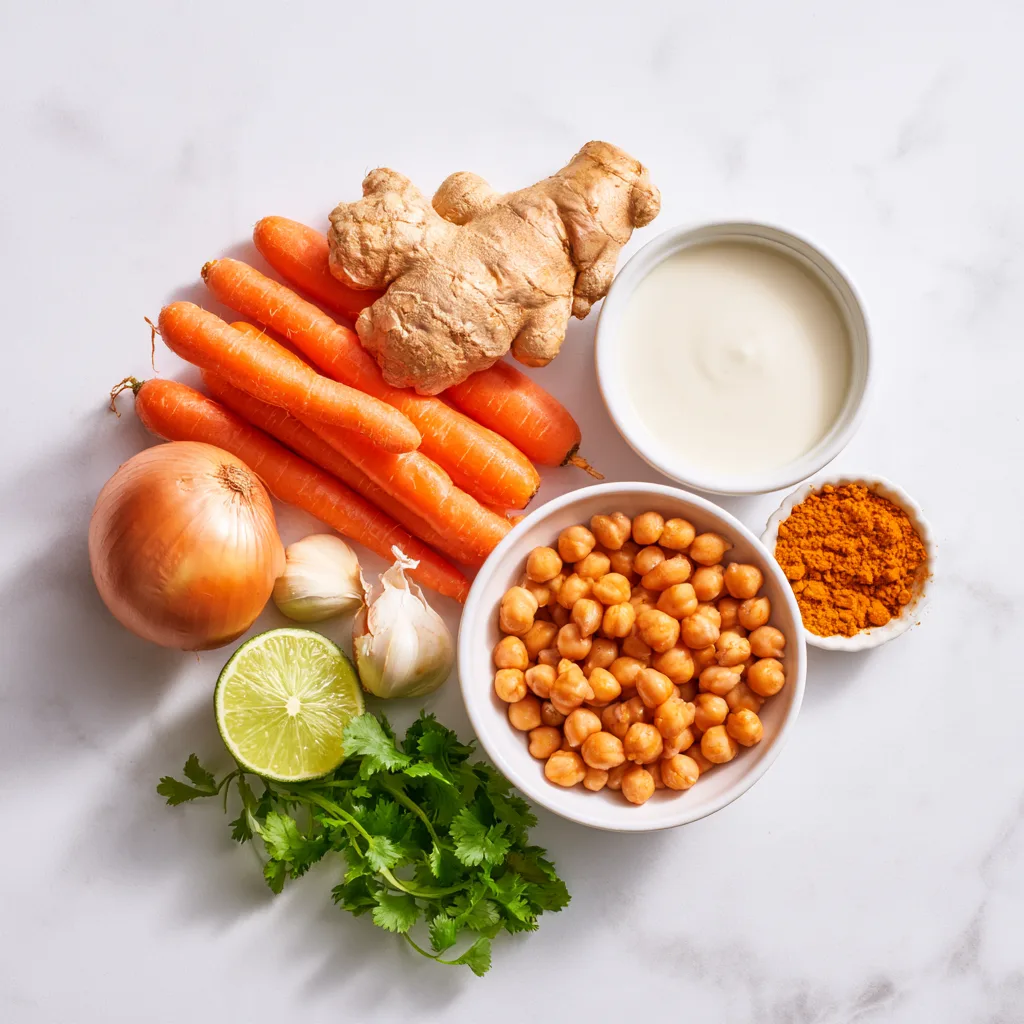
Ingredients
- 1 tablespoon olive oil
- 1 medium onion, diced
- 1½ lb (680 g) carrots, peeled and sliced
- 1 tablespoon grated ginger and 2 minced garlic cloves
- 1 teaspoon cumin and ¼ teaspoon turmeric
- 1 can chickpeas, 15 oz (425 g), drained and rinsed
- 3 cups (720 ml) low-sodium vegetable broth
- ¾ cup (180 ml) unsweetened canned coconut milk
- 1 tablespoon lime juice, ½ teaspoon salt, ¼ teaspoon pepper
Step-by-Step Instructions
1. Soften the base
Warm oil in a soup pot. Cook onion for 5 minutes. Stir in ginger, garlic, cumin, and turmeric for 30 seconds until fragrant. Add a splash of broth if the pan begins sticking.
2. Simmer
Add carrots, chickpeas, and broth. Partly cover and simmer 20–25 minutes until every carrot slice is soft. Stir occasionally and check thicker pieces before blending.
3. Blend
Remove from heat and blend carefully. Return to low heat and stir in coconut milk. Add broth if too thick. Avoid vigorous boiling once the coconut milk is added.
4. Finish
Stir in lime, salt, and pepper to taste. Serve with cilantro, reserved chickpeas, or toasted pumpkin seeds, keeping crunchy toppings separate until serving.
Carrot Sweetness and Savory Balance
Carrots are naturally sweet, so the soup needs a savory base to feel like dinner rather than a vegetable purée with little depth. Onion, garlic, cumin, and broth provide that base. Cook the onion until soft before adding the carrots, and allow the spices a brief moment in the oil. Their aroma should become noticeable without turning dark. Tomatoes are not included because the intended flavor is carrot and ginger; adding them would change both the acidity and the color of the bowl.
Carrot age and thickness can affect cooking time. Very large older carrots may be firmer than small fresh ones, even when cut similarly. Check a few pieces from different parts of the pot before blending. They should yield easily to a fork. If some remain firm, continue simmering with enough liquid to prevent sticking. A blender cannot fully compensate for undercooked carrots; it may reduce them to small gritty fragments rather than the smooth texture this soup is designed to have.
Choosing and Grating Fresh Ginger
Fresh ginger should feel firm and have a lively aroma when cut. Peel with a spoon if the skin is thin, then grate finely. Work across the fibers and leave behind any particularly tough stringy portion. One measured tablespoon gives noticeable warmth without making the soup aggressively spicy. If your ginger is unusually strong, you can begin with a little less and assess the flavor after simmering. Avoid simply chopping large pieces because fibers may remain noticeable even after blending.
Ground ginger creates a different result rather than an identical replacement. It has a warmer, less fresh character, so begin with the smaller amount mentioned in the FAQ. Do not use the same tablespoon measurement for ground ginger. For people who enjoy a strong ginger finish, offer a little fresh grated ginger in a separate garnish rather than increasing the entire pot. This gives flexibility without forcing every bowl to have the same sharpness. Lime and ginger both bring brightness, but their roles are distinct.
Making Coconut Milk Work in the Soup
Canned coconut milk can separate into a thick layer and a thinner liquid. Stir the contents before measuring so the recipe receives a balanced portion of both. Adding only the thick top produces a richer soup than intended, while using only the watery part gives a lighter result. The measured amount softens the ginger and rounds out the carrot flavor. More is not automatically better: a full can may shift the main taste toward coconut instead of vegetables.
Coconut milk is added near the finish after the vegetables are tender and the soup has been blended. That sequence makes thickness easier to judge. Warm gently and stir until uniform, then add lime. If the soup is thicker than you prefer, use broth to loosen it rather than additional coconut milk. For a dairy version, cream can replace it, but the flavor will become less tropical. For a lighter version, leave it out and use a little extra broth. Neither variation needs a flour thickener.
Chickpeas and Garnish Choices
Chickpeas supply body and make the bowl more substantial. Drain them thoroughly before adding, and give them time to warm with the carrots so their flavor blends into the broth. For a very smooth soup, blend longer in short stages and add enough liquid to keep the mixture moving. Some blenders leave a slightly textured finish from chickpea skins; that is acceptable for a home-style bowl. If smoothness matters most, inspect the soup before returning it to the heat.
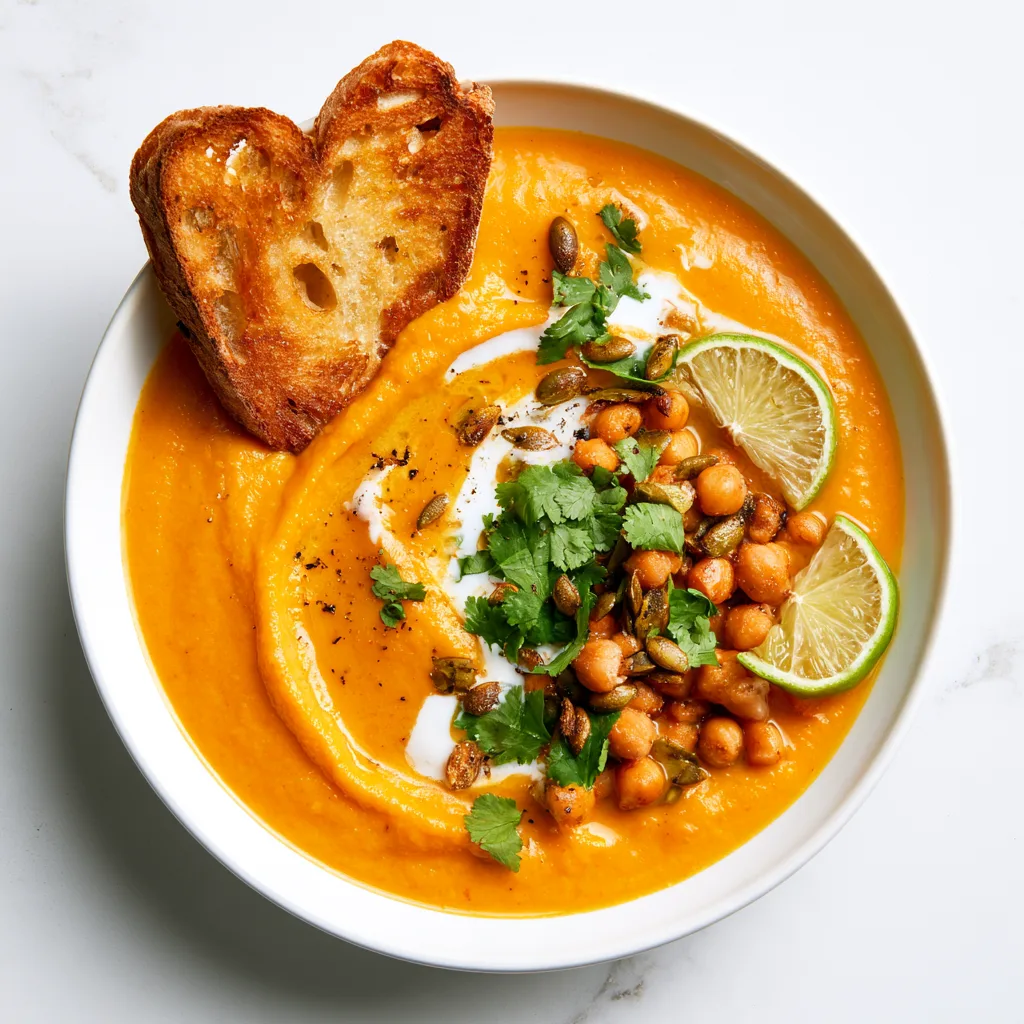
A few whole chickpeas on top make the ingredient visible and provide contrast. Toasted pumpkin seeds add crunch, but use them sparingly so they do not dominate a spoonful. Cilantro gives a fresh herbal finish if you like it; parsley is a milder alternative. Add coconut-milk swirls only after the soup is in the bowl and use a small spoon rather than a large pour. Toast or rice can make the meal fuller, while a crisp cucumber salad provides a different texture beside the creamy soup.
Tips for the Best Results
Carrots must be tender before blending. Grate ginger finely. Coconut milk should enrich rather than hide the vegetables, so measure it instead of using the full can.
Variations
Use cream instead of coconut milk for a dairy version, or omit it and add broth for a lighter bowl. Chili flakes provide heat. Cooked red lentils can supplement chickpeas but increase thickness.
PrintCreamy Carrot Ginger Chickpea Soup – Easy One-Pot Dinner
- Total Time: 45 minutes
- Yield: 4 servings 1x
- Diet: Vegan
Description
Creamy carrot ginger chickpea soup combines sweet carrots, fresh ginger, chickpeas, coconut milk, cumin, and lime in an easy one-pot meatless dinner.
Ingredients
1 tablespoon olive oil
1 medium onion, diced
1½ lb (680 g) carrots, peeled and sliced
1 tablespoon fresh ginger, grated
2 garlic cloves, minced
1 teaspoon ground cumin
¼ teaspoon ground turmeric
1 can (15 oz / 425 g) chickpeas, drained and rinsed
3 cups (720 ml) low-sodium vegetable broth
¾ cup (180 ml) unsweetened canned coconut milk
1 tablespoon fresh lime juice
½ teaspoon salt
¼ teaspoon black pepper
Cilantro, chickpeas, or toasted pumpkin seeds for serving, optional
Instructions
1. Warm the olive oil in a large soup pot over medium heat. Add the onion and cook for about 5 minutes until softened. Stir in the ginger, garlic, cumin, and turmeric and cook for 30 seconds until fragrant.
2. Add the sliced carrots, chickpeas, and vegetable broth. Bring to a gentle simmer, partially cover, and cook for 20–25 minutes until the carrots become completely tender.
3. Remove the pot from the heat. Carefully blend the soup with an immersion blender until smooth. Alternatively, blend safely in batches according to your countertop blender’s hot-liquid instructions.
4. Return the soup to low heat and stir in the coconut milk. Add a little additional broth if you prefer a thinner consistency.
5. Stir in the lime juice, salt, and black pepper. Taste and adjust the seasoning as needed. Serve warm with cilantro, reserved chickpeas, or toasted pumpkin seeds.
Notes
Cut the carrots into evenly sized slices so they cook at the same rate.
Make sure the carrots are completely tender before blending for the smoothest texture.
Grate fresh ginger finely to prevent noticeable fibers in the finished soup.
Stir canned coconut milk before measuring it.
Add extra vegetable broth gradually if the blended soup becomes too thick.
Keep crunchy garnishes separate until serving.
- Prep Time: 15 minutes
- Cook Time: 30 minutes
- Category: Soup
- Method: Stovetop
- Cuisine: American
Nutrition
- Serving Size: 1 bowl
- Calories: Approximately 330
- Sugar: Approximately 12 g
- Sodium: Approximately 620 mg
- Fat: Approximately 15 g
- Saturated Fat: Approximately 7 g
- Unsaturated Fat: Approximately 7 g
- Trans Fat: 0 g
- Carbohydrates: Approximately 43 g
- Fiber: Approximately 10 g
- Protein: Approximately 10 g
- Cholesterol: 0 mg
Why the Order of Cooking Matters
A good soup develops flavor in stages. Start with the onion in oil rather than immediately pouring broth over raw vegetables. That first stage softens its sharpness and creates a sweeter background. Garlic and ground spices need a much shorter time because they can burn before the onion is tender. Once the aromatics smell fragrant, the liquid stops the frying stage and starts the simmer.
After adding broth, use a steady, gentle simmer. A rolling boil drives off liquid quickly and makes the result harder to control. Stir along the bottom periodically, especially once beans or purée begin thickening the pot. Keep the lid slightly ajar if you want modest reduction, and add small amounts of liquid when the ingredients need more time to soften.
Deciding How Much to Blend
Texture is a choice rather than an all-or-nothing decision. Blending part of the soup creates body while leaving enough whole ingredients to identify the dish. Before blending, remove any toppings or whole portions that you want to reserve. Start with less blending, inspect the result, and continue only if you want a smoother bowl.
An immersion blender is convenient because the soup remains in the pot. Keep its head submerged and use short pulses to avoid splashing. For a countertop blender, follow the manufacturer’s hot-liquid instructions, work in small batches, and avoid sealing hot steam under a closed lid. Let the soup cool somewhat before transferring it and use a ladle instead of lifting a heavy pot.
Managing Thickness and Seasoning
Judge consistency after the ingredients are fully tender. A soup can look thin early in cooking and thicken noticeably when vegetables soften or beans release starch. Add broth a little at a time if necessary, stir thoroughly, and check again. A measured adjustment is easier to repeat than an unplanned large pour.
Taste after blending because the flavor becomes more evenly distributed. Salt, acidity, and heat do different jobs: salt supports the savory base, lemon or lime makes it brighter, and chili supplies warmth. Add one adjustment at a time rather than changing all three together. Taste a spoonful at a comfortable eating temperature so it reflects the finished bowl.
Meal Preparation and Leftover Portions
Prepare chopped vegetables in advance and keep them covered in the refrigerator. Drain and rinse canned beans before you begin cooking, and measure spices into a small dish. This is particularly helpful when several aromatics go in quickly. Keep garnishes separate so they retain their texture when the main soup is reheated.
For leftovers, transfer soup to shallow containers and refrigerate promptly rather than leaving a large pot on the stove. Warm the amount you plan to eat and stir as it heats so the center and edges warm evenly. Thick soup may need a little water or broth to regain its original texture. Add fresh herbs, crunchy toppings, and finishing citrus after reheating.
Serving a Soup as a Complete Meal
A generous bowl can be served with bread, toast, or a simple salad. Think about contrast: a smooth soup benefits from something crisp, while a chunky soup often needs only a light garnish. Place bread on the side instead of soaking every piece in the bowl before serving. That gives each person control over the texture.
For a casual gathering, serve the soup from a warm pot and set toppings in small bowls. Offer citrus wedges and pepper separately so guests can adjust their portions. If adding yogurt, swirl it into individual bowls after they leave the heat. Avoid keeping dairy garnishes in a boiling pot, where they can lose their smooth texture.
Frequently Asked Questions
Can I use ground ginger?
Begin with half a teaspoon; its flavor is warmer and less fresh.
Why is the soup grainy?
Carrots may be undercooked or the soup may need extra blending and a little liquid.
What toppings work?
Cilantro and toasted pumpkin seeds provide fresh and crunchy contrasts.
More Recipes to Try
Slow Cooker Beef and Sweet Potato Chili – Hearty Fall Dinner and Creamy Tomato White Bean Tortellini Soup – Easy Cozy Dinner offer additional ideas for your next meal.
You might also like these recipes
Creamy Carrot Ginger Chickpea Soup – Easy One-Pot Dinner
Sheet Pan Balsamic Chicken and Pears – Easy Fall Dinner
Broccoli Cheddar Brown Rice Bake – Cozy Family Dinner