
Transform an ordinary dessert occasion into something serene with this Lavender Vanilla Cheesecake with Shortbread Crust. Combining the comforting warmth of aromatic vanilla with the subtle, floral elegance of culinary lavender, this elegant dessert delivers a balanced and sophisticated flavor profile. Encased in a buttery, crumbly shortbread foundation, the velvety cream cheese filling melts delicately on the tongue. It offers a wonderful centerpiece for afternoon tea gatherings, spring celebrations, or quiet evenings at home when you want a truly special homemade treat that feels refined yet comforting.
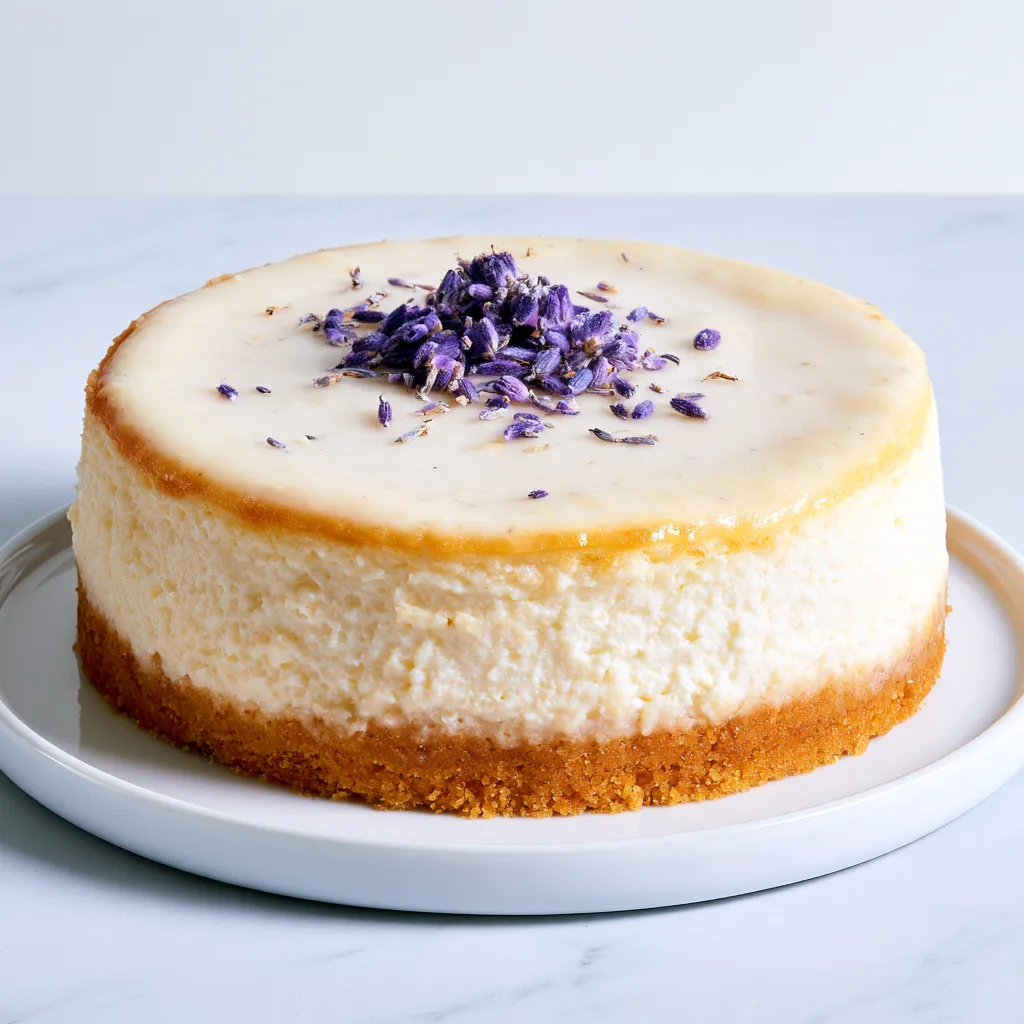
Recipe Snapshot
- Prep Time: 35 minutes
- Bake Time: 65 to 80 minutes
- Cooling & Chilling: Oven rest 1 hour, room temperature cool 1 hour, chill at least 6 hours (overnight preferred); total time at least 10 hours.
- Yield: Ten slices (9-inch springform pan)
- Equipment: 9-inch springform pan, mixing bowls, electric mixer, fine-mesh strainer, separate pan for oven steam.
Why This Recipe Works
This recipe achieves its signature velvety texture and harmonious flavor balance through precise technique and careful ingredient pairing. Steeping dried culinary lavender directly in heavy cream gently extracts its fragrant floral essence without introducing an overpowering soapy quality. Incorporating sour cream into the full-fat brick cream cheese base adds a subtle tang while ensuring a luxuriously smooth crumb. Furthermore, baking the cheesecake with a separate pan of hot water on a lower rack adds humidity. It may help limit surface drying, although gentle mixing and avoiding overbaking also matter. The center should retain a small cohesive wobble.
Ingredient Selection Notes
Lavender Buds: You must use dried culinary lavender buds that are explicitly labeled food-grade, never ornamental varieties or essential oils, to ensure a safe and pleasant herbal flavor.
Cream Cheese: Use full-fat brick cream cheese rather than whipped or tub varieties, ensuring it is thoroughly softened to room temperature for a lump-free batter.
Shortbread: Shortbread cookies provide a rich, sandy crust that complements the vanilla filling. Crush them finely so the base presses into an even layer.
Dairy and Binding: Full-fat sour cream and fresh room-temperature eggs bind the structure securely while maintaining a tender, rich mouthfeel, and a single tablespoon of all-purpose flour stabilizes the mixture against cracking.
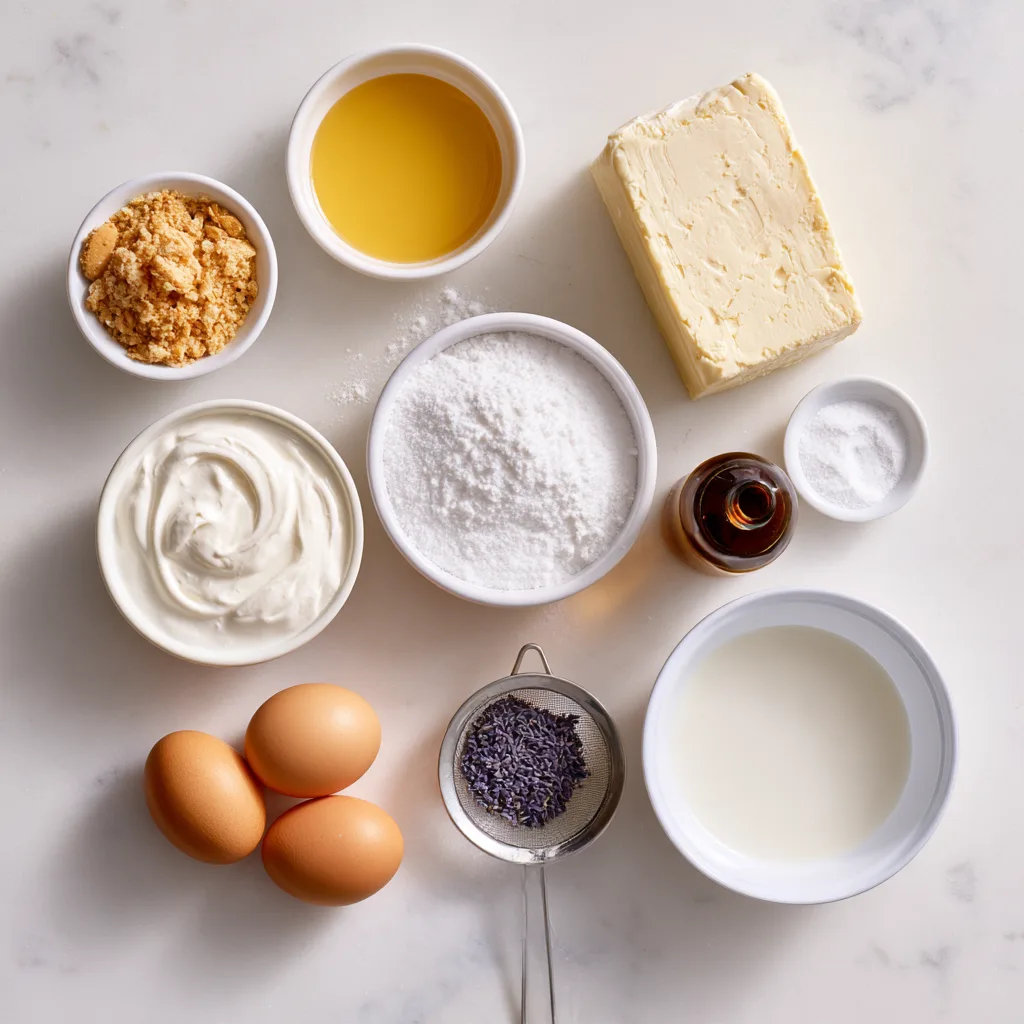
Lavender Vanilla Cheesecake with Shortbread Crust
Yield: Ten slices. Pan size: 9-inch springform pan. Total time: At least 10 hours.
Ingredients
- Crust: 1.5 cups (180g) shortbread crumbs, 3 tbsp (42g) melted butter
- Filling: 24 oz (680g) full-fat brick cream cheese (softened), 3/4 cup (150g) sugar, 3/4 cup (180g) sour cream, 3 large room-temperature eggs, 2 tsp vanilla extract, 1 tbsp all-purpose flour
- Infusion: 1/3 cup (80ml) heavy cream, 1 tsp dried culinary lavender buds (explicitly food-grade, not ornamental or oils)
Instructions
- Prepare the oven and pan. Preheat the oven to 350°F (175°C). Line the base of a 9-inch springform pan with parchment. Place a separate metal pan on a lower oven rack for hot water; the cheesecake will sit on the middle rack and will not be submerged.
- Make the crust. Combine 1.5 cups (180g) of shortbread crumbs with 3 tbsp (42g) of melted butter until the mixture resembles wet sand. Press this mixture firmly and evenly into the bottom of the prepared springform pan. Bake on the middle rack for 10 minutes, then remove and let it cool while you adjust the oven temperature to 325°F (160°C).
- Infuse the cream. Heat 1/3 cup (80ml) of heavy cream in a small saucepan until it begins to steam. Remove from heat, stir in 1 tsp of food-grade dried culinary lavender buds, and let steep for 10 minutes. Strain the cream through a fine mesh strainer, pressing gently on the buds to extract maximum liquid. Top up the strained cream back to a full 1/3 cup with additional fresh heavy cream if any was lost during straining, then allow it to cool.
- Mix the filling. In a large bowl, beat 24 oz (680g) of softened full-fat brick cream cheese and 3/4 cup (150g) of sugar on low speed until completely smooth and creamy. Mix in 3/4 cup (180g) of sour cream, 2 tsp of vanilla extract, 1 tbsp of flour, and the cooled lavender cream until just combined. Add the 3 large room-temperature eggs one at a time, mixing on low speed only until incorporated and avoiding excess air incorporation.
- Bake the cheesecake. Pour the filling over the cooled shortbread crust. Carefully pour hot water into the separate metal pan on the lower rack. Place the springform pan on the middle rack above it. Keep the two pans separate and do not pour water into the cheesecake pan. Bake on the middle rack at 325°F (160°C) for 65 to 80 minutes. The cheesecake is done when the edges are set and the center 2-inch circle wobbles cohesively with no liquid wave sloshing around.
- Cool and chill. Turn off the oven, crack the oven door ajar, and let the cheesecake rest inside for 1 hour. Remove it to a wire cooling rack and let it cool at room temperature for another hour. Refrigerate the cheesecake within 2 hours of removing it from the warm oven, chilling for at least 6 hours, though overnight chilling is strongly preferred before slicing into ten portions.
Storage notes: Keep refrigerated at 40°F (4°C) or colder for 3 to 4 days, or freeze plain for up to 2 months. Return leftover slices to the refrigerator within two hours of serving.
Plan Your Cheesecake Preparation
The floral flavor should sit behind the vanilla rather than dominate it. Strain the lavender carefully, then let the infusion cool before mixing it into softened cream cheese. Using a nine-inch pan keeps the filling depth consistent, while a long refrigerator rest makes the cake easier to slice.
Equipment Selection and Pan Preparation
Use a nine-inch springform pan so the filling depth matches the stated baking range. Place it on the middle rack, with a separate metal pan of hot water on the rack below. This keeps water away from the crust and avoids wrapping the springform base. Pour hot water carefully with the lower pan already positioned, then keep hands clear of escaping steam. Do not use a cold glass dish for the hot water.
Mastering Lavender Vanilla Cheesecake
Success with this delicate floral profile relies entirely on the quality of your ingredients and temperature control. Culinary lavender can quickly dominate a dairy filling. Use the measured teaspoon, strain out the buds, and avoid adding extra flowers to the batter. For a subtler first batch, reduce the infusion to half a teaspoon.
Technique Tips for Silky Texture
Ensure your cream cheese and eggs are at room temperature before mixing. Cold cream cheese can leave lumps that encourage overmixing. Let it soften before mixing, then scrape the bowl frequently instead of beating on high speed. When incorporating the eggs, mix on the lowest possible speed just until combined. Overbeating at this final stage whips excess air into the batter, which can lead to excessive rising and cracking as the cake settles.
Troubleshooting Common Issues
- Cause: The cheesecake surface cracked during baking. Solution: The oven temperature was likely too high, or the batter was beaten too aggressively. Next time, lower the oven heat promptly after the crust phase and mix eggs gently by hand or on low speed.
- Cause: The lavender flavor tastes bitter or harsh. Solution: Too much lavender or a strong variety can dominate the filling. Steep strictly for ten minutes and press gently.
- Cause: The crust seems damp after chilling. Solution: Use the separate lower-rack water pan and keep it away from the cheesecake. Bake the shortbread base first and let the finished cake cool before covering, so condensation does not collect directly on its surface.
- Cause: The center refuses to set after eighty minutes. Solution: Ovens vary significantly. Rely on the visual wobble test rather than a timer: the outer edges should be firm while the inner two inches wobble cohesively like gelatin without any liquid wave.
Elegant Make-Ahead Dessert
Lavender Vanilla Cheesecake with Shortbread Crust
A creamy vanilla cheesecake delicately infused with culinary lavender, baked over a buttery shortbread crust. Chill thoroughly for smooth, neatly cut slices.
- Prep Time
- 35 minutes
- Cheesecake Bake
- 65–80 minutes
- Total Time
- At least 10 hours
- Yield
- 10 slices
Also allow: 10 minutes to bake the crust, 1 hour resting in the switched-off oven, 1 hour cooling at room temperature, and at least 6 hours chilling. Overnight chilling is preferred.
Equipment
9-inch springform pan, parchment paper, mixing bowls, electric mixer, small saucepan, fine-mesh strainer, wire cooling rack, and a separate metal pan for hot water.
Ingredients
Shortbread Crust
Lavender Infusion
Cheesecake Filling
Instructions
- Prepare the oven and pan. Preheat the oven to 350°F (175°C). Line the base of a 9-inch springform pan with parchment. Position a separate metal pan on a lower oven rack for hot water. The cheesecake will bake on the middle rack, above the water pan.
- Bake the shortbread crust. Combine the shortbread crumbs and melted butter until the mixture resembles wet sand. Press firmly and evenly into the bottom of the springform pan. Bake on the middle rack for 10 minutes. Remove and let cool. Reduce the oven temperature to 325°F (160°C).
- Infuse the cream. Heat the heavy cream in a small saucepan until it begins to steam. Remove from the heat, stir in the culinary lavender, and steep for 10 minutes. Strain through a fine-mesh strainer, pressing gently on the buds. Add fresh heavy cream as needed to restore the strained liquid to 1/3 cup (80 ml). Let cool.
- Mix the filling. Beat the softened cream cheese and sugar on low speed until completely smooth. Mix in the sour cream, vanilla, flour, and cooled lavender cream just until combined. Add the eggs one at a time, mixing on low speed only until incorporated. Avoid whipping excess air into the batter.
- Bake the cheesecake. Pour the filling over the cooled crust. Carefully pour hot water into the separate metal pan on the lower rack. Place the cheesecake on the middle rack, keeping the two pans separate. Do not pour water into the springform pan. Bake at 325°F (160°C) for 65–80 minutes, until the edges are set and the center 2-inch circle wobbles cohesively without a liquid wave.
- Rest and cool. Turn off the oven, leave the door slightly ajar, and rest the cheesecake inside for 1 hour. Transfer to a wire rack and cool at room temperature for another hour. Refrigerate within 2 hours of removing it from the warm oven.
- Chill and slice. Refrigerate for at least 6 hours, preferably overnight, before removing the springform rim and slicing into 10 portions. Serve chilled.
Creative Variations
Lemon Lavender Cheesecake
Brighten the floral notes by adding one tablespoon of freshly grated lemon zest directly into the sugar before beating it with the cream cheese. The citrus cuts through the rich dairy and complements the lavender beautifully.
Honey Shortbread Crust
Swap out two tablespoons of the shortbread crumbs for finely crushed honey-glazed almonds, and drizzle one tablespoon of mild clover honey into the melted butter before binding the crust mixture together.
Serving Suggestions
Serve chilled slices plain to let the nuanced vanilla and floral aromatics shine, or plate alongside a dollop of lightly sweetened whipped cream and a few fresh blackberries for a tart contrast.
Make-Ahead Planning and Storage
Because this lavender vanilla cheesecake requires at least six hours of chilling time—and truly shines after an overnight rest—it is an ideal dessert to prepare in advance. You can bake the entire dessert up to two days before serving. Once the cheesecake has cooled completely to room temperature and finished its required refrigerator firming period, cover the surface loosely with parchment paper and wrap the springform rim securely in plastic wrap to prevent it from absorbing refrigerator odors.
For longer storage, the plain unadorned cheesecake freezes well for up to two months. Wrap the fully chilled cake tightly in a layer of plastic wrap followed by heavy-duty aluminum foil. Thaw frozen cheesecake overnight in the refrigerator before serving. Leftovers keep safely in the refrigerator for three to four days.
Frequently Asked Questions
Can I use flowers from a decorative lavender bunch?
Use dried lavender sold specifically for culinary use. Decorative flowers may have been treated or stored for display rather than eating. This recipe uses a strained infusion; do not substitute essential oil or an ornamental floral product.
Does the cheesecake sit in water?
No. This version uses a separate metal pan of hot water on the lower rack and the cheesecake on the middle rack. It adds humidity without placing the springform seam in water. Handle the hot water pan carefully and let it cool before moving.
Why add eggs at low speed?
Eggs should blend into the softened cheese without whipping in a large amount of air. Add them one at a time, scrape the bowl, and stop mixing once the batter is uniform. High-speed beating can encourage excessive rising and later cracking.
What should the center look like?
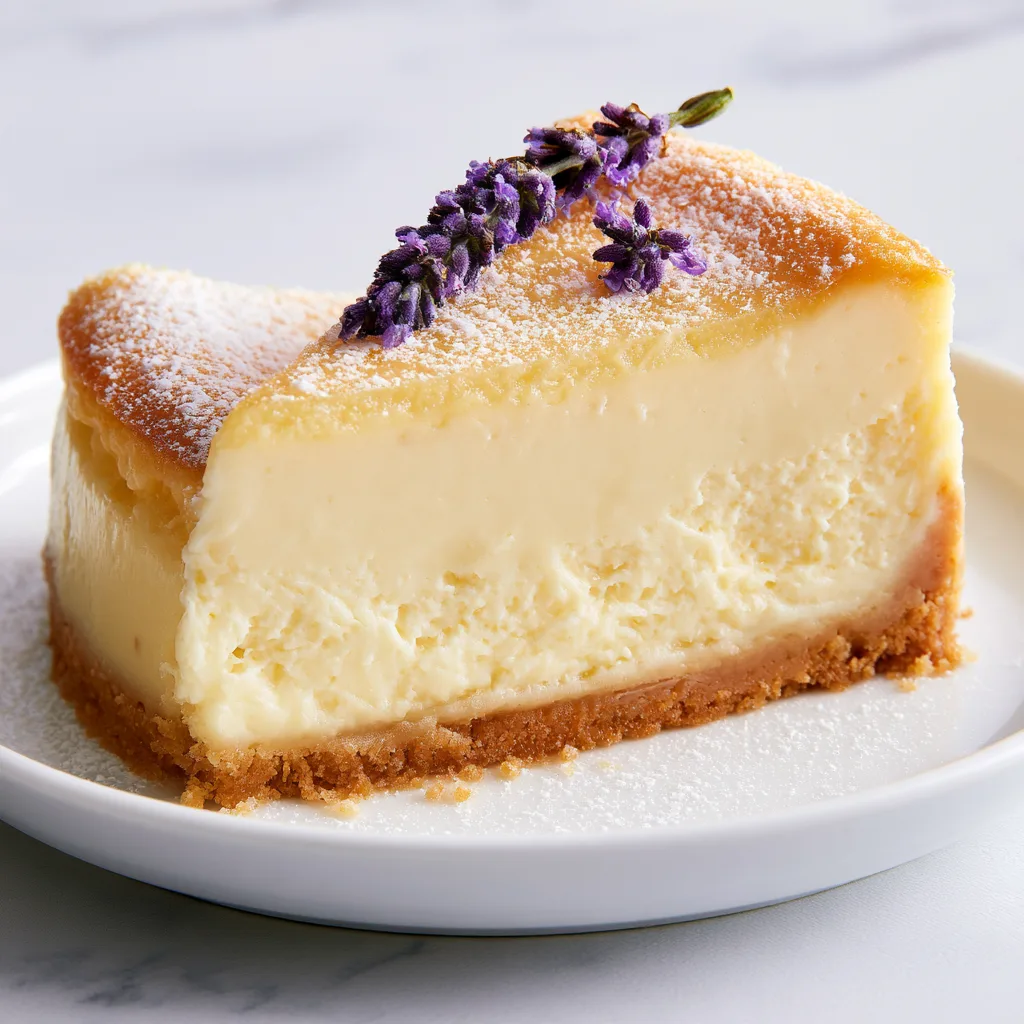
The outer portion should be set and the central two-inch area should wobble as one piece when the pan is nudged. A liquid wave indicates it needs more baking. Cooling and at least six hours of chilling finish the texture before slicing.
Conclusion
With its buttery shortbread crust and delicately floral filling, this lavender vanilla cheesecake offers a refined dessert experience. By following the cooling and chilling timeline carefully, you will achieve a smooth filling that is firm enough to slice neatly.
More Recipes for Your Menu
For another cheesecake-inspired dessert, try chocolate pumpkin cheesecake bars. If you need a dessert with less oven time on a different occasion, banana pudding cups with Greek yogurt provide a simple chilled option.
You might also like these recipes
Lavender Vanilla Cheesecake with Shortbread Crust
Chicken Thighs with Broccoli Cheddar Orzo
Herbed Garlic Parmesan Chicken Breasts with Green Beans