
Sticky ginger chicken bowls combine seared chicken thighs, crisp-tender green beans, and fragrant jasmine rice. The sauce uses fresh ginger, garlic, soy sauce, and a little honey, with vinegar to keep the sweetness in check. It cooks into a thin glaze that coats the chicken instead of pooling heavily around the rice.
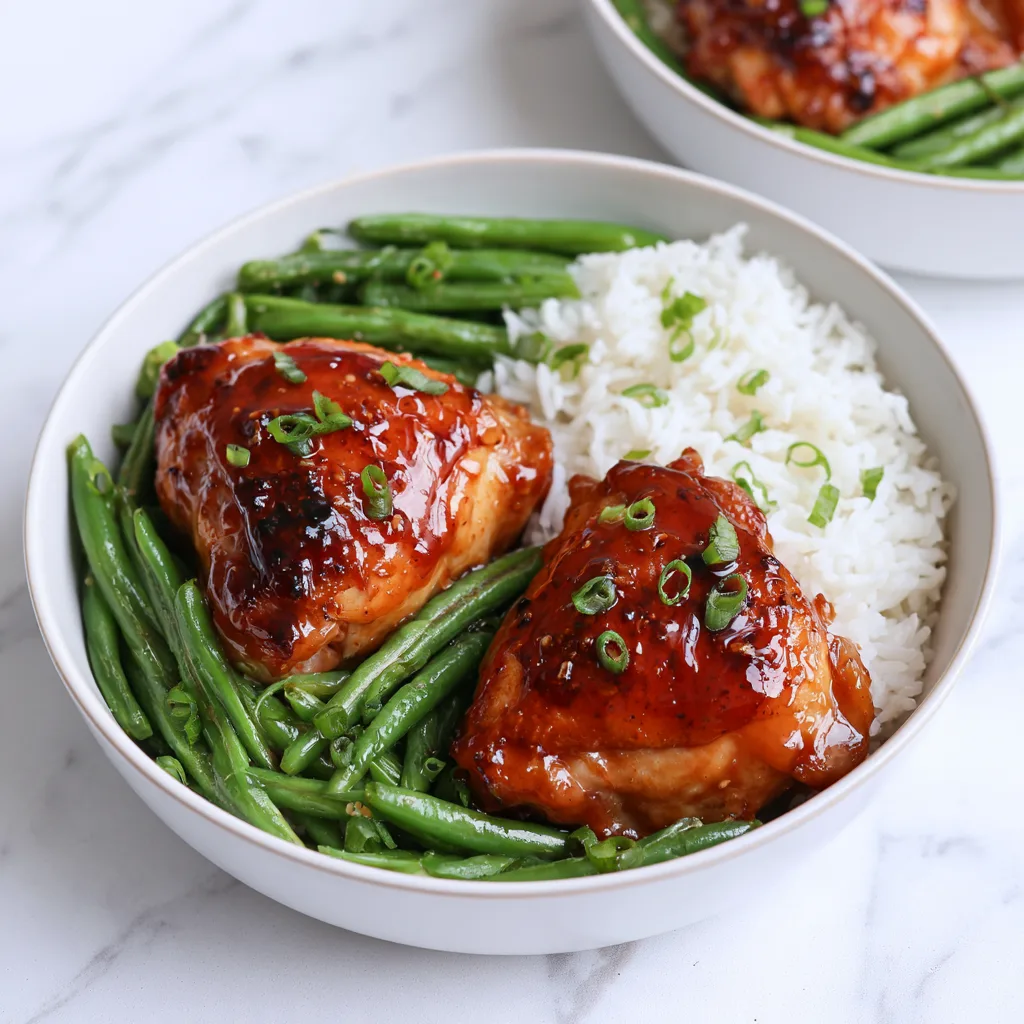
Recipe Snapshot
Prep: 20 minutes · Cook: 25 minutes · Total: about 45 minutes · Yield: 4 servings · Difficulty: Easy
Equipment: Rice saucepan, large skillet, mixing bowl.
Why This Recipe Works
Green beans bring a firmer bite than broccoli and stay attractive when cooked separately before the glaze. Chicken thighs give this version a juicy texture, while fresh ginger provides the leading flavor. The method uses one skillet in stages, making it easier to preserve those differences without washing several pans.
Ingredient Notes and Useful Substitutions
Prepare green beans for an even bite
Trim the dry stem ends, then cut particularly long beans in half. A mixture of very short and very long pieces makes a bowl harder to eat, even if both cook properly. If the beans are thick, extend the covered steaming stage slightly and check one before removing the batch. They should bend and bite cleanly while keeping a little firmness. Beans that are already limp before cooking will not regain their snap in the sauce.
Keep honey from taking over the ginger
Fresh ginger is the leading flavor in this recipe, while honey supports the glaze. If you add extra honey immediately because the sauce tastes sharp before cooking, you may lose the balance once it reduces. Begin with the measured mixture and judge a cooked bite over rice. For a more pronounced ginger aroma, grate it finely and keep the juice with the pulp. Large chopped ginger pieces create occasional strong bites rather than an evenly seasoned coating.
Sticky Ginger Chicken Bowls with Green Beans and Jasmine Rice Recipe
Ingredients
- 1¼ lb (565 g) boneless skinless chicken thighs, cut into 1-inch pieces
- ¾ cup (150 g) dry jasmine rice
- Water as directed on the rice package
- 12 oz (340 g) green beans, trimmed
- 1½ tablespoons neutral oil, divided
- ¼ teaspoon fine salt
- ¼ teaspoon black pepper
- 3 tablespoons reduced-sodium soy sauce
- 1½ tablespoons honey
- 1 tablespoon unseasoned rice vinegar
- ⅓ cup (80 ml) water for sauce
- 1 tablespoon grated fresh ginger
- 3 garlic cloves, minced
- 2 teaspoons cornstarch mixed with 2 tablespoons cold water
- 2 scallions, sliced
- 2 tablespoons water for steaming beans
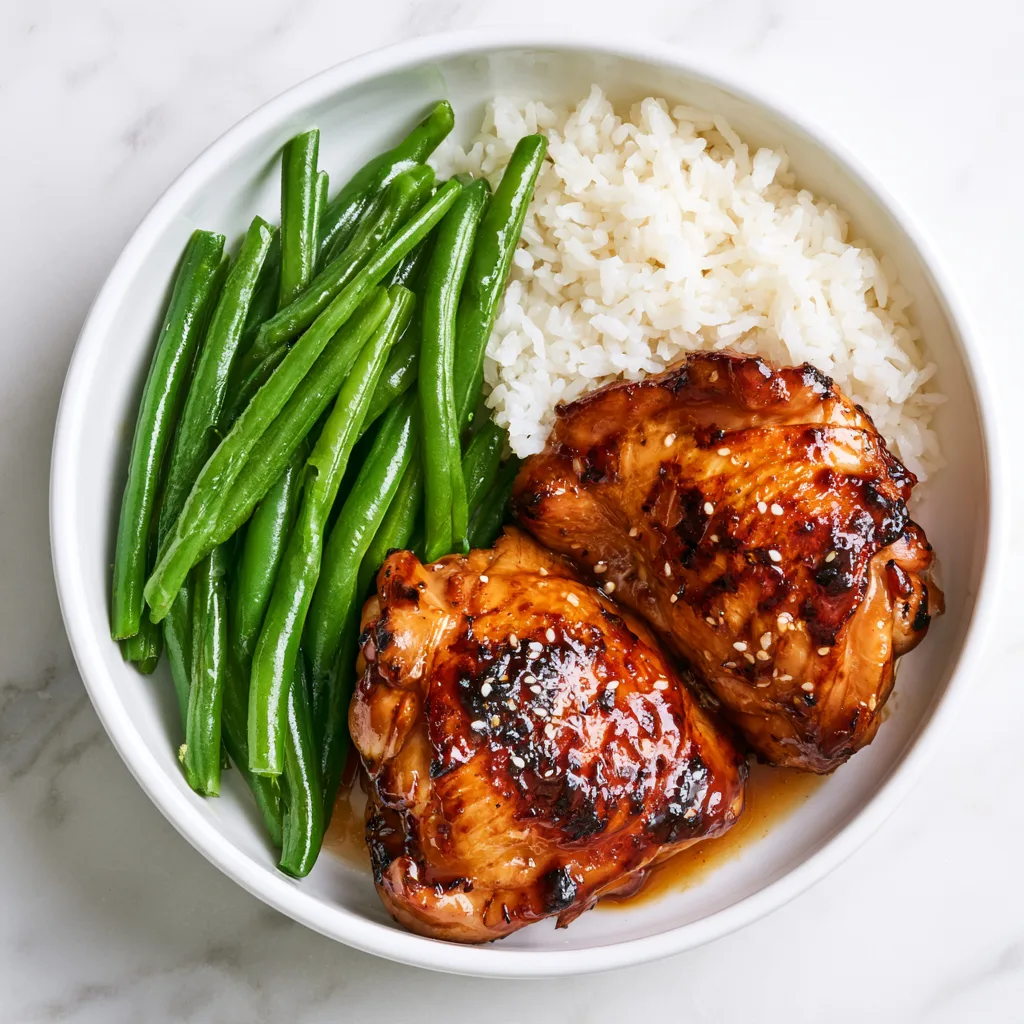
How to Make Sticky Ginger Chicken Bowls with Green Beans and Jasmine Rice
1. Cook the rice first
Rinse the jasmine rice if its package recommends it. Add the specified water and cook according to the package, then rest covered for 5 minutes before fluffing. While it simmers, trim the beans and cut any very long ones in half. Keeping the rice covered afterward helps it stay warm without extra cooking.
2. Mix the glaze ingredients
Whisk the soy sauce, honey, vinegar, and ⅓ cup water together. Prepare the cornstarch slurry in a separate cup and keep a spoon beside it for stirring again later. Pat the chicken dry and season with salt and pepper. Measure the ginger and garlic before starting the skillet.
3. Cook the green beans
Heat ½ tablespoon oil in a large skillet over medium-high heat. Add the beans and stir-fry for 3 minutes. Add 2 tablespoons water, cover, and steam for about 2 minutes, until bright green and crisp-tender. Uncover, let the remaining water evaporate, and transfer the beans to a plate.
4. Sear the chicken thighs
Add the remaining tablespoon oil to the skillet. Spread the chicken in one layer and cook for 4 minutes before turning. Continue for approximately 4–6 minutes, until browned and the thickest pieces reach at least 165°F (74°C). If the pan is small, use two batches so the chicken sears instead of steams.
5. Create the sticky coating
Reduce the heat to medium and add the ginger and garlic for 45 seconds. Pour in the sauce and simmer for 1 minute. Stir the slurry again and add it gradually while tossing. Simmer for another 1–2 minutes until the glaze looks shiny. Return the beans for a brief toss to warm them.
6. Serve without soaking the rice
Divide the rice among four bowls and arrange chicken and beans over it. Spoon over only the glaze left clinging in the skillet, rather than adding more liquid. Scatter scallions on top. Serve promptly while the beans still have a clear bite and the chicken is glossy rather than covered in a thick paste.
Easy Dinner · Ginger & Garlic
Sticky Ginger Chicken Bowls with Green Beans and Jasmine Rice
Seared chicken thighs, crisp-tender green beans, and fluffy jasmine rice finished with a glossy honey ginger glaze.
By Raelynn
Chicken, Rice & Green Beans
Ginger Glaze & Garnish
Instructions
- Cook the rice. Rinse if recommended on the package. Cook with the package-directed water amount, then rest covered for 5 minutes and fluff. Meanwhile, trim the beans and halve particularly long ones.
- Prepare the sauce. Whisk soy sauce, honey, vinegar, and the measured sauce water. Mix the cornstarch and cold water separately. Pat chicken dry and season with salt and pepper.
- Cook the beans. Heat one-third of the oil in a large skillet over medium-high heat. Stir-fry beans for 3 minutes. Add the measured steaming water, cover, and steam for about 2 minutes until crisp-tender. Uncover, evaporate remaining water, and transfer beans to a plate.
- Sear the chicken. Add the remaining oil. Spread chicken in one layer and cook for 4 minutes before turning. Continue for approximately 4–6 minutes, until browned and the thickest pieces reach at least 165°F (74°C). Work in batches if necessary.
- Glaze. Reduce heat to medium. Add ginger and garlic and stir for 45 seconds. Pour in the sauce and simmer for 1 minute. Stir the slurry again, then add gradually while tossing. Simmer for another 1–2 minutes until shiny. Return beans and toss briefly to warm.
- Serve. Divide rice among serving bowls and top with chicken and beans. Spoon over the remaining clinging glaze without adding extra liquid. Scatter scallions on top and serve promptly.
Tips for the Best Texture and Flavor
Grate ginger across a fine grater and include its juice. Large chopped pieces can taste unexpectedly hot when someone bites into them.
Do not add the slurry all at once if the pan is already quite dry. You may need less after evaporation, and you can always add more.
Use tongs to check a few pieces of thigh meat with a thermometer. Their irregular shapes make a single small piece a poor guide to the whole batch.
Keep the chicken pieces consistent
Evenly sized chicken pieces give you more control than a fixed cooking time alone. A mixture of tiny scraps and large chunks leaves the smallest pieces dry while the largest are still undercooked. Trim as needed, pat the chicken dry, and keep it chilled until the pan is ready. When cooking in batches, let the skillet regain heat before adding the next portion. A broad layer with a little space between pieces promotes browning. Crowding traps steam and creates liquid that will later dilute the glaze you have carefully measured.
Mix a balanced sauce before heating
Stir the sweetener and liquid seasonings together before they enter the pan. Honey needs enough moisture to spread evenly and enough acidity to avoid a heavy, sugary finish. Taste this mixture only before it contacts raw poultry. Keep extra salt aside until the whole bowl is ready, because reduced-sodium soy sauce still contributes substantial seasoning. If you want more heat, add it to individual servings. A balanced glaze should taste strong enough to season plain grains, yet still let the ginger, citrus, or garlic remain recognizable after cooking.
Use cornstarch with control
Cornstarch needs to be mixed into cold water before it meets the hot sauce. It settles quickly, so stir the slurry again immediately before pouring. Add it gradually while the liquid bubbles gently, then pause to see how much the sauce thickens. A glaze that looks slightly loose in the skillet often clings more firmly as it cools. If it becomes gummy, add water a tablespoon at a time and toss gently. Do not correct a thick sauce by adding more soy sauce, which changes saltiness much faster than it restores the right texture.
Time vegetables separately from the glaze
Vegetables benefit from a cooking method that suits their texture rather than sitting in the sauce throughout the chicken’s cooking time. Roasted florets need space for browning, while green beans can be briefly stir-fried and steamed. Prepare them in the order described, then combine at the end or serve alongside. This keeps a sticky chicken bowl from becoming a pan of uniformly soft ingredients. If the vegetables release water when reheated, let it evaporate before the final toss. Fresh scallions should stay out of the prolonged cooking stage altogether.
Variations and Substitutions
Snow peas can replace the green beans, but cook them briefly without the covered steaming stage. Chicken breast works too; begin checking earlier so it reaches 165°F (74°C) without drying out. Use each rice variety’s package ratio rather than assuming jasmine and brown rice cook alike.
Use thighs for a forgiving skillet texture
Boneless thighs have irregular shapes and some visible fat seams. Trim large loose pieces of fat, then cut the meat into similarly sized chunks without trying to remove every fine seam. Open folded sections so they touch the pan. A thermometer is useful because small pieces can brown before thicker folds are cooked. Once the chicken is ready, do not keep simmering it simply to make a sauce look thicker; use the slurry gradually and stop when the glaze clings.
Keep rice from becoming a sticky layer
Jasmine rice should be fluffed after resting, not stirred hard while steaming. Divide it into bowls without packing it down. The glaze will then coat a few grains around each piece of chicken instead of soaking into a compressed block. If preparing rice earlier, cool and refrigerate it promptly rather than holding it lukewarm on the counter. Reheat until thoroughly hot before pairing it with the freshly cooked chicken and beans.
Serving Suggestions
Add cucumber ribbons or sliced radishes for a cool side. A little extra vinegar at the table is useful for people who prefer a sharper sauce. Keep chili flakes optional; fresh ginger already supplies warmth without turning the entire family meal into a hot chili dish.
Storage and Meal Prep
Pack and reheat with a little moisture
Refrigerate cooked chicken and grains promptly in shallow containers, within two hours, and use within three to four days. Store fresh garnishes separately. To reheat, add a teaspoon or two of water to the cooked portion, cover loosely, and heat until it reaches 165°F (74°C), stirring partway through. The water helps loosen a starch-thickened glaze that has set in the refrigerator. Reheat only the portion you need instead of repeatedly warming and chilling the full batch. Cooked vegetables will soften somewhat overnight, so add fresh crunchy sides at serving time.
Read texture before reaching for more sauce
A bowl can seem dry because the grain is tightly packed, the chicken has cooled, or the glaze has thickened, rather than because the recipe needs another full batch of sauce. Fluff the grain with a fork, warm the cooked elements properly, and loosen the glaze with a small splash of water first. Then taste a complete bite. Extra sauce may be welcome, but it should be a deliberate adjustment. The best result is glossy chicken and distinct vegetables over a tender base, with flavor distributed evenly instead of a sweet puddle at the bottom.
Frequently Asked Questions
Can I use ground ginger?
Fresh ginger gives the cleanest flavor here. If necessary, begin with ¾ teaspoon ground ginger, mix it into the sauce, and expect a warmer, less fresh result.
Can I make extra sauce?
Yes, but scale the sauce ingredients together and add slurry only until it coats a spoon. Doubling the thickener automatically can produce a gel rather than a glaze.
You might also like these recipes
Sticky Ginger Chicken Bowls with Green Beans and Jasmine Rice
Pineapple Chicken Sheet Pan Dinner with Coconut Lime Drizzle
Ginger Beef Lettuce Wraps with Water Chestnuts and Carrot Slaw