
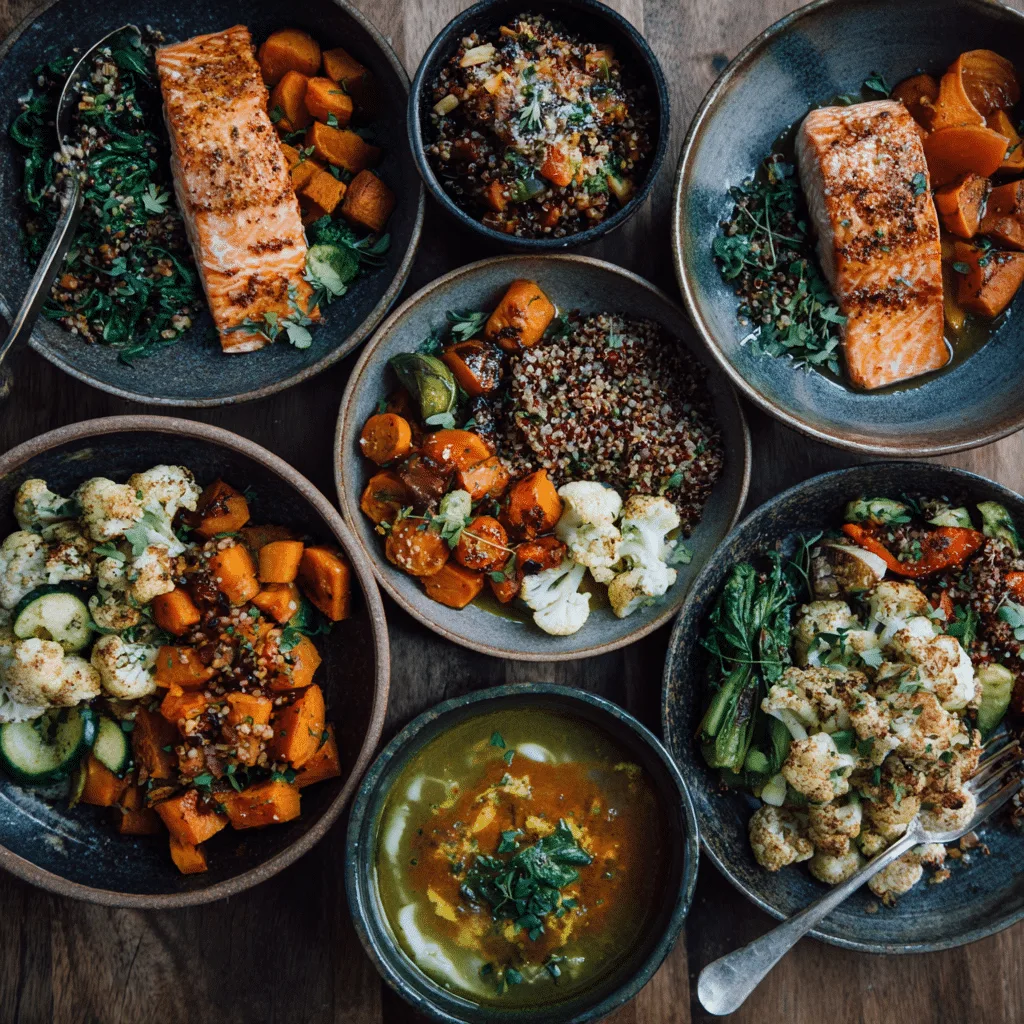
Looking for anti-inflammatory meals you can fit into everyday cooking? This guide brings together breakfast ideas, grain bowls, sheet-pan dinners, and plant-based meals using ingredients such as vegetables, beans, whole grains, fish, nuts, and olive oil.
Start with the salmon recipe card for a complete dinner, or browse the meal ideas below for inspiration. You’ll also find budget-friendly staples and meal prep tips. These ideas are for everyday meal planning and do not promise to treat a medical condition.
Table of Contents
Table of Contents
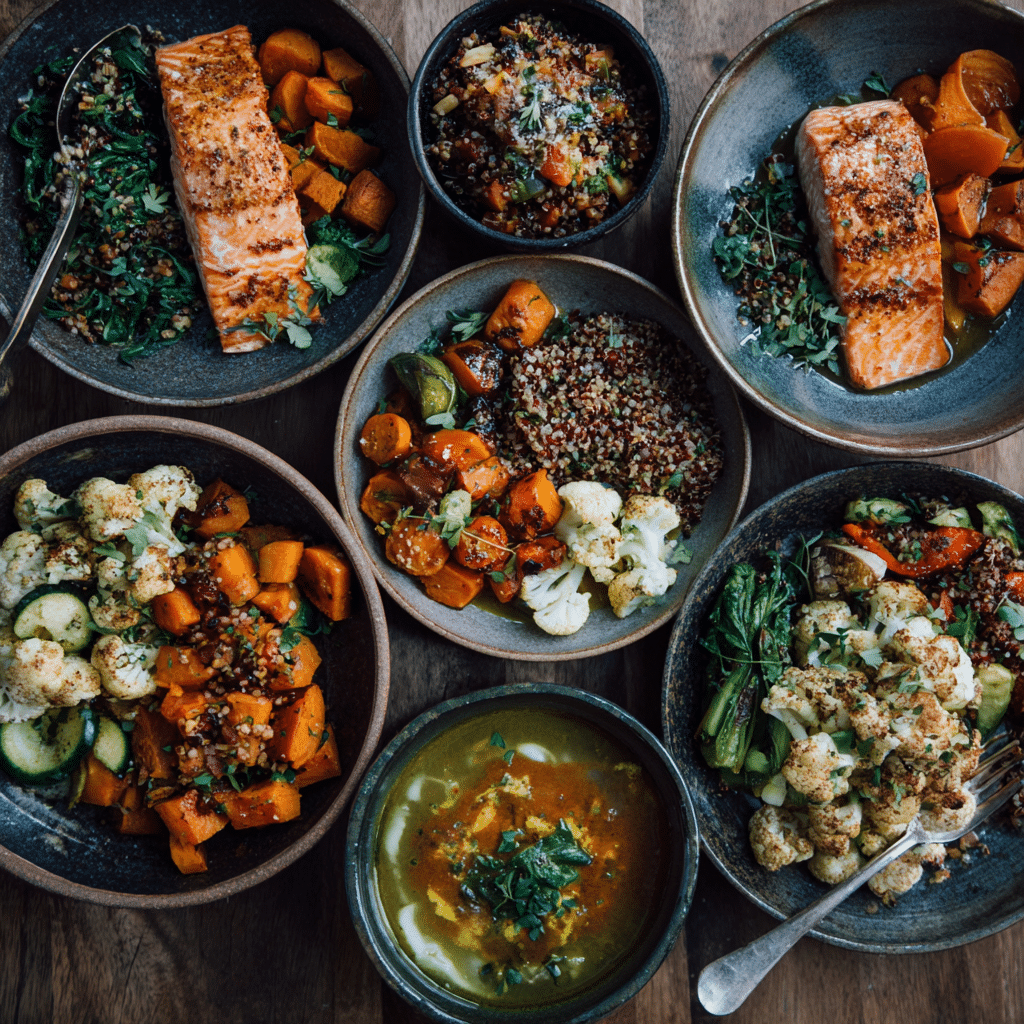
Budget-Friendly Anti-Inflammatory Staples
Smart Shopping: Everyday Ingredients on a Budget
Eating well shouldn’t cost a fortune. One of the biggest myths around anti-inflammatory meals is that they require expensive superfoods or organic-only produce. Not true. Some of the most powerful inflammation-fighting ingredients are the same ones you’ll find in your regular grocery aisle—lentils, frozen spinach, sweet potatoes, oats, and even canned sardines.
Here’s a quick look at affordable anti-inflammatory staples that cost under $3 per serving and deliver serious nutritional punch:
| Ingredient | Why It’s Anti-Inflammatory |
|---|---|
| Frozen Berries | Loaded with antioxidants that reduce oxidative stress |
| Dry Lentils | High in fiber and polyphenols—both reduce inflammation |
| Sweet Potatoes | Rich in beta-carotene and vitamin C |
| Cabbage | Contains sulforaphane, which may inhibit inflammation pathways |
| Canned Sardines | High in omega-3s and calcium, especially useful for joint pain |
You don’t have to build a whole new pantry. Start by swapping one or two ingredients in your favorite meals. Try using dry lentils instead of ground beef in tacos or stews. Roast cabbage wedges with olive oil and garlic for a simple side dish. Or blend frozen berries into a breakfast smoothie—check out our Berry Chia Pudding for an easy win.
Looking for more affordable dinner ideas? Don’t miss our collection of one-pot healthy meals that keep costs low and flavor high.
Print
7 Anti-Inflammatory Meals You’ll Love (Backed by Science & Flavor)
- Total Time: 40 minutes
- Yield: 2 servings 1x
Description
A simple, nourishing anti-inflammatory dinner featuring salmon, sweet potatoes, and broccoli—rich in omega-3s, fiber, and antioxidants.
Ingredients
- 2 salmon fillets (4–6 oz each)
- 1 large sweet potato, cubed
- 2 cups broccoli florets
- 2 tablespoons olive oil
- 2 garlic cloves, minced
- 1 teaspoon dried thyme or Italian herbs
- ½ teaspoon sea salt
- ¼ teaspoon black pepper
- Lemon wedges, for serving
Instructions
- Preheat oven to 400°F (200°C) and line a baking sheet with parchment paper.
- Toss sweet potato cubes with 1 tablespoon olive oil, half the garlic, salt, and pepper. Spread on one side of the sheet pan.
- Roast sweet potatoes for 15 minutes.
- Meanwhile, season salmon fillets with remaining olive oil, garlic, and thyme.
- After 15 minutes, add salmon and broccoli to the sheet pan.
- Continue roasting for another 15 minutes, or until salmon is flaky and vegetables are tender.
- Serve with a squeeze of lemon.
Notes
You can use frozen broccoli—just thaw before roasting.
Swap salmon for sardines or trout for variety.
Store leftovers in the fridge for up to 3 days.
- Prep Time: 10 minutes
- Cook Time: 30 minutes
- Category: Dinner
- Method: Roasting
- Cuisine: Anti-Inflammatory
Nutrition
- Serving Size: 1 plate
- Calories: 480
- Sugar: 6g
- Sodium: 320mg
- Fat: 28g
- Saturated Fat: 4g
- Unsaturated Fat: 22g
- Trans Fat: 0g
- Carbohydrates: 28g
- Fiber: 6g
- Protein: 35g
- Cholesterol: 75mg
Easy Anti-Inflammatory Breakfast Ideas
Why Breakfast Is the Foundation of Anti-Inflammatory Eating
Mornings set the tone—and breakfast is your first chance to reduce inflammation naturally. Skipping it or grabbing processed carbs spikes blood sugar, which can lead to more inflammation throughout the day. The right anti-inflammatory meals for breakfast include fiber, antioxidants, and healthy fats that balance your body and fuel your brain.
Instead of sugary cereals or white toast, go for nutrient-packed options like oats, chia seeds, wild berries, and leafy greens. These ingredients help stabilize blood sugar, calm the gut, and give you long-lasting energy.
Need inspiration? Our High-Fiber Breakfast Recipes section has quick options that are just as comforting as they are healing.
3 Anti-Inflammatory Breakfast Ideas (That Take Less Than 10 Minutes)
1. Blueberry Chia Pudding
Mix chia seeds with unsweetened almond milk and cinnamon, then stir in frozen blueberries. Let it sit overnight or for 10 minutes if you’re short on time. Berries are packed with anthocyanins—compounds shown to fight oxidative stress.
2. Savory Breakfast Salad
Toss baby spinach, leftover sweet potatoes, and an egg (or avocado for plant-based) with olive oil and lemon. Leafy greens reduce inflammation while healthy fats support hormone balance.
3. Overnight Oats with Turmeric
Stir oats with dairy-free milk, grated ginger, turmeric, and a dash of maple syrup. Add walnuts or almonds for extra crunch. Turmeric’s curcumin compound has been shown in studies to significantly reduce inflammation markers.
Want more make-ahead breakfast options? Visit our Meal Prep Ideas for tips and recipes that save you time and stress.
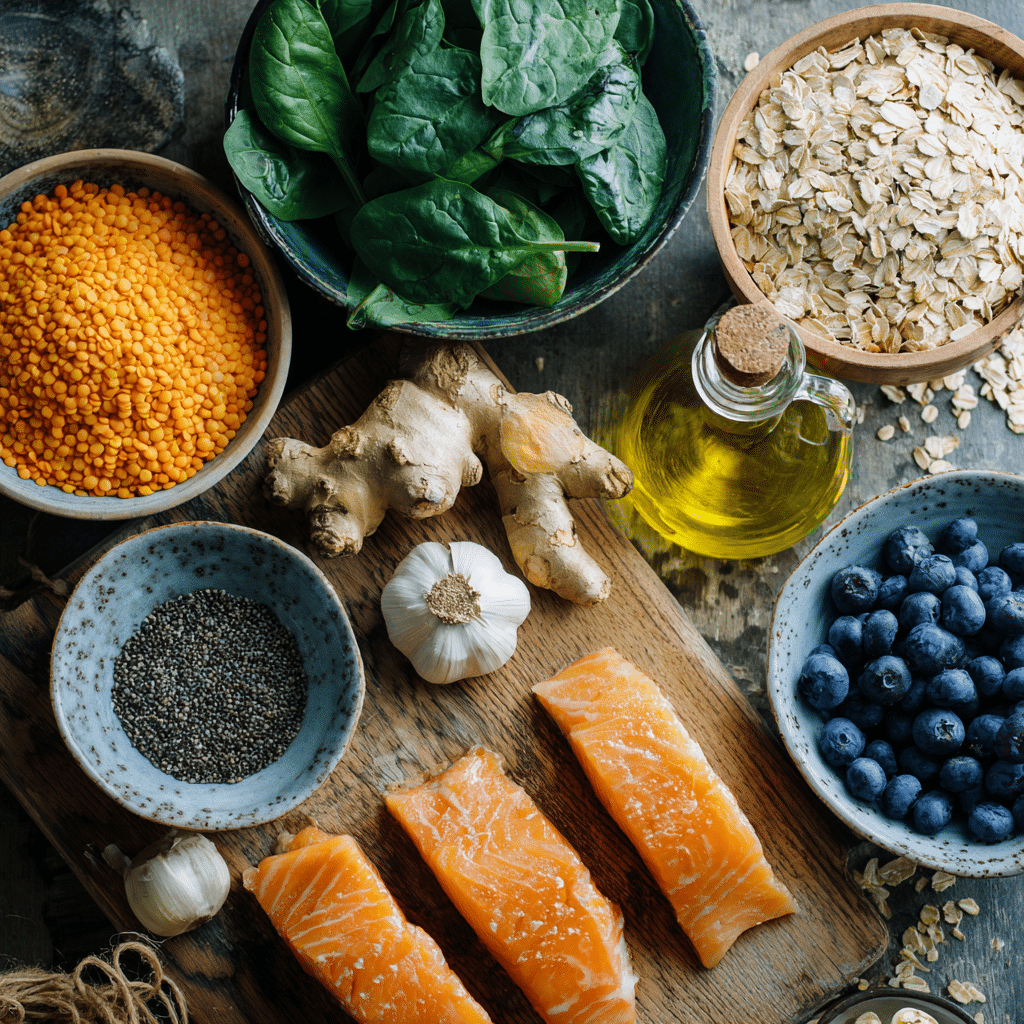
Lunch & Grain Bowls That Satisfy
Build Your Own Bowl: Anti-Inflammatory Lunch Made Simple
Lunchtime is when most of us hit the wall—tired, hungry, and tempted to grab something fast. But anti-inflammatory meals don’t need to be complicated. One of the easiest ways to eat for wellness in the middle of the day? Build a bowl.
Grain bowls give you structure and flexibility. You start with a base like quinoa, brown rice, or farro, then layer in colorful vegetables, lean proteins, and flavor-packed sauces. It’s everything your body needs to stay fueled and focused—without the blood sugar crash or post-lunch bloat.
We’re big fans of keeping a few basic ingredients prepped ahead. You’ll find lots of inspiration in our Meal Prep Recipes and Healthy Lunches collections.
3 Grain Bowl Combinations You’ll Actually Crave
1. Mediterranean Quinoa Bowl
Start with cooked quinoa, then add cherry tomatoes, cucumber, spinach, canned chickpeas, and a dollop of hummus. Drizzle with olive oil and lemon juice. The fiber and healthy fats keep inflammation low and satisfaction high.
2. Roasted Sweet Potato & Lentil Bowl
Toss cubed sweet potatoes with cumin and paprika, then roast until crispy. Serve over brown rice with cooked lentils, red cabbage slaw, and tahini dressing. Both sweet potatoes and lentils are budget-friendly inflammation fighters.
3. Avocado, Beet & Wild Rice Bowl
Use leftover wild rice, add steamed beets, arugula, and sliced avocado. Top with pumpkin seeds and a beet-ginger vinaigrette. The combo delivers antioxidants, magnesium, and omega-3s—all linked to reduced chronic inflammation.
If you’re looking for plant-based variety, check out our Vegetarian Recipes—these dishes are designed to satisfy, not just “fill in.”
Easy Anti-Inflammatory Dinner Recipes
Simple Dinners with Less Cleanup
After a long day, nobody wants to wash five pots and pans. That’s where one-pan anti-inflammatory meals come in. With just a baking sheet or skillet, you can roast, sauté, and simmer ingredients that nourish your body while saving you time and energy.
These recipes rely on the natural power of anti-inflammatory staples: omega-3-rich fish, cruciferous veggies, garlic, olive oil, and warming spices like turmeric and paprika. Toss everything together, roast it, and let the oven do the work.
Many of our most popular Sheet-Pan Recipes come together in under 30 minutes—and yes, they taste just as good reheated the next day.
3 Sheet-Pan Dinner Ideas
1. Garlic-Herb Salmon with Broccoli and Sweet Potatoes
Follow the recipe card above: roast the cubed sweet potatoes at 400°F (200°C) for 15 minutes first, then add the seasoned salmon and broccoli and continue roasting for about 15 minutes, until the fish is cooked and the vegetables are tender.
2. Moroccan-Spiced Chicken & Cauliflower
Toss chicken thighs and cauliflower florets in olive oil, turmeric, cumin, and cinnamon. Bake until golden. Serve with a lemony yogurt sauce or tahini drizzle. For more dinner ideas, browse our anti-inflammatory chicken recipes.
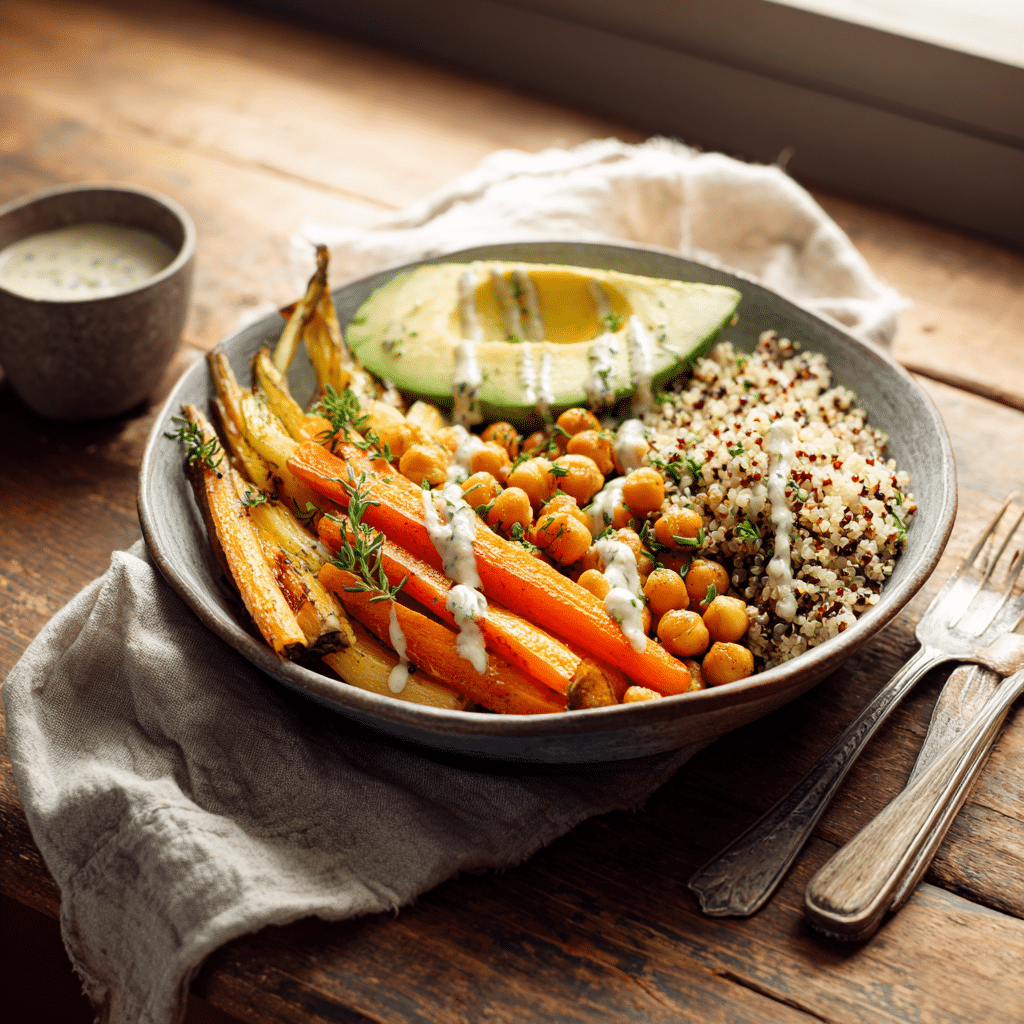
3. Chickpeas, Carrots & Red Onion with Tahini
Roast canned chickpeas, sliced carrots, and red onion with paprika, salt, and a splash of olive oil. Once crispy, top with tahini dressing and fresh parsley. Simple, satisfying, and completely plant-based.
Want more delicious simplicity? Our One-Pot Meals are perfect for nights when you want to eat well and crash early.
Vegetarian & Vegan Anti-Inflammatory Ideas
Plant-Based Meals That Nourish Deeply
You don’t need meat to build powerful anti-inflammatory meals. In fact, many of the most inflammation-fighting foods—like leafy greens, legumes, cruciferous vegetables, nuts, seeds, and berries—are entirely plant-based. Vegetarian and vegan dishes can be hearty, budget-friendly, and filled with anti-inflammatory benefits, especially when you layer flavors with spices like turmeric, ginger, and garlic.
These meals also offer fiber, which plays a crucial role in gut health and regulating inflammation. Whether you’re fully plant-based or just doing a meatless Monday, these meals are loaded with the nutrients your body craves.
For even more meat-free goodness, explore our Vegetarian Comfort Food and Vegan Dinners collections.
3 Flavorful Vegan Meal Ideas
1. Roasted Cauliflower Tacos with Avocado Crema
Toss cauliflower florets in smoked paprika, garlic, and olive oil. Roast until crispy, then stuff into corn tortillas with shredded cabbage and a creamy avocado-lime sauce. Cauliflower is a cruciferous vegetable known for reducing inflammation markers.
2. Sweet Potato & Black Bean Skillet
In a single pan, sauté sweet potatoes, black beans, and kale with cumin and chili powder. Top with a sprinkle of pumpkin seeds for crunch. This meal is high in antioxidants, plant-based protein, and magnesium—key to reducing inflammation.
3. Golden Coconut Lentil Soup
Simmer red lentils, coconut milk, turmeric, and ginger for a velvety, warming soup that’s both comforting and deeply anti-inflammatory. Add chopped spinach at the end for a boost of folate and iron.
Craving something fresh to go alongside? Our Anti-Inflammatory Salads bring balance to any meal and pair beautifully with these plant-powered mains.
Myths About Inflammatory Foods
Not All “Inflammatory” Foods Are What They Seem
There’s a lot of confusion online about what actually causes inflammation. One week, tomatoes are the enemy. The next, seed oils are under fire. But the truth is, when it comes to anti-inflammatory meals, it’s not about fear—it’s about balance.
Here’s what science and dietitians actually say: inflammation isn’t caused by a single ingredient, but rather the overall pattern of eating. Ultra-processed foods, added sugars, and excessive refined oils? Yes, those can cause chronic inflammation over time. But whole, nutrient-dense foods—even those with a bad rep—often fight inflammation when part of a balanced diet.
Our Healthy Eating Basics page dives into these principles with recipes and no-nonsense advice.
3 Food Myths That Need to Be Put to Rest
1. “Nightshades Cause Inflammation”
Tomatoes, eggplant, and peppers get a bad rap—but there’s little evidence they’re inflammatory unless you have a specific sensitivity. In fact, tomatoes are high in lycopene, a powerful antioxidant that helps reduce inflammation.
2. “Seed Oils Are Always Bad”
It depends. Cold-pressed oils like flaxseed or grapeseed in moderation can be part of a healthy pattern. The real issue is highly refined oils in fast food and processed snacks—not a drizzle of oil in your salad dressing.
3. “All Carbs Trigger Inflammation”
Refined sugars and white bread? Yes. But whole grains like quinoa, oats, and farro are anti-inflammatory superstars when eaten as part of fiber-rich, whole-food meals. Many of our Budget-Friendly Bowls include these ingredients to help support gut and immune health.
In short: don’t cut food groups without good reason. Build your anti-inflammatory meals with variety, color, and intention—not fear.
Anti-Inflammatory Meal Prep Tips
How to Make Meal Prep Fit Your Busy Life
You don’t need hours in the kitchen every night to eat well. One of the most effective ways to stick to anti-inflammatory meals long-term is to prep them in advance. When your fridge is stocked with roasted veggies, cooked grains, and a few simple sauces, you can throw together a nourishing meal in minutes—even on the busiest weeknights.
Meal prep doesn’t mean eating the same bland chicken and rice all week. It means prepping building blocks you can mix and match: grains, proteins, veggies, dressings, and garnishes. A little planning up front gives you flexibility, variety, and healing food all week long.
Need help getting started? Browse our Easy Meal Prep Recipes for practical inspiration.
5 Simple Meal Prep Habits That Support Inflammation-Fighting Goals
1. Batch Roast Vegetables
Choose 3–4 veggies like sweet potatoes, carrots, cauliflower, or zucchini. Roast with olive oil, garlic, and turmeric, then store in glass containers for up to 5 days. These veggies can top grain bowls, salads, or soups.
2. Cook a Big Pot of Whole Grains
Quinoa, brown rice, and farro store well and make a perfect base for your anti-inflammatory meals. Add greens, beans, or a fried egg for an easy meal.
3. Prep Proteins in Bulk
Roast salmon, chicken thighs, or make a pot of lentils. These reheat beautifully and provide the protein your body needs to repair and reduce inflammation.
4. Keep a Few Freezer-Friendly Meals Ready
Make extras of soups and stews—like our Golden Coconut Lentil Soup—and freeze portions for easy grab-and-go options.
5. Make One Versatile Dressing or Sauce Each Week
Whip up a tahini-lemon dressing, chimichurri, or yogurt-based sauce to elevate any meal instantly.
When you meal prep for inflammation, you’re not just saving time—you’re giving your body a head start on feeling its best.
FAQs About Anti-Inflammatory Meals
What is the most anti-inflammatory meal?
One of the most effective anti-inflammatory meals includes wild-caught salmon, roasted sweet potatoes, and steamed broccoli drizzled with olive oil. This meal provides omega-3s, fiber, antioxidants, and healthy fats—all known to reduce inflammation naturally.
What 10 foods lower inflammation?
Top anti-inflammatory foods include salmon, sardines, blueberries, leafy greens (spinach, kale), turmeric, olive oil, walnuts, flaxseeds, sweet potatoes, and lentils. These staples are easy to include in everyday anti-inflammatory meals.
What does an anti-inflammatory meal look like?
A typical anti-inflammatory meal features lean protein (like salmon or beans), colorful vegetables, a whole grain (like quinoa), and healthy fats from nuts or oils. Think balance, fiber, and variety on one plate.
Are eggs anti-inflammatory?
Yes, in moderation. Eggs contain choline and antioxidants like lutein, which support brain and cell health. While some people with sensitivities may react, for most, eggs can be part of healthy anti-inflammatory meals.
How do you flush inflammation out of your body?
Start with anti-inflammatory meals made from whole, unprocessed foods. Focus on hydration, reduce sugar and processed oils, increase fiber intake, and include foods rich in omega-3s and antioxidants. Consistency is key to reducing chronic inflammation.
You might also like these recipes
Lavender Vanilla Cheesecake with Shortbread Crust
Chicken Thighs with Broccoli Cheddar Orzo
Herbed Garlic Parmesan Chicken Breasts with Green Beans