
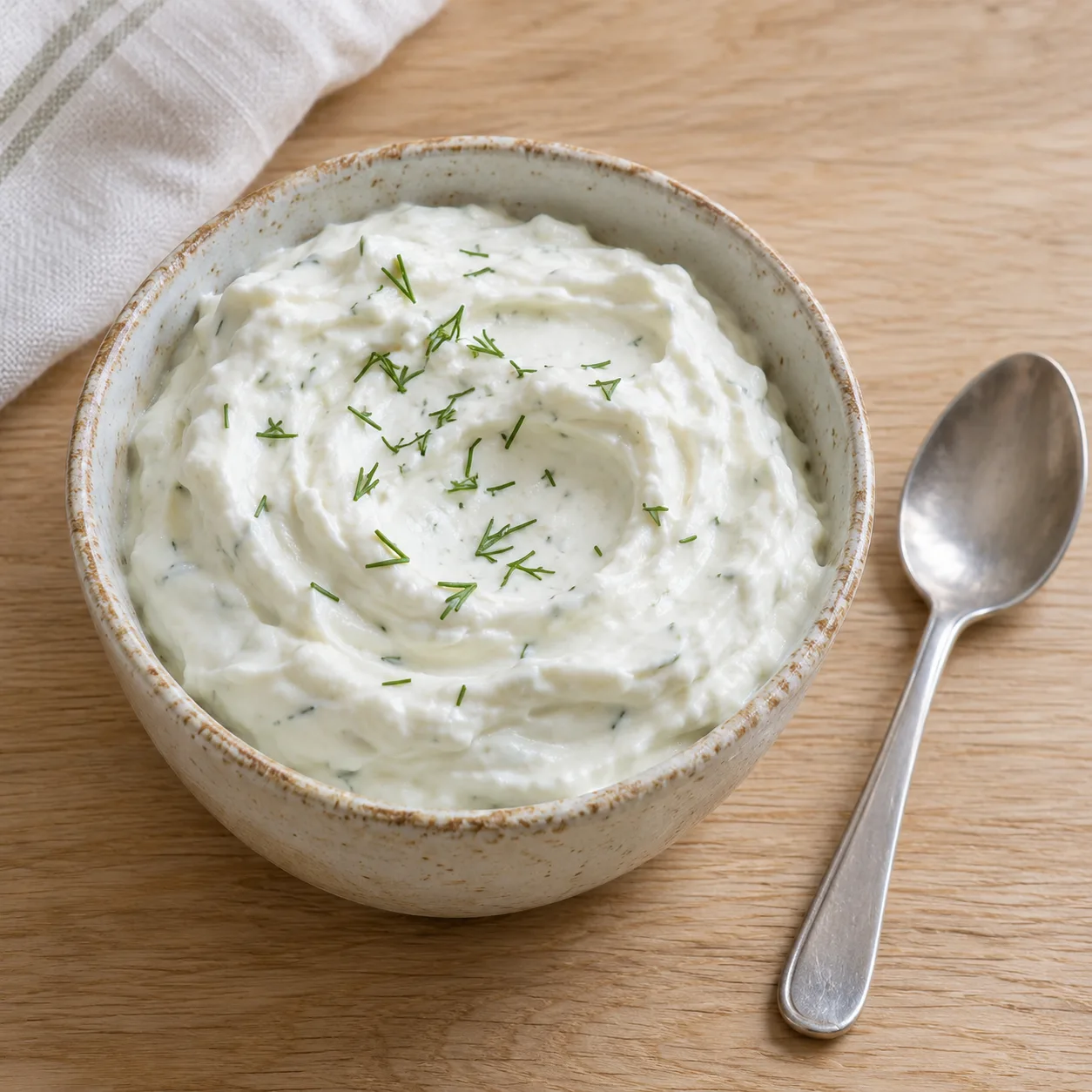
Savory whipped cottage cheese turns a tub of familiar curds into a smooth, spoonable snack with a little yogurt and optional dill. It is a useful change when sweet protein desserts no longer appeal. The preparation takes about ten minutes, uses no oven and begins with a mild base you can season gradually.
This version keeps garlic, strong acidity and crunchy mix-ins out of the basic formula. A small amount of lemon and finely chopped herbs are optional, so the person eating can choose a plainer version. Blending changes texture; it does not remove milk, lactose, salt or any other ingredient from the cheese.
For readers after bariatric surgery: ask your team whether this food, consistency and amount fit your current instructions. Smooth-looking food is not automatically cleared for every puréed or soft-food stage. Thirteen weeks after surgery is not a universal permission to eat a particular recipe.
Jump to the recipe or visit the FAQ about savory snacks, protein, fluids and food tolerance.
Why whip cottage cheese?
Cottage cheese has soft curds surrounded by a little liquid. Blending breaks the curds into smaller particles and distributes them through that liquid, creating a more even mixture. Greek yogurt helps loosen a very thick cheese and adds a mild tang without requiring a large pour of milk.
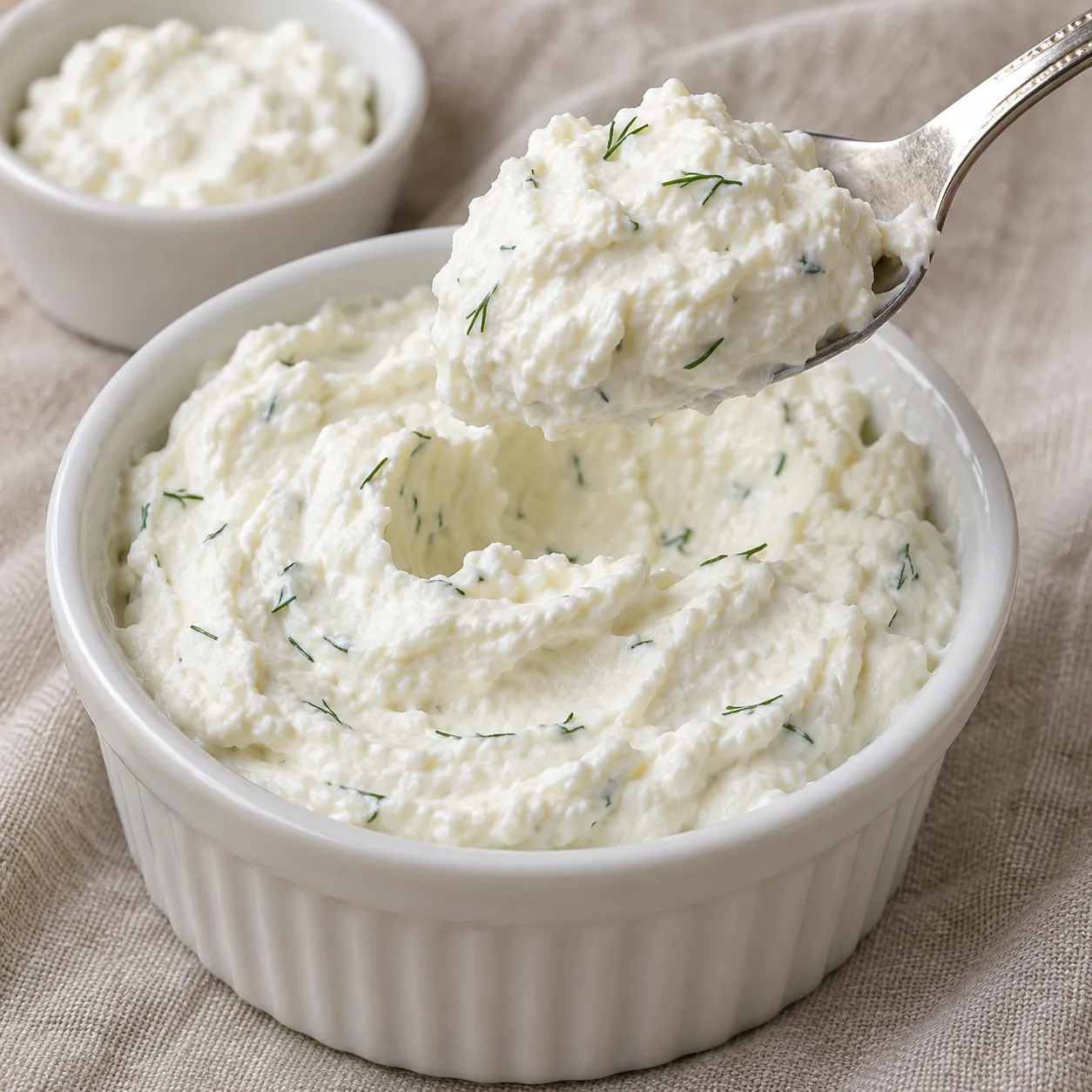
The result is a spread or spoonable cream rather than a drink. Its exact smoothness depends on the cheese and appliance. Some brands retain a faint graininess. Assess the finished consistency instead of deciding that every blended cottage cheese automatically meets a medical texture definition.
Choose a plain product and compare labels
Start with plain pasteurized cottage cheese. A lower-fat version works in this recipe, but labels differ in protein, sodium, moisture and added stabilizers. Small-curd and large-curd styles can both blend; their starting appearance matters less than the actual moisture and the processor’s ability to circulate the mixture.
If sodium is a concern in your plan, compare products before adding seasoning. Cottage cheese often tastes salty enough without extra salt. A no-salt-added version can taste much milder, but that is a different product choice rather than a reason to season every batch the same way.
Use the package date and opened-storage instructions when planning your batch. Whipping an older tub does not reset its storage clock. If the cheese is not suitable to eat before blending, processing and adding herbs will not make it suitable afterward.
Savory Whipped Cottage Cheese Recipe
Prep: about 10 minutes. Optional chill: 20 minutes. Yield: approximately 1¼ cups, or four kitchen portions of roughly 5 tablespoons. Recipe portions are for dividing the batch and are not prescribed post-operative amounts.
Ingredients
- 1 cup (225 g) plain pasteurized low-fat cottage cheese
- ¼ cup (60 g) plain unsweetened nonfat Greek yogurt
- Optional: 1 teaspoon finely chopped fresh dill, or ¼ teaspoon dried dill
- Optional: ½ teaspoon lemon juice
- Optional: a small pinch of finely ground black pepper
Equipment
A small food processor or suitable blender, flexible spatula, measuring tools and a covered container. A scale is useful when calculating nutrition from the amount actually used.
Instructions
- Check the ingredients. Stir the cottage cheese in its tub so the curds and liquid are evenly distributed. Measure the cheese and yogurt into the processor.
- Blend the base. Process for about 30 seconds, switch off and scrape the sides. Continue in short bursts until as smooth as your appliance and product allow. Do not place a spatula near moving blades.
- Assess before seasoning. Spoon a small amount into a clean dish and examine the consistency. Keep the base plain if that is the version you want or the only version appropriate for your plan.
- Add optional flavor. Blend in dill, lemon and pepper only if desired and suitable. Begin with the listed small amounts, then taste before adding anything else. No added salt is required in the base recipe.
- Serve or chill. Transfer to a clean covered container. Serve immediately or refrigerate for 20 minutes for the flavors to settle. Portion according to appetite and any personal dietary instructions.
Recipe note: This is a culinary preparation, not a clinically tested texture-modified recipe. The base remains a dairy food and must be assessed against any prescribed consistency requirements.
How to help a small batch blend
A mini processor is often easier than a large blender for a little over one cup of thick mixture. In a tall jar, the ingredients may sit around the blade instead of moving through it. Stop and scrape, then try another short burst before changing the liquid ratio.
If the machine cannot circulate the mixture, add another teaspoon of yogurt at a time. Record the addition because it changes both yield and thickness. A large splash of milk can turn a spoonable snack into a loose sauce, which may no longer be what you intended to prepare.
A powerful blender can warm food during extended processing. Use short bursts and refrigerate promptly after preparation. Longer blending is not automatically better; stop when the texture has improved as much as the product allows rather than running the motor continuously.
Fresh dill, dried dill and a plain option
Fresh dill adds a gentle herbal aroma with a small amount. Wash and dry it, remove tough stems and chop finely before adding. Even fine herb particles remain particles, so omit them if the person’s current instructions call for a fully smooth food without visible pieces.
Dried dill is more concentrated by volume, which is why the recipe uses less. Let it hydrate in the chilled mixture before judging the flavor. Adding several teaspoons immediately because it tastes faint can create a much stronger result after standing.
The plain base is a complete culinary option, not an unfinished recipe. You can divide it first and season only the amount intended for people who want herbs. That keeps the rest available for a milder serving without making several separate batches.
Keep lemon and pepper optional
Lemon juice gives a brighter finish, but yogurt already adds acidity. Begin with half a teaspoon for the full batch and taste. More acid is not required to make the recipe work. If you prefer the dairy flavor alone, leave the lemon out.
Black pepper creates a little warmth and visible specks. It can be omitted without changing the structure. Raw garlic, chopped onion and hot sauce are not part of the base formula; they can dominate a mild snack and are best considered separately rather than added automatically.
How much protein is in a serving?
Calculate it from the labels on your cottage cheese and yogurt. For an illustrative example, suppose the measured cottage cheese supplies 26 grams of protein and the yogurt supplies 6 grams. The batch then contains 32 grams before the small herb contribution, or 8 grams in one quarter.
If you eat half of that recipe portion, count half its protein. Four grams from a smaller serving is different from the eight grams listed for a larger division. The useful number is the amount eaten, not the amount available in the container.
Weighing the finished mixture can make portion tracking simpler. If a batch weighs 290 grams and contains 32 grams of protein, a 50-gram portion contributes about 5.5 grams. These are demonstration numbers; replace them with your own measured batch and product labels.
Does blending make it lactose-free?
No. A smoother texture does not change the dairy ingredients into a lactose-free product. If lactose is the issue, a labeled lactose-free cottage cheese and compatible yogurt may be options to discuss. They still contain milk protein and are not substitutions for someone with a milk allergy.
Plant-based alternatives vary in their protein, ingredients and blending behavior. Some contain nuts, while others contain soy. A dairy-free version needs its own ingredient review and nutrition calculation. Do not use the dairy recipe’s protein estimate for a visually similar substitute.
Ways to use it outside a texture-restricted diet
For people without a prescribed texture restriction, the mixture can be a dip, a spread or a spoonable side. Try it with a meal rather than automatically turning it into constant grazing. Its savory flavor works beside cooked vegetables, eggs or other foods already included in the person’s usual eating pattern.
Crunchy crackers, raw vegetables, seeds and toast are separate foods with separate texture considerations. They are not part of this base recipe, and they should not be presented as universal post-operative serving suggestions. If following a bariatric plan, choose accompaniments only from the foods your own team has cleared.
For another flavor direction on BestEverRecipes, the existing cottage cheese dessert collection offers ideas to evaluate individually. A collection of recipes is inspiration, not a clinical menu or an assurance that every ingredient fits the same stage.
Make a small rotation without changing everything
Prepare the base first, then divide it into plain and dill portions. This gives you two flavor choices while keeping the main ingredients consistent. If you want to try a new ingredient, add it to one small portion rather than altering the entire batch.
Keep a simple note with the cheese brand, yogurt quantity and additions. If one batch is thinner than the previous one, that record helps identify whether the product or measurement changed. It is more useful than trying to fix texture by adding several powders without a clear plan.
For busy days, measure ingredients in advance but keep them refrigerated. Blend when ready to use, or prepare a small batch for the next couple of days. There is no need to make a large volume just because the appliance has a large bowl.
Troubleshooting texture and flavor
| Problem | Possible reason | Adjustment |
|---|---|---|
| Noticeable curds remain | Appliance circulation or cheese texture | Scrape and blend briefly again; choose another product if needed. |
| Mixture is too loose | Extra liquid or a wet cheese | Chill before judging and use less added yogurt next time. |
| Too salty | Salty cottage cheese or added seasoning | Choose a lower-sodium product and skip extra salt. |
| Herbs taste too strong | Too much dill for a small batch | Begin with less, especially when using dried herbs. |
Storage and serving hygiene
Store the whipped mixture covered in a refrigerator at 40°F (4°C) or below and plan to use it within three days, subject to any earlier limit for the opened dairy ingredients. Label the container with the preparation date. Use a clean spoon rather than dipping used utensils into the shared batch.
Keep the serving container out only as long as needed. USDA guidance limits unrefrigerated perishable foods to two hours, or one hour above 90°F (32°C). Freezing is not recommended for the intended creamy texture because thawing can cause separation and graininess.
Frequently Asked Questions
Is whipped cottage cheese appropriate thirteen weeks after surgery?
That depends on the operation, current diet stage and your team’s instructions. The recipe does not provide automatic clearance. Tell your dietitian what is in it and how smooth it actually becomes, including whether you have added herbs or other particles.
What should I ask about my daily protein goal?
Ask for your personal target and how your team wants portions recorded. Temple Health discusses protein quality and food sources after weight-loss surgery, but an online recipe cannot set your individual requirement. Use the actual ingredient labels to calculate the contribution of the amount eaten.
What if sweet snacks no longer appeal to me?
A plain or gently savory dairy option may be worth discussing within your plan. Keep the flavor mild at first rather than replacing sweetness with intense garlic or chili. Your preference for sweet or savory foods is useful information for building a practical rotation.
Can it replace a protein shake?
Not automatically. The protein amount, fluid volume, texture and other nutrients differ. If a shake is prescribed, ask before replacing it. A few spoonfuls of cheese may supply far less protein than the serving of supplement you were told to use.
What if I struggle to drink enough?
Discuss the problem with your surgical team instead of relying on a thick dairy snack as a hydration strategy. Keep your assigned drinking schedule separate. Ask specifically how thick foods are counted rather than assuming their moisture content replaces your fluid target.
Should I add collagen or another powder?
The base does not need powder. Gelatin or collagen is not interchangeable with a complete protein supplement. If your team has recommended a particular product, ask about the amount and mixing method; adding it will also change this snack’s texture and nutrition.
What food intolerances matter here?
Milk allergy, lactose intolerance and individual reactions to ingredients need different responses. Record the product, amount and symptoms rather than labeling every problem as the same intolerance. Repeated symptoms after surgery deserve advice from the team managing your care.
How much preparation and cleanup should I expect?
Allow about ten minutes and expect to wash the processor bowl, blade, spatula and measuring tools. No oven or saucepan is required. If washing a blender is inconvenient, plain unblended cottage cheese has a different texture and is not an equivalent option for a prescribed smooth-food stage.
Sources
Temple Health: protein quality and sources; UCSF: individual diet progression and fluids; Mayo Clinic: gastric bypass dietary guidance; USDA: food handling and storage.
You might also like these recipes
Savory Whipped Cottage Cheese with Dill: A Smooth Protein Snack
Greek Yogurt Jello Fluff: A Creamy No-Added-Sugar Recipe
Anti-Inflammatory Dinners for Beginners: A Simple Sheet Pan Recipe and Weekly Plan