
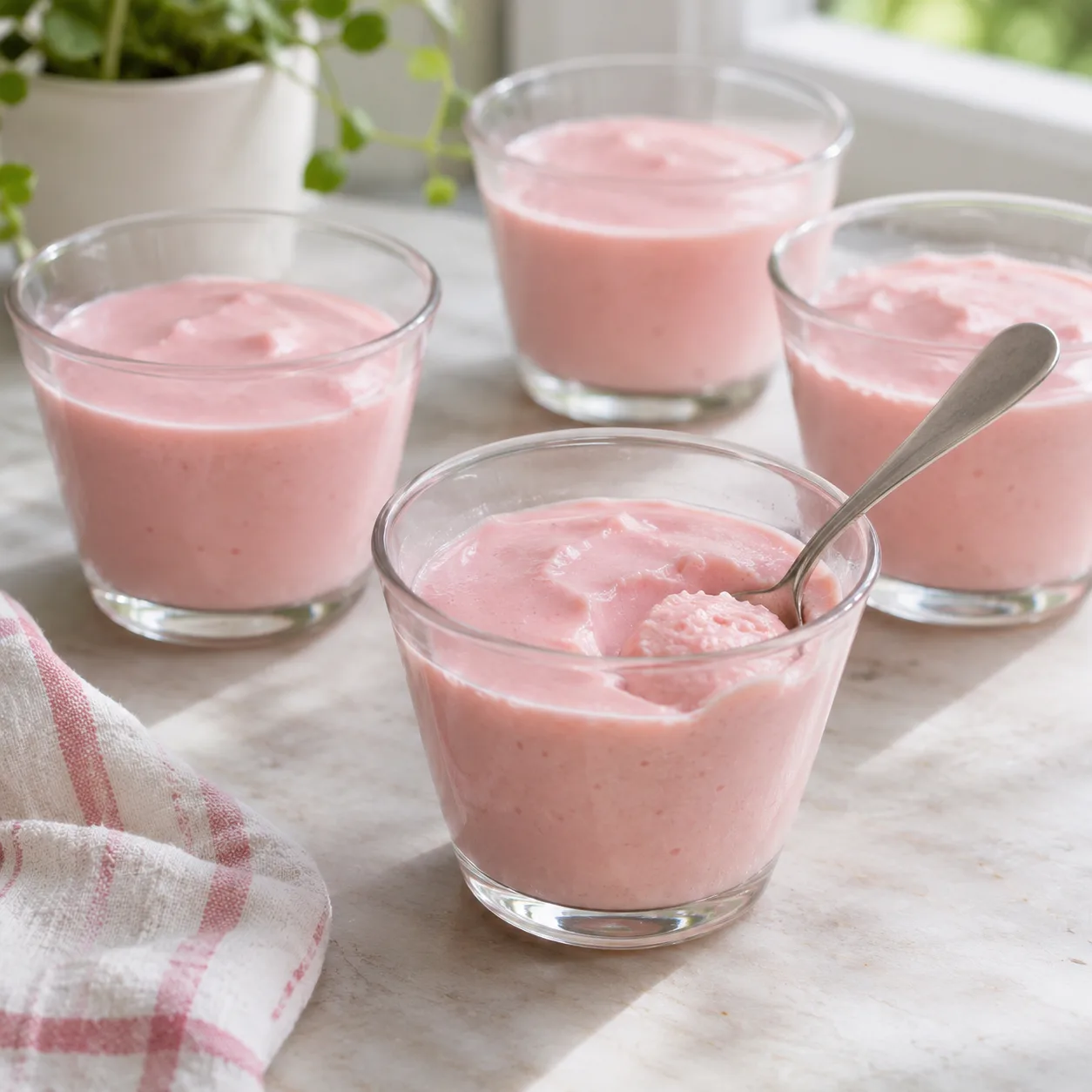
Greek yogurt jello fluff combines flavored gelatin, hot water and plain Greek yogurt into a chilled, creamy dessert. The yogurt softens the gelatin’s bright flavor and adds dairy protein, while the gelatin gives the mixture its spoonable set. There is no whipped topping, cream cheese or baking step in this version.
This recipe uses sugar-free gelatin, but the finished dessert contains the naturally occurring sugars in yogurt. “No added sugar,” when supported by your ingredient labels, is a more useful description than assuming the whole dish has zero sugar. The texture is a creamy set dessert rather than a large bowl of airy whipped cream.
For readers after bariatric surgery: use this recipe only if its ingredients, consistency and portion fit your own program. It is not a guaranteed way to prevent dumping syndrome, a prescribed meal replacement or a universal week-thirteen food. Your surgical team determines your diet progression.
Jump to the recipe or go to the questions about protein, portions and post-operative planning.
What makes this version different from a fluff salad?
Many desserts called jello fluff include marshmallows, sweetened fruit, whipped topping or cottage cheese. Those versions can be enjoyable desserts, but they have different ingredients and nutrition. Here, the yogurt is blended into dissolved gelatin, so the finished mixture sets into small cups without those additions.
Expect a slight yogurt tang and a soft gelatin structure. Whisking adds some bubbles, but it will not behave like an egg-white mousse. Calling it fluff describes the familiar recipe family; it does not guarantee a particular amount of air or a texture suitable for every medical diet.
Read the gelatin box before measuring
Choose a small sugar-free flavored gelatin packet that the manufacturer normally prepares with two cups of liquid. A common small packet weighs 0.3 ounces, approximately 8.5 grams, but weights vary by brand and flavor. Do not confuse it with a three-ounce package of regular sweetened gelatin.
The packet’s intended prepared volume matters more than a casual reference to “one box.” A larger family-size packet designed for four cups of liquid would be too concentrated in this formula. If your product uses a different preparation method, do not assume it can be exchanged without adjusting the recipe.
Use gelatin dessert mix, not instant pudding mix. They thicken differently and cannot be substituted by matching the number of tablespoons. Unflavored gelatin also needs its own blooming method and flavoring formula. This recipe is specifically written for a small flavored gelatin dessert packet.
Greek Yogurt Jello Fluff Recipe
Preparation: about 10 minutes. Cooling: usually 15–25 minutes, depending on the bowl and room. Chilling: about 3 hours or until set. Yield: roughly 2 cups, divided into four kitchen portions of about ½ cup. These are recipe divisions, not prescribed bariatric servings.
Ingredients
- 1 small packet sugar-free flavored gelatin, intended to make 2 cups prepared gelatin, commonly 0.3 oz / 8.5 g
- 1 cup (240 ml) boiling water
- 1 cup (about 240 g) plain unsweetened nonfat Greek yogurt
Equipment
A heatproof mixing bowl, whisk, measuring cup, flexible spatula and four covered dessert containers. A hand mixer is optional; ordinary whisking is enough to combine the ingredients.
Instructions
- Dissolve completely. Empty the packet into the heatproof bowl. Add boiling water and whisk for the time specified on the packet, commonly about 2 minutes. Scrape around the bottom and check that no granules remain.
- Cool by temperature, not just minutes. Let the mixture cool until barely warm and still fully liquid. Stir occasionally. This may take about 15–25 minutes; five minutes is not a dependable cooling schedule for every bowl. Do not let it become a firm gel.
- Temper the yogurt. Stir the yogurt smooth in a separate bowl. Whisk in a few spoonfuls of the cooled gelatin liquid, then gradually whisk that yogurt mixture into the remaining gelatin. Scrape the sides and whisk until evenly colored.
- Portion. Divide among clean containers. If you want smaller recipe divisions, use more containers and record the actual portion size. Cover and refrigerate.
- Chill until set. Allow about 3 hours, or longer if needed, until the mixture holds a soft set. Serve chilled in the amount appropriate for the person eating.
Method note: This is a recipe-development formula, not a clinically validated post-operative food. Gelatin products and yogurt thickness vary, so assess the first batch before changing several ingredients.
Why cooling matters
Very hot gelatin liquid can make yogurt look grainy or separated, especially when added all at once. Cooling the dissolved mixture first reduces that abrupt temperature change. Tempering then brings a small amount of the liquid into the yogurt before the two mixtures are fully combined.
The ideal point is still pourable, without strands or a skin forming around the bowl. If it has already become jelly-like, whisking may leave little pieces in the final dessert. Prepare the containers and yogurt while the gelatin cools so you can combine everything before it starts setting.
A shallow bowl cools more quickly than a narrow jug. Room temperature, bowl material and the starting water temperature all affect the wait. The visual and temperature cues are more useful than repeating a fixed five-minute pause regardless of conditions.
Choose yogurt for flavor and consistency
Plain Greek yogurt contributes a tangy flavor and a thicker dairy base. Compare labels: different products contain different protein amounts even when their containers look similar. Using an unsweetened yogurt also makes it easier to separate the gelatin’s sweetness from added sugars in flavored dairy.
Regular yogurt is usually thinner and may produce a softer dessert with less protein per measured cup. A very thick strained yogurt can create a denser result. Begin with the listed quantity, note the brand and change only one feature on the next batch if you want to adjust texture.
Lactose-free Greek yogurt may be an option for someone who tolerates milk protein but needs less lactose. It still contains dairy and is not suitable for a milk allergy. Plant-based yogurt changes both the protein contribution and setting behavior; it needs a separate trial rather than an automatic nutrition claim.
Calculate protein from the products you use
Use the nutrition panel rather than a universal promise of six or seven grams per cup. For an illustrative calculation, suppose your measured cup of yogurt provides 23 grams of protein and the entire gelatin packet provides 1 gram. The full recipe then contains 24 grams, and one quarter contains 6 grams.
If you divide that same batch into eight equal containers, each contains 3 grams, not 6. Smaller portions can be useful for serving flexibility, but they also contain less protein. Keep the calculation linked to the actual amount eaten rather than the number printed beside a larger recipe serving.
Calculate calories, carbohydrates and sugars in the same way: add the amounts from the measured ingredients, then divide by the fraction consumed. The original estimate of 55 calories is not transferable to every yogurt and packet. Optional additions must be included rather than treated as nutritionally invisible.
Gelatin is not a complete protein supplement
Gelatin provides structure, but it should not be treated as interchangeable with a complete protein supplement. Temple Health’s bariatric protein guidance notes that gelatin and collagen products do not supply all essential amino acids. In this dessert, the yogurt is the main food-based protein ingredient.
If your dietitian recommends a supplement, use the particular product and amount in your plan. Adding a scoop to a recipe changes the recipe; it does not automatically make the finished cup appropriate for your needs. A larger powder addition may also make the texture chalky or unusually thick.
Can you add whey protein?
For a culinary trial, mix a small measured quantity into the yogurt before tempering, using a powder already approved and tolerated by the person eating. Avoid stirring a full scoop into boiling gelatin liquid. Follow the powder manufacturer’s mixing guidance and record exactly how much you added.
Vanilla powder can change both sweetness and flavor. Unflavored powder may still have a milky or noticeable aftertaste. Scoops vary in weight and protein content, so “one scoop” is not a dependable nutrition unit. Weigh or measure according to the product label and recalculate the complete batch.
Flavor ideas without changing the basic method
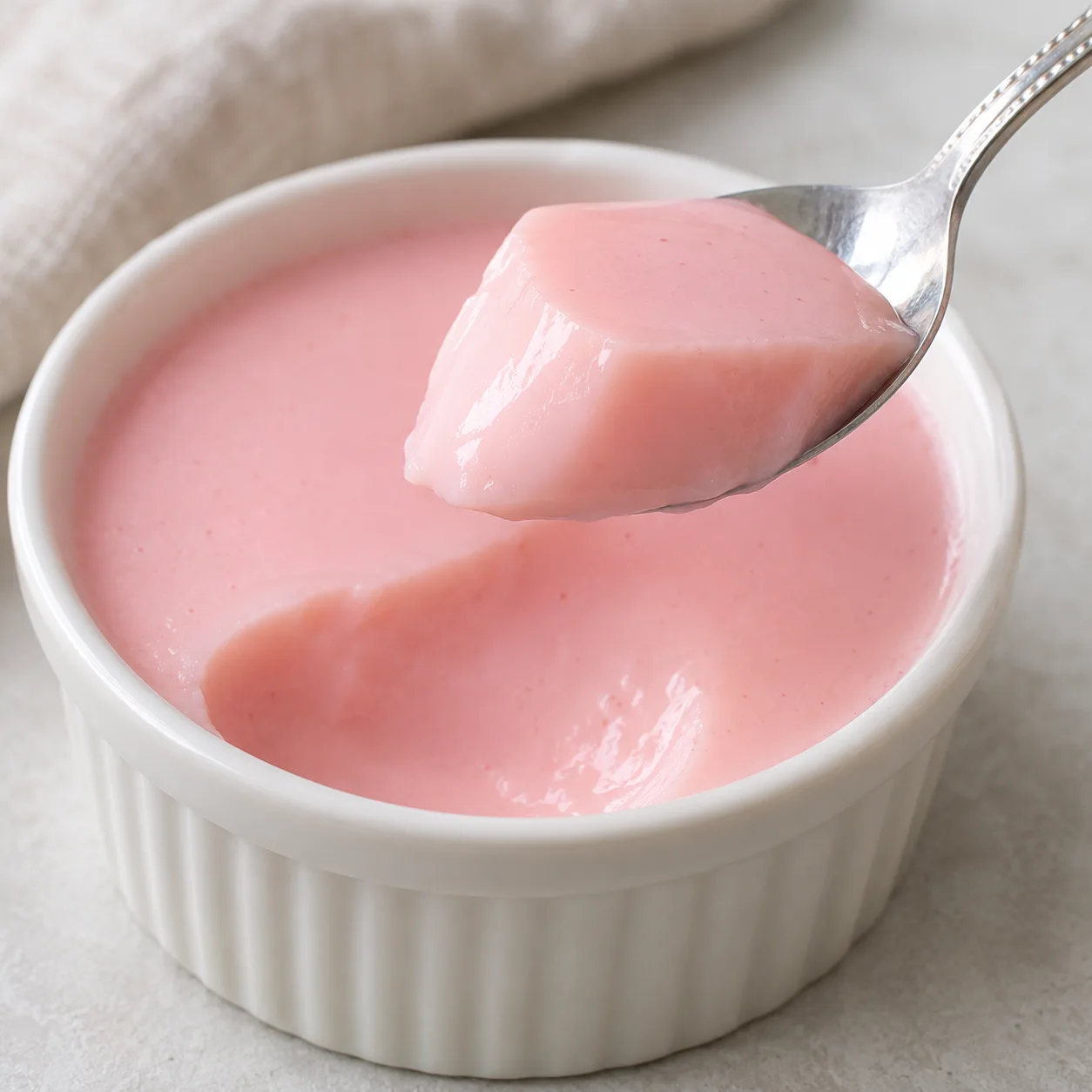
Strawberry gelatin creates a pink dessert with a familiar berry flavor. Orange gives a cream-style profile, while lime tastes sharper against tangy yogurt. Test the three-ingredient base first; adding several flavorings before you know the starting result makes troubleshooting harder.
A small amount of vanilla extract can round out an orange or strawberry version. Fresh fruit, seeds, nuts and whipped topping are separate additions with their own textures and nutrition. For post-operative readers, any topping must fit the current diet instructions; a smooth base does not make every garnish suitable.
Troubleshooting a first batch
| Problem | Possible cause | Next adjustment |
|---|---|---|
| Grainy or streaky mixture | Gelatin was too hot or yogurt was not combined gradually | Cool fully to barely warm and temper the yogurt. |
| Small rubbery pieces | Gelatin started setting before mixing | Combine while the liquid is still completely pourable. |
| Very firm dessert | Wrong packet size or overly concentrated formula | Check the package’s intended prepared volume. |
| Too soft after chilling | Different product, extra liquid or incomplete dissolving | Review quantities and allow more chilling before changing the next batch. |
Store small portions thoughtfully
Keep the cups covered in a refrigerator at 40°F (4°C) or below. For this homemade dairy mixture, plan to use it within three days, provided the ingredients remain within their own storage limits. Use clean utensils and return the container to the refrigerator promptly after serving.
Do not leave a large batch out while deciding how to portion it. Refrigerate perishable food within two hours, or within one hour above 90°F (32°C), following USDA guidance. Freezing is not recommended for the intended texture because thawed gelatin and yogurt can separate.
Frequently Asked Questions
Is this automatically suitable at thirteen weeks after surgery?
No. The surgery type, recovery, current food stage and individual tolerance all matter. Ask your team whether this set dairy texture and your chosen portion belong in your plan. A calendar week does not provide personalized clearance.
Can sugar-free jello fluff prevent dumping syndrome?
No recipe can guarantee that. Johns Hopkins describes dietary changes as part of managing dumping syndrome; a sugar-free label does not establish personal tolerance. This dessert is food, not a treatment or a substitute for assessment of recurring symptoms.
Does it replace my fluid intake?
Do not replace your drinking schedule with this dessert. Ask your bariatric team how it should be counted in your own plan. Its water content does not mean a set yogurt mixture can automatically replace the fluids you have been told to drink.
Should I follow a thirty-minute drinking rule?
Follow the timing your own program gives you. Published bariatric guidance commonly separates drinking from meals, but this article does not prescribe a new interval or classify every set dessert for every surgical plan. Confirm how your team wants you to handle it.
What if I do not tolerate dairy?
Clarify whether the issue is lactose, milk allergy or another problem. Lactose-free dairy still contains milk protein. Ask about an appropriate alternative rather than assuming every plant yogurt has comparable protein or that blending changes an ingredient you cannot tolerate.
Which questions should I discuss with my dietitian?
Bring your surgery type, current approved food stage, personal protein target, drinking plan and any symptoms. Also note whether you use whey, soy, collagen or another supplement. Product labels and a realistic food record make that conversation more specific.
Sources
Temple Health: protein after weight-loss surgery; Johns Hopkins: dumping syndrome; Mayo Clinic: gastric bypass diet progression; USDA: refrigerated food handling.
You might also like these recipes
Savory Whipped Cottage Cheese with Dill: A Smooth Protein Snack
Greek Yogurt Jello Fluff: A Creamy No-Added-Sugar Recipe
Anti-Inflammatory Dinners for Beginners: A Simple Sheet Pan Recipe and Weekly Plan