
An anti-inflammatory dinner can start with ordinary groceries: a bag of broccoli, canned chickpeas, olive oil, and a few salmon fillets. You do not need an expensive cleanse, a special supplement, or a complicated list of forbidden foods. A repeatable meal that tastes good is a more useful starting point than a perfect menu you cannot maintain.
This beginner-friendly guide combines a lemon salmon sheet pan dinner with practical substitutions and a seven-day dinner outline. The recipe takes about thirty-five minutes, including preparation, and leaves you with a colorful plate and relatively little washing up. You can also use the same method to build meals around beans, tofu, or another fish.
The phrase “anti-inflammatory” describes the eating pattern these meals can support. It does not mean one dinner treats an inflammatory disease, and it does not promise immediate changes in symptoms. Think of this as a convenient way to put more vegetables, legumes, and satisfying home-cooked food into your week.
What does an anti-inflammatory dinner include?
There is no single universally prescribed anti-inflammatory diet. Many practical recommendations resemble a Mediterranean-style eating pattern, with vegetables, fruit, whole grains, beans, nuts, olive oil, and fish. The American Heart Association describes this pattern as flexible rather than a fixed menu. [1]
Research on Mediterranean diets has found improvements in some inflammatory markers, although results differ across markers and studies. Those findings concern broader dietary patterns over time; they cannot establish that this particular salmon dinner reduces inflammation. [2]
For everyday cooking, build the meal around three useful components: a generous vegetable portion, a protein source, and a fiber-containing carbohydrate. Add olive oil, herbs, citrus, or another flavorful dressing. This structure makes shopping and preparation easier without requiring you to count every ingredient as either good or bad.
Frozen vegetables and canned beans belong in this approach. Their convenience can be the difference between making dinner and abandoning the plan. Choose lower-sodium beans when available, rinse regular canned beans, and season the finished dish to your preference.
Are foods forbidden on a strict anti-inflammatory diet?
A general anti-inflammatory eating pattern does not automatically require eliminating dairy, gluten, tomatoes, potatoes, or all carbohydrates. Individual restrictions may be necessary for an allergy, celiac disease, or another diagnosed condition, but that is different from a universal rule.
Instead of cutting out entire categories without a reason, consider what you can regularly add: another vegetable, a serving of beans, or whole grains you enjoy. Then look at opportunities to reduce frequent sugary drinks or processed meats. A sustainable pattern allows room for convenience and enjoyment.
If you have a medical condition that requires a therapeutic diet, a registered dietitian can help adapt these ideas. A meal that fits one person's needs may need changes for someone managing kidney disease, food allergies, or digestive symptoms.
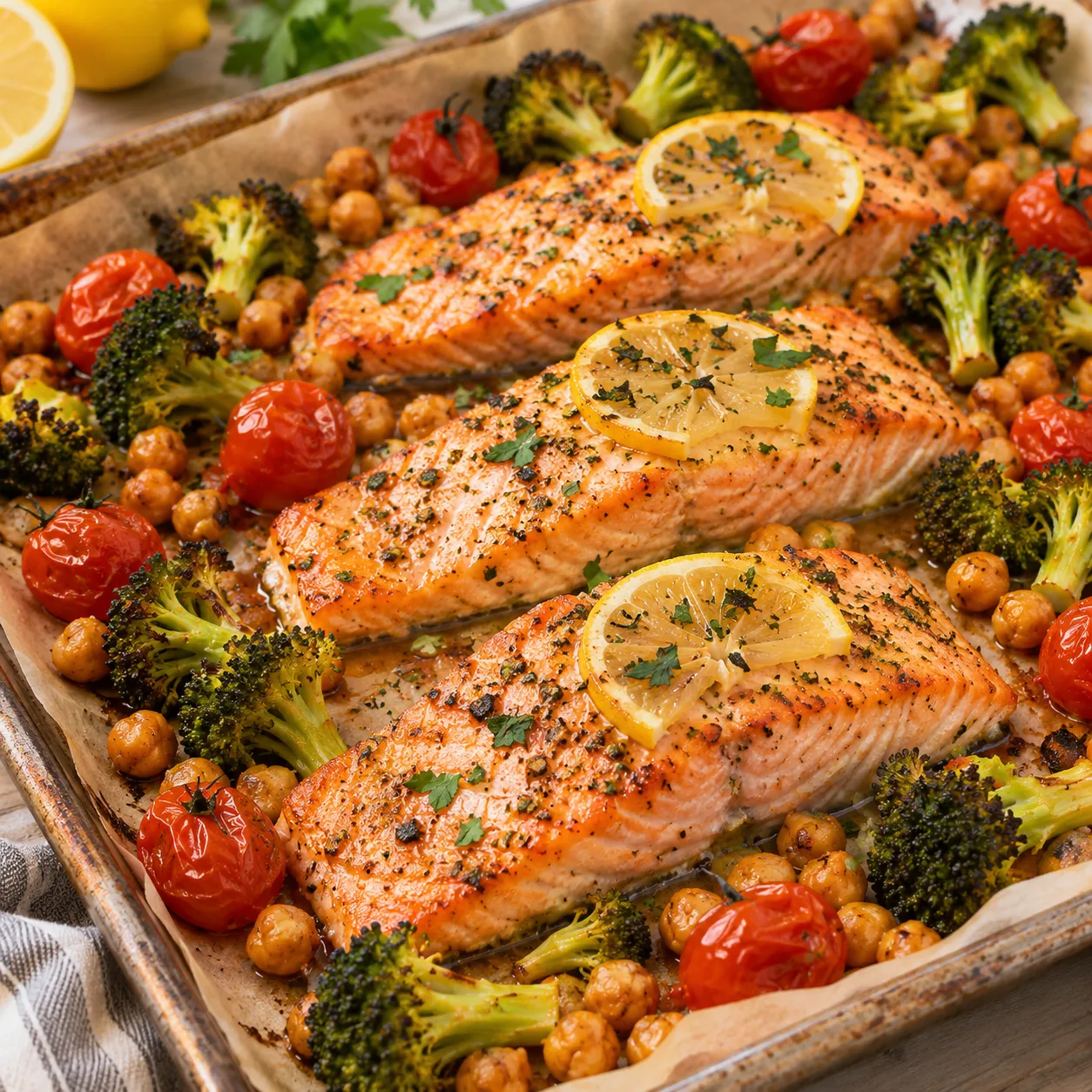
Lemon salmon, chickpea, and broccoli sheet pan dinner
This recipe uses a short head start for the vegetables so the fish does not have to remain in the oven while the broccoli softens. Choose similarly sized salmon portions to make cooking more predictable.
Servings: 4. Preparation: about 15 minutes. Cooking: about 20 minutes. Total: about 35 minutes. Equipment: large rimmed sheet pan, parchment, mixing bowl, measuring spoons, and food thermometer.
Ingredients
- Four salmon fillets, about 5 ounces or 140 grams each
- One 15-ounce or 425-gram can chickpeas, drained and rinsed
- Four cups broccoli florets, cut into small, similar pieces
- Two cups cherry tomatoes
- Two tablespoons extra-virgin olive oil, divided
- One lemon, half sliced and half reserved for juice
- Two garlic cloves, finely minced
- One teaspoon dried oregano
- Half a teaspoon smoked paprika
- Half a teaspoon fine salt, or less to taste
- Black pepper to taste
- Two tablespoons chopped parsley, optional
- Two cups cooked brown rice, optional, for serving
Instructions
- Heat the oven to 425°F or 220°C. Line a large rimmed sheet pan with parchment suitable for that temperature. Pat the rinsed chickpeas dry so excess water does not pool around the vegetables.
- Toss the broccoli, chickpeas, and tomatoes with one tablespoon olive oil, half the oregano, and about half the salt. Spread them across the pan. If everything is crowded into a thick layer, use a second pan.
- Roast the vegetables for eight minutes. Meanwhile, pat the salmon dry and combine the remaining tablespoon olive oil with garlic, paprika, remaining oregano, black pepper, and remaining salt.
- Stir the vegetables and make four spaces for the salmon. Add the fillets, brush with the seasoning mixture, and place a thin lemon slice on each portion.
- Return the pan to the oven for approximately ten to fourteen minutes. Thickness matters more than the clock. Check the thickest part of each fillet with a thermometer and cook fish to 145°F or 63°C. [3]
- Squeeze the reserved lemon over the vegetables, scatter with parsley if using, and serve. Add the cooked brown rice when you want a more substantial meal.
Why the method works
The vegetables receive heat before the salmon enters the oven, making it easier to cook both components appropriately. Dry chickpeas and adequate space encourage browning. Small broccoli florets cook more evenly than a mixture of tiny fragments and large stems.
Lemon added at the end gives the vegetables a fresh flavor without requiring a heavy sauce. Taste a chickpea before adding extra salt. The amount needed depends on your canned beans and personal preference.
Simple substitutions that keep dinner practical
For a plant-based version, replace salmon with firm tofu that has been drained, patted dry, and cubed. Roast tofu with the vegetables from the beginning and check for the texture you prefer. This variation has different nutrition and cooking requirements, so treat it as a flexible alternative rather than an identical replacement.
If salmon is expensive, choose another available fish and use a thermometer to determine doneness. Frozen fillets can be convenient; thaw them safely in the refrigerator before following this method. Keep raw fish and its utensils separate from ready-to-eat ingredients.
Broccoli can become cauliflower, green beans, or zucchini, but their cooking times differ. Thin zucchini pieces soften quickly, while large cauliflower florets need longer. Match ingredient size to cooking time and give firm vegetables a head start.
For serving, brown rice is only one option. Quinoa, barley, whole-wheat couscous, or a baked potato can work. Choose according to availability, dietary needs, and what your household will actually eat.
Can this become a twenty-minute healthy dinner?
The full sheet pan recipe is a thirty-five-minute meal, not an honest twenty-minute promise. For a faster dinner, use a different assembly method: microwave a pouch of cooked brown rice, steam frozen broccoli, and combine them with drained chickpeas and canned salmon.
Dress everything with olive oil and lemon. This bowl uses a similar ingredient pattern without waiting for an oven to heat. Follow package instructions and check canned fish for bones according to your preference.
Another quick option is a white bean skillet. Warm canned beans with chopped tomatoes, stir in baby spinach, and serve over toast. Keeping two or three genuinely fast meals available is often more helpful than trying to make every dinner follow one cooking method.
A flexible seven-day dinner plan
This is a dinner outline, not a complete daily nutrition plan. Breakfast, lunch, snacks, portions, and individual needs still matter. Reuse ingredients deliberately so the shopping list stays manageable.
| Day | Dinner | Useful shortcut |
|---|---|---|
| Monday | Lemon salmon sheet pan dinner | Cook extra brown rice |
| Tuesday | White bean, tomato, and spinach skillet | Use canned beans |
| Wednesday | Tofu and broccoli rice bowls | Use frozen broccoli |
| Thursday | Lentil vegetable soup with whole-grain toast | Use cooked lentils |
| Friday | Chickpea cucumber bowls with lemon dressing | Chop vegetables ahead |
| Saturday | Chicken, green bean, and potato tray bake | Use one roasting pan |
| Sunday | Vegetable omelet with a side salad | Use remaining vegetables |
Keep the plan flexible. If you eat the same beans twice, that is efficient cooking. You can also move meals between days, repeat a favorite, or use leftovers when your schedule changes.
Meal prep without eating the same dinner all week
Prepare components instead of seven identical boxes. Cook a pot of grains, wash sturdy vegetables, and mix a small jar of lemon dressing. Keep the dressing separate until serving so salads retain their texture.
For the salmon meal, divide cooked fish and vegetables into shallow containers and refrigerate promptly. Perishable foods should be refrigerated within two hours, or within one hour when temperatures exceed 90°F or 32°C. [4] Keep the refrigerator at 40°F or 4°C or below.
Use refrigerated cooked leftovers within three to four days, and freeze portions you will not eat in that period. Reheat leftovers to 165°F or 74°C. [3,5] Add fresh lemon after reheating to brighten the flavor.
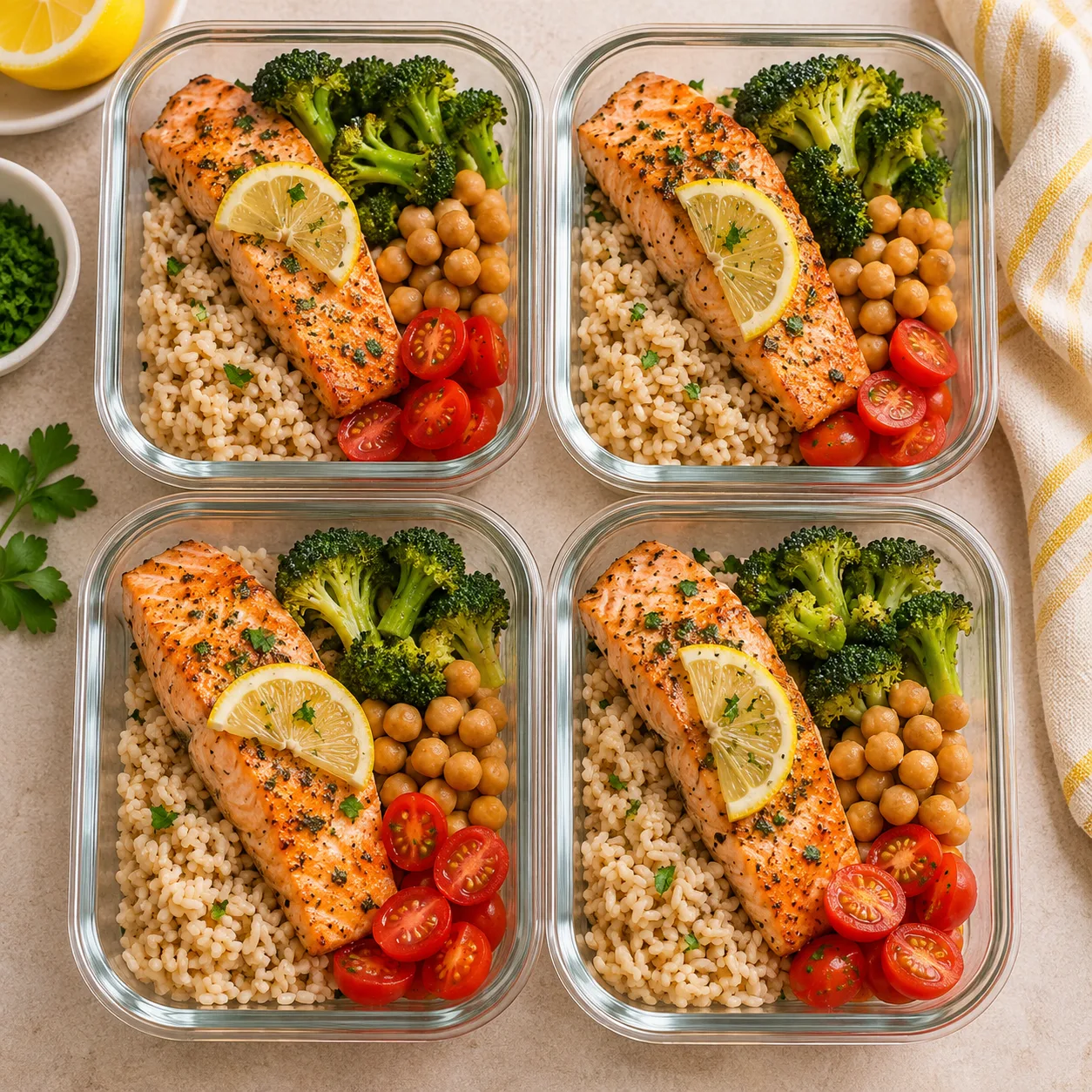
Before packing, decide which portions belong in the refrigerator and which should be frozen. Label containers with the preparation date. This small habit makes leftovers easier to use and helps you avoid guessing how long a meal has been stored.
Shopping on a realistic budget
Start with the protein options that are affordable where you shop. Canned beans, lentils, eggs, tofu, and frozen fish can give you several ways to build dinner without depending on fresh salmon every week.
Buy vegetables in forms you will use. Frozen broccoli may be more economical if fresh produce often spoils in your refrigerator. Plain frozen vegetables also let you take out a single portion and save the rest.
Choose one grain for several meals and change the toppings. Brown rice can accompany the salmon, fill a bean bowl, and become part of a vegetable skillet. Reusing a staple reduces preparation time and helps prevent half-used packages from accumulating.
Frequently asked questions
What is the fastest way to purge inflammation from the body?
“Purging inflammation” is not a defined dietary treatment. Avoid expecting an overnight food fix. Persistent swelling, pain, fever, or other unexplained symptoms deserve medical attention rather than an increasingly restrictive menu.
Is this dinner suitable for weight loss?
It can fit many eating plans, but one recipe cannot guarantee weight loss. Portions, overall intake, activity, health conditions, and other factors matter. Adjust the rice and oil to your needs while keeping enough food to make dinner satisfying.
Must every ingredient be organic?
No. Choose produce you can afford and prepare consistently. Wash fresh vegetables, handle fish safely, and focus on a varied routine. Ordinary groceries can produce a useful, enjoyable dinner.
Where should a beginner start?
Choose two dinners this week, buy their ingredients, and repeat the ones you enjoy. A reliable meal is a building block. Add variety gradually as shopping, cooking, and leftovers become easier to manage.
Start with the version that suits your kitchen, and make one manageable change at a time.
Sources
[1] American Heart Association, Mediterranean diet: https://www.heart.org/en/healthy-living/healthy-eating/eat-smart/nutrition-basics/mediterranean-diet/
[2] Mediterranean diet inflammation systematic review: https://pubmed.ncbi.nlm.nih.gov/41211687/
[3] FoodSafety.gov, safe minimum temperatures: https://www.foodsafety.gov/food-safety-charts/safe-minimum-internal-temperatures
[4] CDC, preventing food poisoning: https://www.cdc.gov/food-safety/prevention/index.html
[5] FoodSafety.gov, people at risk and leftovers: https://www.foodsafety.gov/people-at-risk
This recipe is an original draft and has not been kitchen-tested.
You might also like these recipes
Honey Butter Garlic Chicken Bites with Cheesy Pasta
Lavender Vanilla Cheesecake with Shortbread Crust
Chicken Thighs with Broccoli Cheddar Orzo