
Pineapple chicken sheet pan dinner turns chicken, bell peppers, red onion, and pineapple into a bright oven meal. A separate coconut lime drizzle softens the sweet-savory edges without flooding the trays. The fruit caramelizes at the corners while the chicken cooks in evenly sized pieces.
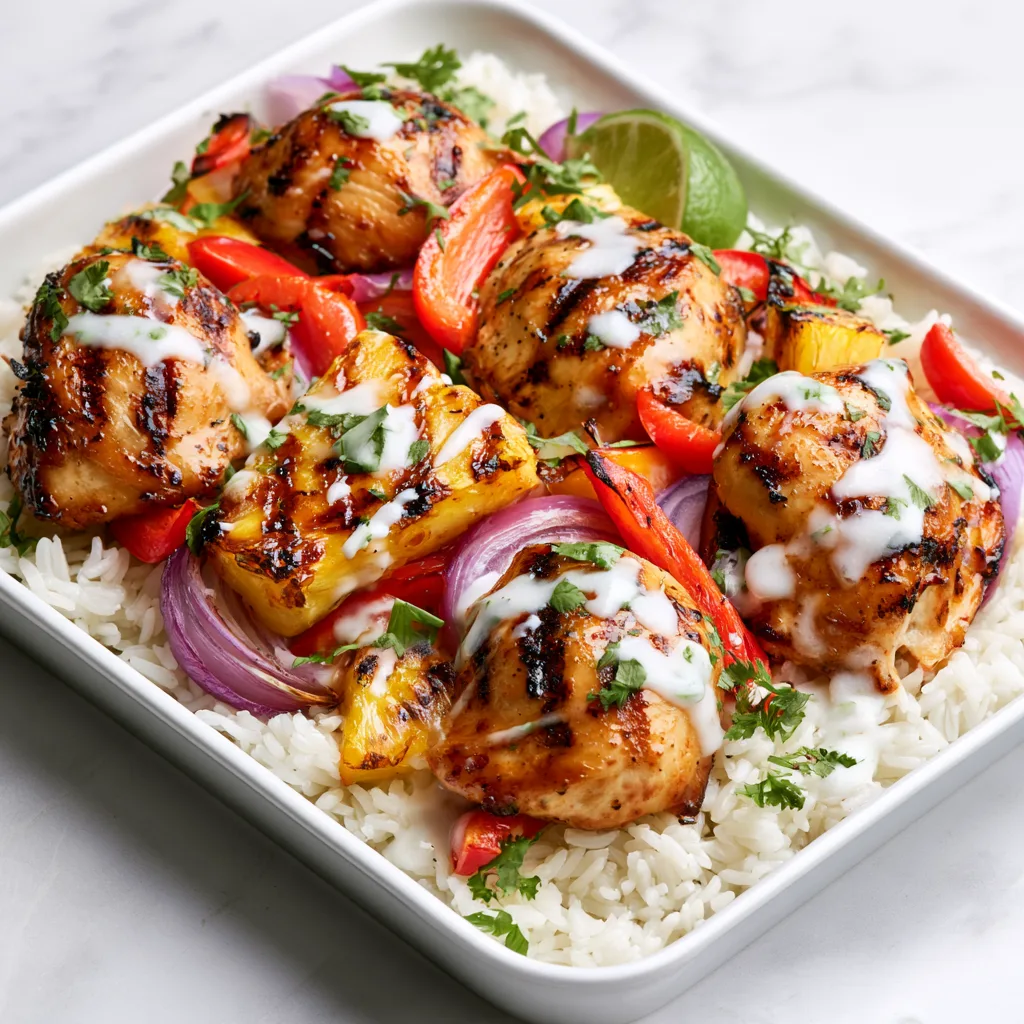
Recipe Snapshot
Prep: 20 minutes · Cook: 25 minutes · Total: about 45 minutes · Yield: 4 servings · Difficulty: Easy
Equipment: Two rimmed baking sheets, small saucepan, mixing bowl.
Why This Recipe Works
This is a pineapple-inspired sheet pan meal rather than a claim to a traditional Hawaiian preparation. Its distinctive feature is the unsweetened coconut sauce added after roasting. Keeping that sauce off the trays gives the vegetables a better chance to brown and lets you spoon just enough over each serving.
Ingredient Notes and Useful Substitutions
Let coconut soften the final flavor
The coconut lime drizzle is meant to complement roasted pineapple rather than turn the tray into a creamy casserole. Warm the coconut milk gently, then add citrus after taking it off the heat. Boiling hard can make the sauce reduce quickly and seem greasy or overly concentrated. Spoon a little onto a sample bite of rice, chicken, and pineapple before adding more lime or salt. It should taste rounded, fresh, and light enough to drizzle.
Select pineapple for roasting
Fresh pineapple should smell sweet and have firm flesh that cuts into clean chunks. Canned pineapple in juice is convenient, but it needs thorough draining and drying. Avoid very small crushed pieces, which release liquid and scorch at the tray edges instead of retaining a juicy center. Keeping chunks close in size helps them brown at a similar rate. Their juices can mingle with the peppers, but the tray should not begin with a deep puddle of packing liquid.
Pineapple Chicken Sheet Pan Dinner with Coconut Lime Drizzle Recipe
Ingredients
- 1½ lb (680 g) boneless skinless chicken breast, cut into 1¼-inch pieces
- 2 cups (330 g) pineapple chunks, fresh or well-drained canned in juice
- 2 bell peppers, cut into 1-inch pieces
- 1 medium red onion, cut into wedges
- 2 tablespoons neutral oil
- 2 tablespoons reduced-sodium soy sauce
- 1 tablespoon honey
- 1 teaspoon grated fresh ginger
- 2 garlic cloves, minced
- ¼ teaspoon black pepper
- ½ cup (120 ml) unsweetened canned coconut milk, stirred
- 1 tablespoon fresh lime juice
- 1 teaspoon lime zest
- ¼ teaspoon fine salt, or to taste
- 3 cups cooked jasmine rice for serving
- 2 tablespoons chopped cilantro, optional
How to Make Pineapple Chicken Sheet Pan Dinner with Coconut Lime Drizzle
1. Heat and dry
Heat the oven to 425°F (220°C) and place racks in the upper and lower thirds. Set out two large rimmed baking sheets. Pat the pineapple dry, especially if canned, and blot excess moisture from the chicken. Cut peppers and onion into substantial pieces that will not disappear before the chicken finishes.
2. Season in separate bowls
Whisk the soy sauce, honey, ginger, garlic, pepper, and 1 tablespoon oil. Toss the chicken with this mixture. In a clean bowl toss pineapple, peppers, and onion with the remaining tablespoon oil. Keeping the raw chicken and vegetables separate now makes it easier to remove either tray when its contents are ready.
3. Arrange the trays
Spread the chicken on one tray, leaving a little space between pieces. Arrange the vegetables and pineapple in a single layer on the second tray. Pour only the marinade clinging to the chicken onto its sheet; a puddle of extra liquid encourages steaming. Wash utensils and surfaces that touched raw poultry.
4. Roast and rotate
Roast for approximately 18–25 minutes, turning the pieces and exchanging tray positions halfway through. Begin checking the chicken early and remove it once the thickest pieces reach 165°F (74°C). Let the vegetable tray continue if needed until peppers are tender and pineapple edges show golden color.
5. Warm the coconut drizzle
While the trays roast, place the coconut milk in a small saucepan and warm gently for 2–3 minutes. Do not boil aggressively. Remove from the heat and stir in lime juice, zest, and salt to taste. The sauce should be lightly creamy and pourable, rather than cooked down to a heavy paste.
6. Plate and finish
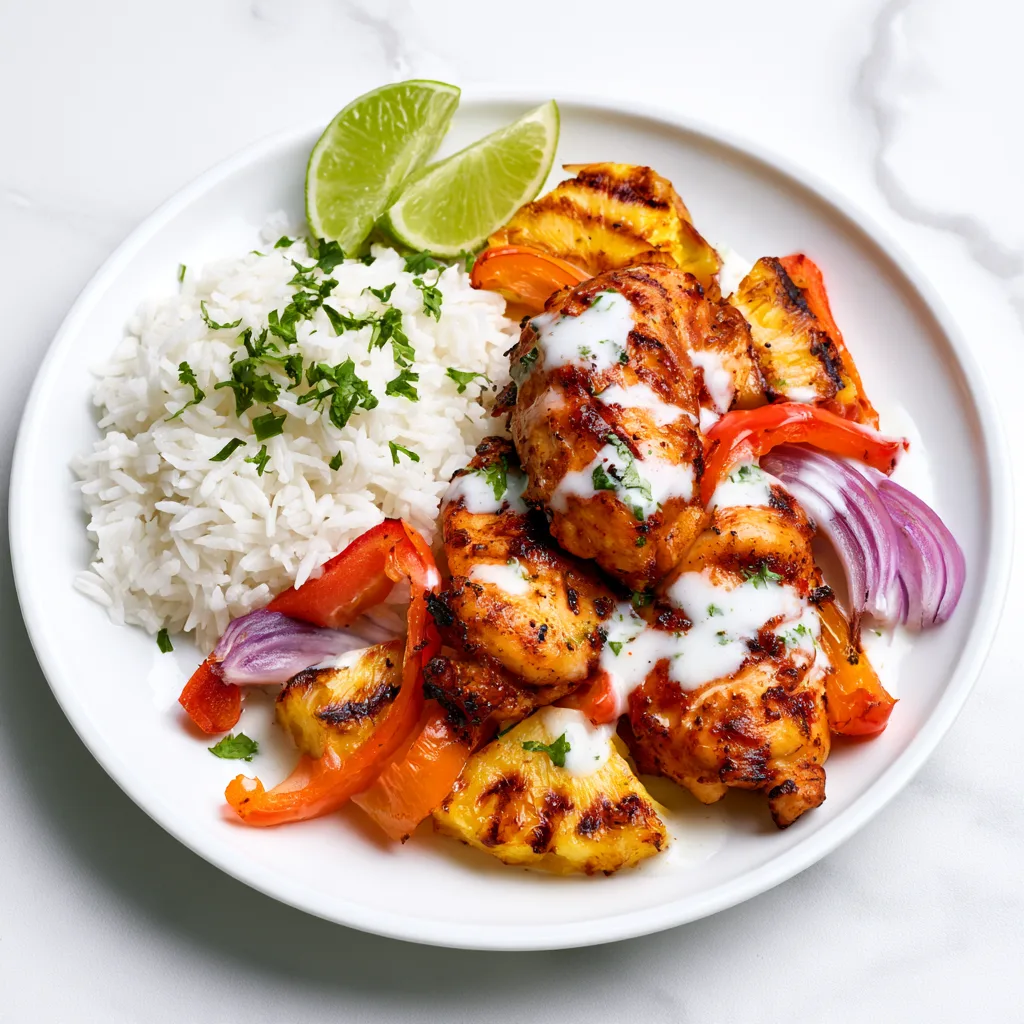
Divide the warm cooked rice among four plates. Add chicken, pineapple, peppers, and onion. Drizzle with coconut lime sauce and finish with optional cilantro. Spoon sauce over individual portions instead of pouring it over the whole tray, preserving the roasted texture and allowing people to choose their own amount.
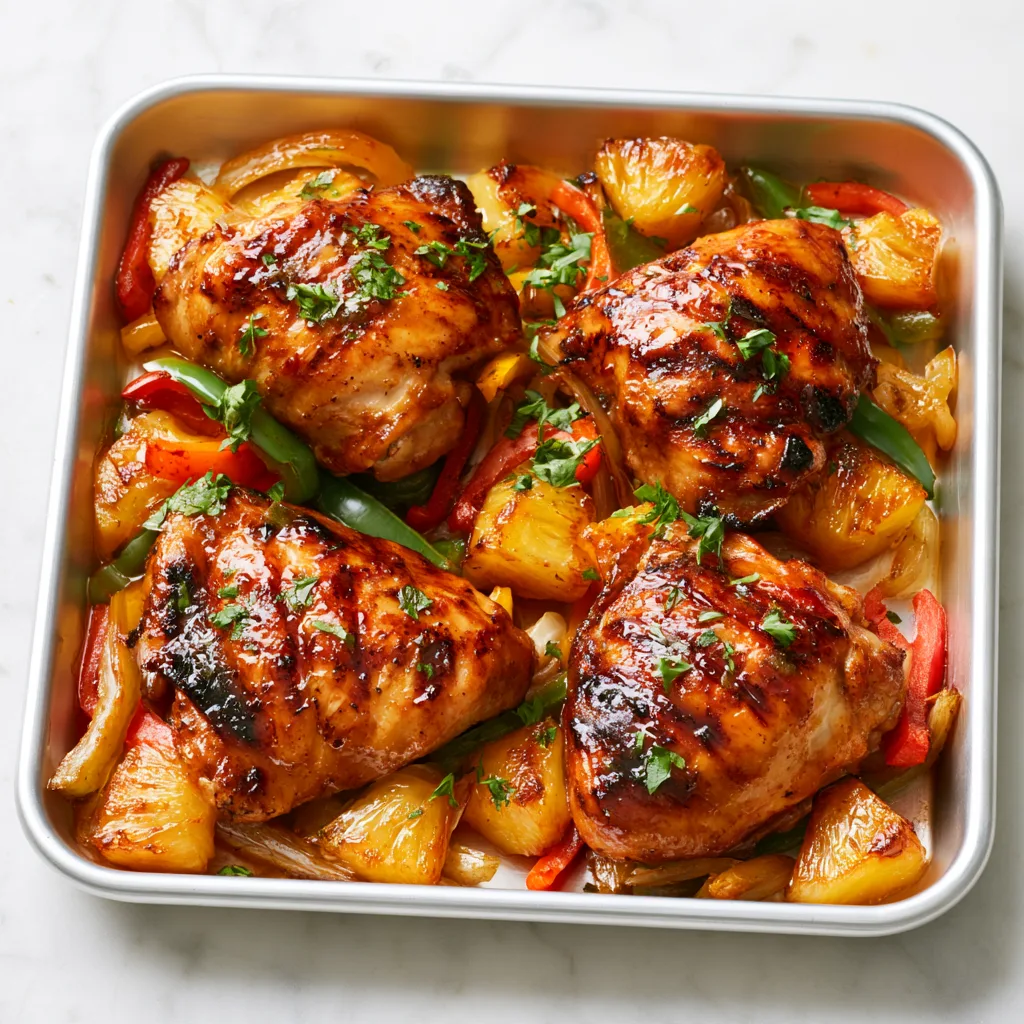
Tips for the Best Texture and Flavor
Use canned pineapple packed in juice, not heavy syrup. Drain it thoroughly, then measure the chunks so the fruit does not bring excess sweetness or liquid.
Stir the coconut milk before measuring because the cream often separates to the top of the can. Taking only the thick layer changes the sauce.
If one tray is finished first, remove it. The recipe does not require chicken and vegetables to spend exactly the same number of minutes in the oven.
Cut for the order of cooking
A sheet pan meal is easier when the pieces are sized for their individual cooking needs. Dense sweet potatoes need small cubes and often a head start, while peppers and onion can stay in larger pieces. Chicken pieces should be consistent enough to cook evenly, with the smallest checked first. Pineapple should be large enough to retain its shape during roasting. Preparing everything in identical sizes may look tidy, but it does not guarantee that all the ingredients will finish together. Use the staged sequence rather than forcing one universal roasting time.
Give roasting food room to breathe
Moisture needs somewhere to escape. When ingredients are packed tightly together, steam collects around them and the tray behaves more like a shallow braising dish. Use two sheets when called for, spread everything in one layer, and rotate their positions if your oven heats unevenly. A large tray can still be crowded if vegetables are heaped in the middle. Leave some visible metal between pieces where possible. Pat canned pineapple dry and avoid pouring excess marinade over the sheet; a small amount of clinging seasoning is enough to flavor the chicken.
Manage sweetness around high heat
Pineapple and honey both contain sugars that darken readily at roasting temperatures. Golden edges add flavor, but blackened glaze tastes bitter. Watch smaller fruit pieces and the hotter corners of the tray, and turn ingredients partway through. If the chicken is cooked before the vegetables brown, remove it and finish the vegetables separately. Do not keep poultry in the oven simply to make everything look equally caramelized. A cooked tray can provide useful juices for serving, but any marinade left in a bowl after contact with raw chicken must not be poured over finished food.
Use a thermometer rather than tray color
Chicken can look browned on the outside while a thick piece still needs more time. Check the thickest pieces for 165°F (74°C), inserting the probe into the center rather than touching the hot tray. Test more than one piece when sizes differ. For the vegetables, use a fork to judge tenderness and your eyes to assess browning. Those are separate decisions. Rotating pans helps even out oven differences, but it does not replace checking each component. Keep a clean plate ready for any chicken that finishes ahead of the rest.
Sheet Pan Dinner · Sweet & Savory
Pineapple Chicken Sheet Pan Dinner with Coconut Lime Drizzle
Golden pineapple, tender chicken, and roasted vegetables served over jasmine rice with a light coconut lime drizzle.
By Raelynn
Chicken & Vegetables
Coconut Lime Drizzle
For Serving
Instructions
- Heat and dry. Preheat the oven to 425°F (220°C), with racks in the upper and lower thirds. Set out two large rimmed baking sheets. Pat the pineapple dry and blot excess moisture from the chicken.
- Season separately. Whisk soy sauce, honey, ginger, garlic, pepper, and half the oil. Toss with the chicken. In a separate clean bowl, toss pineapple, peppers, and onion with the remaining oil.
- Arrange the trays. Spread chicken on one sheet and vegetables and pineapple on the other, leaving space between pieces. Transfer chicken with its clinging marinade, leaving excess liquid behind. Wash utensils and surfaces that touched raw poultry.
- Roast and rotate. Roast for approximately 18–25 minutes, turning pieces and exchanging tray positions halfway through. Check chicken early and remove it when the thickest pieces reach 165°F (74°C). Continue roasting vegetables if needed until tender with golden pineapple edges.
- Warm the drizzle. Gently warm coconut milk in a small saucepan for 2–3 minutes without boiling aggressively. Remove from heat. Stir in lime juice, zest, and salt to taste.
- Plate and finish. Divide warm cooked rice among serving plates. Top with chicken, pineapple, peppers, and onion. Spoon coconut lime sauce over individual portions and add optional cilantro.
Variations and Substitutions
Chicken thighs can replace breast, keeping similar piece sizes and verifying 165°F (74°C). Full-fat coconut milk gives the roundest sauce; light coconut milk is thinner and may need a little less lime juice at first. Mango is too soft to be a direct roasting substitute for the pineapple.
Keep separate trays useful
Separating chicken from fruit and vegetables is more than a space-saving choice. It lets you remove the poultry at the correct internal temperature without asking the peppers to finish on the same schedule. Rotate the trays and exchange their rack positions halfway through if one oven area is hotter. Keep a clean serving plate ready for the chicken, and let the vegetables continue roasting if needed. Only cooked tray juices should be used over the final bowls.
Use a plain rice base on purpose
The coconut lime sauce and pineapple already supply a clear flavor combination, so plain cooked jasmine rice is a useful supporting ingredient. A heavily seasoned rice can compete with the drizzle and make the dinner feel too sweet or too salty. Start the rice separately according to its package while the trays heat. If using leftover rice, reheat it thoroughly and fluff before serving. Offer cilantro and extra lime at the table rather than mixing them into every portion.
Serving Suggestions
Plain jasmine rice absorbs the coconut drizzle well. For extra vegetables, add a simple cucumber salad or steamed snow peas rather than another sweet side. Keep lime wedges on the table, and offer chili sauce separately for guests who enjoy a sharper sweet-and-spicy contrast.
Storage and Meal Prep
Prepare ahead in separate containers
Cut vegetables and mix seasonings earlier in the day if that makes dinner easier. Refrigerate raw chicken sealed and separate from ready-to-eat produce. Keep pineapple away from the chicken during a long marinating period, especially when it is fresh, because its enzymes can affect the meat’s texture. Measure any clean serving sauce before handling raw poultry. When ready to cook, spread the ingredients over the trays rather than leaving them in a deep bowl of accumulated liquid. Start dense vegetables first when the method calls for it, then continue with the staged roasting plan.
Store and refresh roasted leftovers
Refrigerate cooked chicken and vegetables in shallow containers within two hours and use within three to four days. Reheat the portion you need until the chicken reaches 165°F (74°C). An oven or skillet can restore some roasted texture more effectively than a microwave, but avoid heating until the fruit dries out. Store a separate coconut or yogurt sauce separately and warm it gently if needed. If freezing, expect peppers and pineapple to become softer after thawing. Leftovers can also be chopped into a warm rice bowl, with fresh herbs and citrus added after reheating.
Frequently Asked Questions
Can I use one baking sheet?
Only if it is large enough to hold everything without crowding. Two trays give more reliable roasting and make it easier to remove the chicken at its own doneness point.
Can the coconut sauce be cold?
It can, but chilled coconut fat may thicken unevenly. Warm it gently and whisk before serving for the smoothest drizzle.
You might also like these recipes
Pineapple Chicken Sheet Pan Dinner with Coconut Lime Drizzle
Ginger Beef Lettuce Wraps with Water Chestnuts and Carrot Slaw
Hot Honey Ground Beef Sweet Potato Skillet