
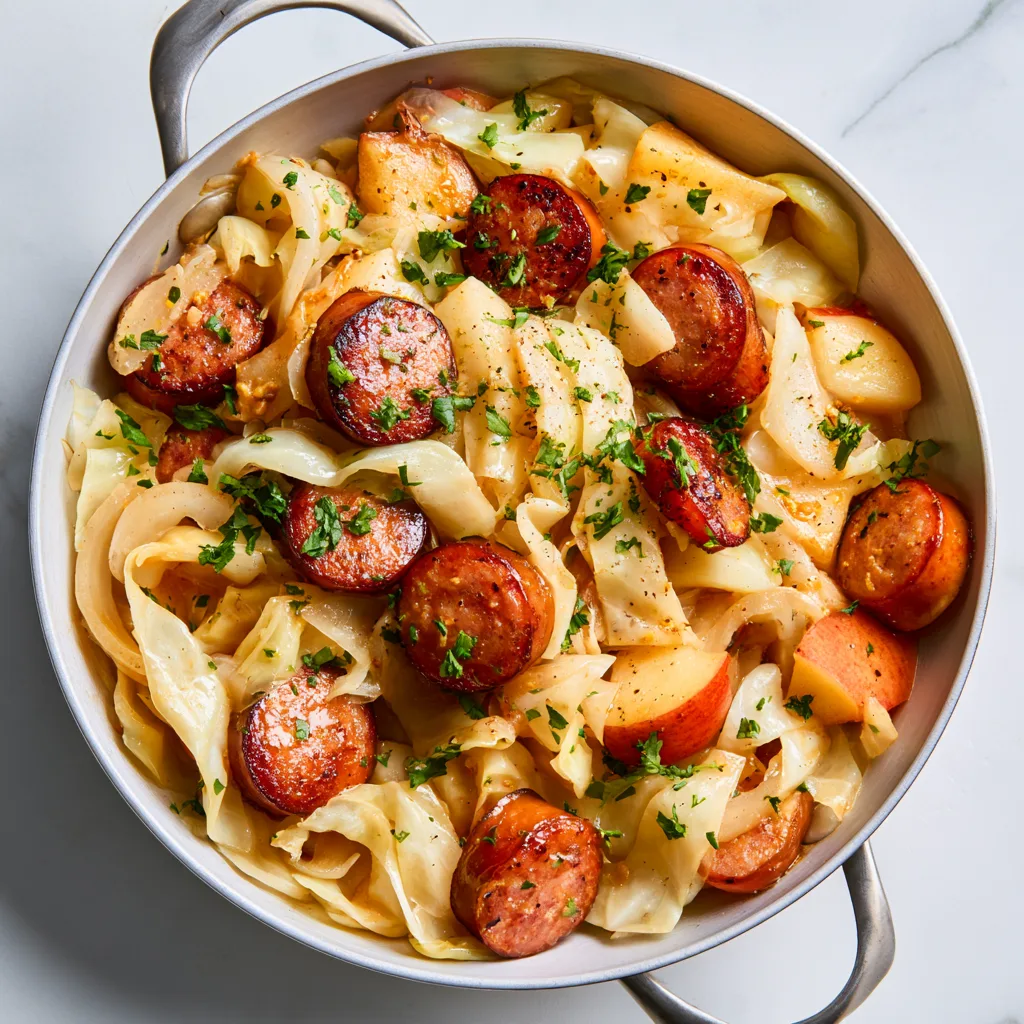
An apple sausage and cabbage skillet is a practical dinner for evenings when you want something warm and satisfying without a long ingredient list. Smoked sausage browns quickly, cabbage softens into savory ribbons, and apple wedges bring a gentle sweetness balanced by Dijon mustard and cider vinegar.
The appeal of this skillet comes from how the ingredients balance one another. Cabbage becomes mellow as it cooks, smoked sausage brings savory depth, and apple provides sweetness without adding sugar. Dijon and vinegar finish the pan with a tangy note that stops the meal from feeling heavy.
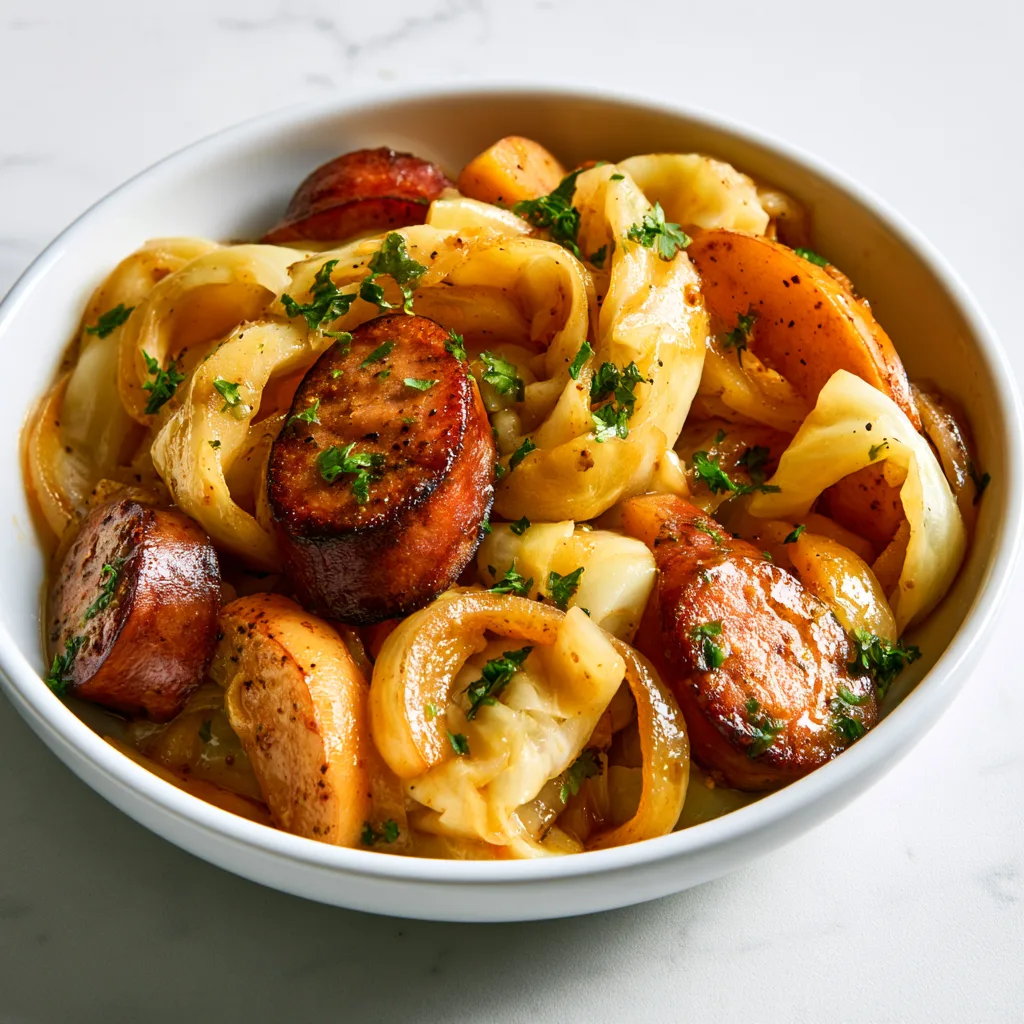
Texture matters as much as flavor here. You want cabbage that bends easily but still has a little bite, apples that remain recognizable wedges, and sausage with browned edges. Adding everything at once would make those textures harder to achieve. The short stages in the method allow each ingredient to cook at its own pace.
This is a useful recipe when a head of cabbage needs to be used and the refrigerator holds only a few other ingredients. You do not need an elaborate sauce or many spices. A little broth gathers the browned flavors into pan juices, leaving a dinner that works with bread, potatoes, or rice.
Jump to the recipe for the complete ingredient amounts and cooking instructions.
Recipe Snapshot
Prep: 15 minutes · Cook: 25 minutes · Total: about 40 minutes · Serves: 4
Apple Sausage and Cabbage Skillet Recipe
Ingredients
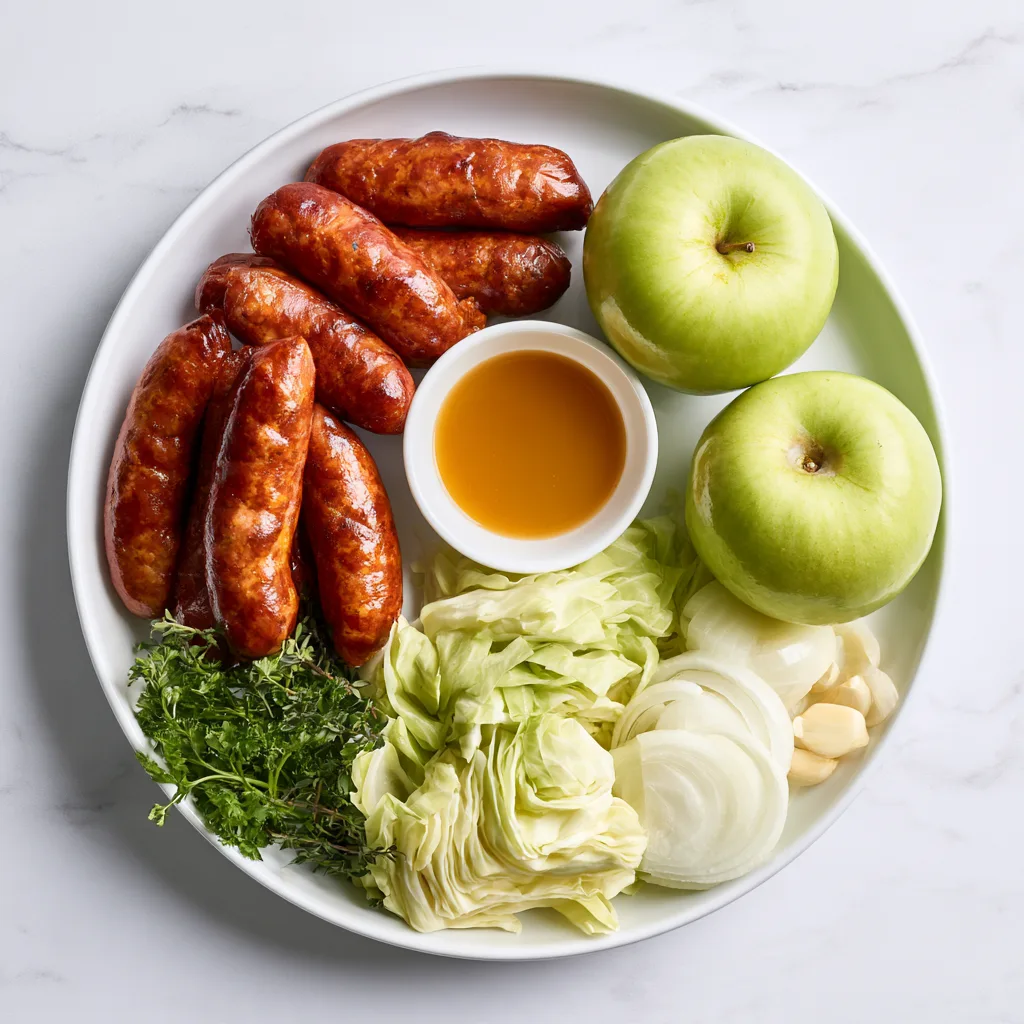
- 12 oz (340 g) fully cooked smoked chicken or pork sausage, sliced
- 1 tablespoon olive oil
- 1 medium onion, thinly sliced
- 1½ lb (680 g) green cabbage, cored and sliced into ½-inch ribbons
- 2 firm apples, such as Honeycrisp or Granny Smith, cored and cut into wedges
- 2 garlic cloves, minced
- ½ teaspoon dried thyme
- ¼ teaspoon black pepper
- ⅓ cup (80 ml) low-sodium chicken broth
- 1 tablespoon Dijon mustard
- 1 tablespoon apple cider vinegar
- Fine salt, to taste
- 2 tablespoons chopped parsley, optional
Ingredient Notes
Measure and prepare the ingredients before you turn on the heat. Use low-sodium broth so you can control seasoning at the end. Fresh garlic adds depth, while dried herbs make this easy to prepare from pantry supplies. Taste after adding any salty ingredients rather than seasoning heavily at the start.
How to Make Apple Sausage and Cabbage Skillet
- Heat oil in a large deep skillet over medium-high heat. Add sausage in a single layer and cook for 4–5 minutes, turning until browned. Transfer to a plate.
- Add onion to the pan and cook for 3 minutes. Add cabbage in two batches, tossing as it wilts. Cook for 6–8 minutes, stirring occasionally, until its volume reduces and some edges begin to brown.
- Stir in apple wedges, garlic, thyme, and pepper. Cook for 2 minutes. Whisk broth with Dijon and pour into the skillet.
- Cover and cook over medium-low heat for 5–7 minutes, until cabbage is tender and apples still hold their shape. Stir once and add a splash of broth if the pan dries out.
- Return sausage to the skillet and cook uncovered for 2–3 minutes, until everything is hot. Stir in vinegar. Taste before adding salt because sausage varies in saltiness. Scatter parsley over the top and serve.
Apple Sausage and Cabbage Skillet – Easy One-Pan Dinner
- Total Time: 40 minutes
- Yield: 4 servings 1x
Description
This Apple Sausage and Cabbage Skillet is an easy one-pan dinner made with browned smoked sausage, tender cabbage, firm apples, Dijon mustard, and apple cider vinegar. The sausage adds savory depth while the apples bring gentle sweetness. Cabbage makes the skillet hearty without feeling heavy, and Dijon and vinegar create a bright, tangy finish. Everything comes together in about 40 minutes for a practical family dinner with simple ingredients.
Ingredients
- 12 oz (340 g) fully cooked smoked chicken or pork sausage, sliced
- 1 tablespoon olive oil
- 1 medium onion, thinly sliced
- 1½ lb (680 g) green cabbage, cored and sliced into ½-inch ribbons
- 2 firm apples, such as Honeycrisp or Granny Smith, cored and cut into wedges
- 2 garlic cloves, minced
- ½ teaspoon dried thyme
- ¼ teaspoon black pepper
- ⅓ cup (80 ml) low-sodium chicken broth
- 1 tablespoon Dijon mustard
- 1 tablespoon apple cider vinegar
- Fine salt, to taste
- 2 tablespoons chopped parsley, optional
Instructions
1. Heat the olive oil in a large, deep skillet over medium-high heat. Add the sliced sausage in a single layer. Cook for 4–5 minutes, turning until the edges brown. Transfer the sausage to a plate.
2. Add the sliced onion to the skillet and cook for 3 minutes. Add the cabbage in two batches, tossing each batch as it wilts. Cook for 6–8 minutes, stirring occasionally, until the cabbage reduces in volume and some edges begin to brown.
3. Add the apple wedges, garlic, thyme, and black pepper. Cook for 2 minutes. Whisk the chicken broth and Dijon mustard together, then pour the mixture into the skillet.
4. Cover the skillet and reduce the heat to medium-low. Cook for 5–7 minutes until the cabbage becomes tender while the apples still hold their shape. Stir once during cooking and add a splash of broth if needed.
5. Return the browned sausage to the skillet. Cook uncovered for another 2–3 minutes until everything becomes hot. Stir in the apple cider vinegar. Taste and add salt only as needed. Garnish with chopped parsley and serve warm.
Notes
- Use firm apples such as Honeycrisp or Granny Smith so the wedges retain their shape.
- Use fully cooked smoked sausage for this recipe.
- Add the cabbage in two batches because it takes up considerable space before wilting.
- Taste the skillet before adding salt because smoked sausage and chicken broth can already contain plenty of sodium.
- Add the apple cider vinegar near the end to maintain its bright flavor.
- Store leftovers promptly in a covered container in the refrigerator and reheat gently with a small splash of broth or water.
- Prep Time: 15 minutes
- Cook Time: 25 minutes
- Category: Dinner
- Method: Skillet
- Cuisine: American
Nutrition
- Serving Size: 1 serving
- Calories: Approximately 390
Cooking Details and Helpful Notes
How to Cut Cabbage for Even Cooking
Remove any wilted outer leaves, then cut the cabbage into quarters through the core. Trim away the firm core from each quarter before slicing the leaves into ribbons. Aim for approximately half an inch in width. Very thick pieces take longer to soften, while extremely thin shreds can lose their texture before the apples are ready.
Cabbage takes up considerable room when raw. Add it in two batches and turn the first batch until it begins to relax before adding the rest. A pair of tongs helps move the ribbons without scattering them across the stove. If your pan is small, use a Dutch oven rather than forcing everything into a shallow skillet.
Picking the Right Sausage
Choose a product labeled fully cooked and read its cooking instructions. This recipe uses that type because the initial stage is primarily for browning and warming. A mild smoked sausage lets the apples and mustard remain noticeable. Very spicy sausage can work, but it changes the balance and may suit a different set of side dishes.
Slice the sausage into rounds of similar thickness so some pieces do not become hard while others barely brown. If the sausage releases a lot of fat, leave only a modest amount in the skillet before adding the onion. If it is very lean, the measured olive oil helps prevent sticking and supports the vegetable cooking stage.
Keeping the Apples from Falling Apart
Firm apples are more forgiving than soft varieties in this recipe. Cut them shortly before cooking when possible, and make wedges thick enough to survive stirring. Leaving the peel on can help them hold together, although peeling is fine if you prefer the texture. Either way, remove the core completely.
Add the apples after the cabbage has begun to soften rather than at the start. Fold them through the pan gently with a broad spoon. Once they are tender, avoid aggressive stirring. Some softening is desirable, but the finished dish should contain apple pieces rather than a coating of applesauce.
Balancing Mustard, Vinegar, and Salt
Whisking Dijon into the broth distributes it evenly through the cabbage. Adding mustard straight from the spoon can leave one area of the pan tasting much stronger than another. Use the listed tablespoon first, then decide whether you want a more pronounced mustard finish after the vegetables are cooked.
Apple cider vinegar goes in at the end to preserve its brighter taste. Sausage and broth can both contribute salt, so taste a forkful containing cabbage, apple, and sausage before adding more. If the pan tastes sharp, give it a brief stir and taste again with the apples; their sweetness should soften the acidity naturally.
Planning the Meal and Using Leftovers
Prepare your chosen side before the skillet reaches its final stage. Small boiled potatoes are convenient because they can cook while you slice the cabbage and apples. Drain them well and serve beside the skillet rather than mixing them in, which helps each component keep its own texture.
Leftover portions can be served in a bowl over freshly cooked rice or tucked beside a baked potato. Warm them gently so the apples do not break apart further. You can also chop a small portion and use it as a savory filling for an omelet, warming the filling separately before adding it to the cooked eggs.
Can I Make It Without Mustard?
You can omit Dijon if you do not enjoy it. Keep the broth and add the vinegar cautiously at the end, tasting before using the full amount. The result will have less depth and tang, so extra parsley and black pepper can help. Check ingredient labels if the change is needed for an allergy.
How Do I Keep the Cabbage from Becoming Watery?
Let the cabbage cook uncovered during the first stage so some moisture can evaporate. Cover only for the short tenderizing step after the broth is added. If the finished skillet has excess liquid, remove the lid and simmer briefly before returning the sausage. Avoid overcooking the apples while reducing the juices.
Tips for the Best Results
Use a wide skillet with a lid so the cabbage can brown before steaming. Keep apples in substantial wedges instead of small cubes; this helps them retain their shape. The recipe uses fully cooked sausage. Raw sausage requires separate cooking before it is added to the vegetables. Add vinegar near the end for a brighter finish.
Variations and Substitutions
Choose chicken sausage for a lighter-tasting version or smoked pork sausage for a richer flavor. Add a pinch of caraway seeds with the thyme if you enjoy their aroma. Replace one apple with thinly sliced carrots, adding the carrots with the cabbage so they have enough time to soften. A plant-based fully cooked sausage also works, following its package instructions.
What to Serve With It
Serve with boiled baby potatoes, mashed potatoes, or crusty bread to catch the mustard pan juices. For a smaller lunch, serve the skillet on its own with extra parsley. If feeding a larger family, cook a pot of rice separately rather than adding dry rice directly to the pan.
Make-Ahead Tips
Chop the vegetables ahead and keep them in separate covered containers in the refrigerator. Measure dry seasonings into a small bowl. Keeping the components organized makes the cooking process easier, especially when several ingredients need to be added close together. For the best texture, finish the recipe shortly before serving.
Storage and Reheating
Transfer leftovers to shallow covered containers and refrigerate promptly. Reheat individual portions gently with a splash of broth or water, stirring so they warm evenly. Add fresh herbs and a little lemon or vinegar after reheating if the flavor needs brightening. The vegetables will soften during storage, so freshly made portions have the best texture.
Troubleshooting
If the pan looks dry, lower the heat and add a small splash of broth. If the finished dish is too loose, simmer briefly uncovered before serving. Taste before adding extra seasoning: salt, acidity, and herbs have different roles, and a small adjustment can be enough. Use the visual and texture cues in the directions alongside the approximate cooking times.
Frequently Asked Questions
Which apples work best?
Firm apples keep their shape. Honeycrisp offers sweetness, while Granny Smith gives a more tart result. Avoid very soft apples.
Can I use red cabbage?
Yes, but it may take longer to soften and will color the apples. Adjust cooking time according to tenderness.
Do I need to peel the apples?
No. Wash them well and leave the peel on for texture, or peel them if you prefer a softer finish.
Tools You Will Need
A large skillet or saucepan, a sturdy spoon, measuring cups and spoons, a sharp knife, and a cutting board are enough for this recipe. Prepare serving bowls before the final step so the meal can go straight from the pan to the table.
More Recipes to Try
Slow Cooker Beef and Sweet Potato Chili – Hearty Fall Dinner and Creamy Tomato White Bean Tortellini Soup – Easy Cozy Dinner offer more ideas for your next home-cooked meal.
Final Recipe Notes
Before serving, check several cabbage ribbons from different parts of the pan. Pieces near the center sometimes soften faster than those around the edge, so a final gentle toss gives a more even result. Divide the apple wedges among the plates first if you want each serving to have the same balance. Spoon the pan juices over the cabbage and sausage rather than leaving them behind. A little chopped parsley adds color and freshness without changing the character of the dish. Keep any extra mustard on the table for people who prefer a stronger finish.
You might also like these recipes
Creamy Carrot Ginger Chickpea Soup – Easy One-Pot Dinner
Sheet Pan Balsamic Chicken and Pears – Easy Fall Dinner
Broccoli Cheddar Brown Rice Bake – Cozy Family Dinner