
Sesame Soy Salmon and Cabbage Bowls combine tender glazed salmon, crisp sautéed cabbage, garlic, ginger, and toasted sesame flavors for an easy, wholesome, flavor-packed dinner.
Hi there, food lover! 👋 Ready to bring something fresh, comforting, and wonderfully flavorful to your dinner table? These Sesame Soy Salmon and Cabbage Bowls are just the thing when you want a homemade meal that feels special without requiring hours in the kitchen.
There is something irresistible about tender salmon coated in a glossy sesame-soy glaze. Pair it with lightly caramelized cabbage, fragrant garlic, fresh ginger, and a squeeze of lime, and you have a bowl filled with contrasting textures and balanced flavors. The salmon is rich and flaky, the cabbage remains pleasantly crisp, and the sauce brings everything together with its sweet, salty, tangy, and nutty character.
This simple preparation takes inspiration from familiar East Asian flavor combinations, particularly soy, sesame, ginger, and rice vinegar, while keeping the method approachable for an everyday home kitchen. 🍚
It is also wonderfully versatile. Serve the salmon and cabbage alone for a lighter meal, spoon them over warm rice for something heartier, or add your favorite vegetables to make each bowl your own.
Best of all, everything comes together quickly, making this a lovely choice for busy evenings when you still want a nourishing, home-cooked dinner. So grab your skillet, prepare that beautiful glaze, and let’s get cooking!
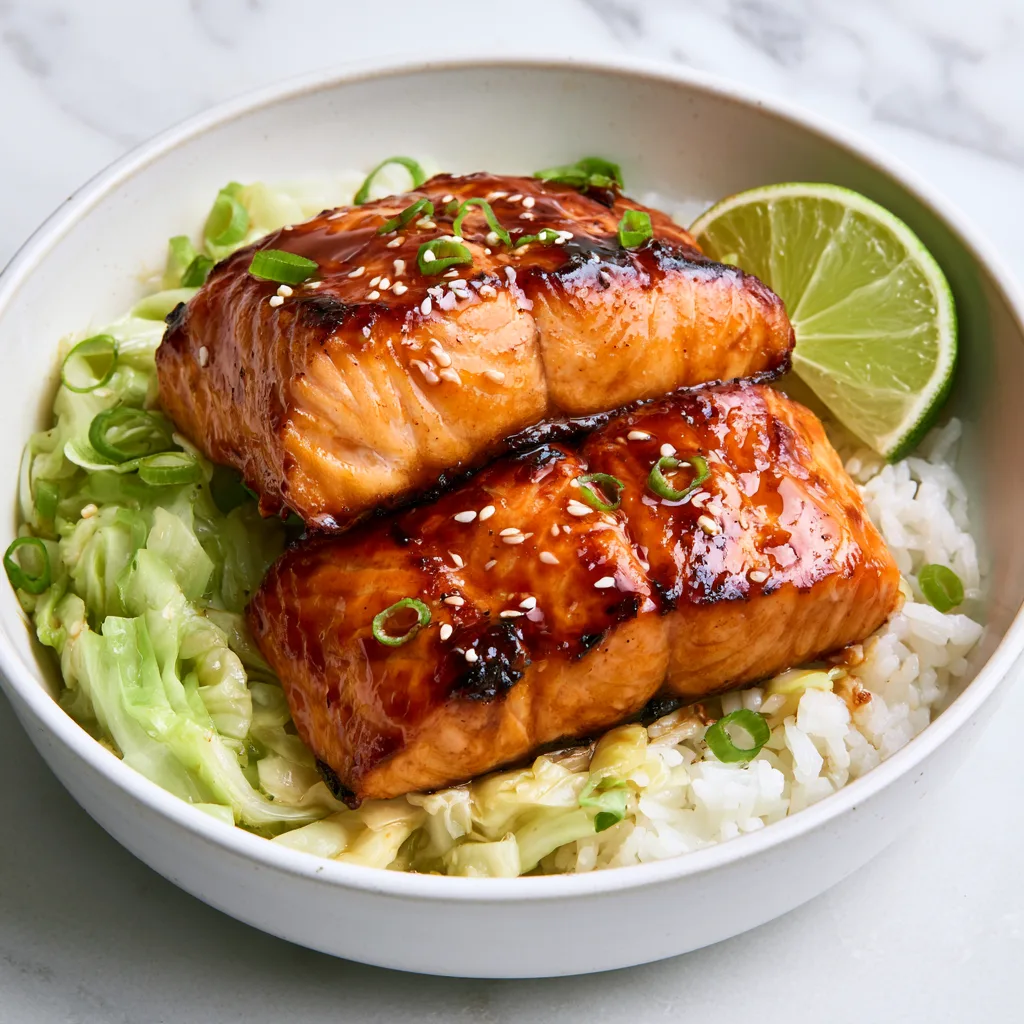
🥬 Sesame Soy Salmon and Cabbage Bowls Ingredients
The beauty of these Sesame Soy Salmon Bowls lies in their simple ingredients. Salmon provides the rich centerpiece, while fresh cabbage adds crunch and substance. Soy sauce, sesame oil, honey, rice vinegar, garlic, and ginger create a deeply savory glaze with just enough sweetness and acidity to keep every bite balanced.
For the Salmon
- 4 salmon fillets, about 6 oz (170 g) each – Choose fresh, evenly sized fillets so they cook at roughly the same rate.
- 1 tablespoon sesame oil – Helps the salmon develop a beautiful exterior while adding a distinctive toasted aroma.
- 1 tablespoon toasted sesame seeds – Adds a delicate crunch and nutty finishing flavor.
- 1 lime, cut into wedges – A squeeze of fresh lime wakes up the rich flavors just before serving.
For the Cabbage
- 1 small head green cabbage, thinly sliced – Fresh cabbage becomes tender around the edges while maintaining a satisfying bite.
- 1 tablespoon sesame oil – Used for sautéing the cabbage and developing lightly caramelized edges.
- Pinch of salt – Use sparingly because the soy sauce already contributes plenty of savory flavor.
For the Sesame Soy Glaze
- 3 tablespoons soy sauce – Low-sodium soy sauce works especially well if you prefer greater control over the saltiness.
- 2 tablespoons honey or pure maple syrup – Adds sweetness and helps create that glossy glaze.
- 1 tablespoon rice vinegar – Provides gentle acidity that balances the richness of the salmon.
- 2 cloves garlic, finely minced – Brings a warm and savory aroma.
- 1 teaspoon fresh ginger, finely grated – Adds freshness and a subtle warming bite.
- 1 teaspoon sesame oil – Gives the glaze an extra layer of toasted sesame flavor.
Optional Bowl Additions
For a more substantial meal, prepare 2 cups cooked jasmine or brown rice and divide it among the bowls before adding the cabbage and salmon.
Steamed edamame, sliced cucumber, shredded carrots, green onions, or lightly steamed broccoli are also delicious additions.
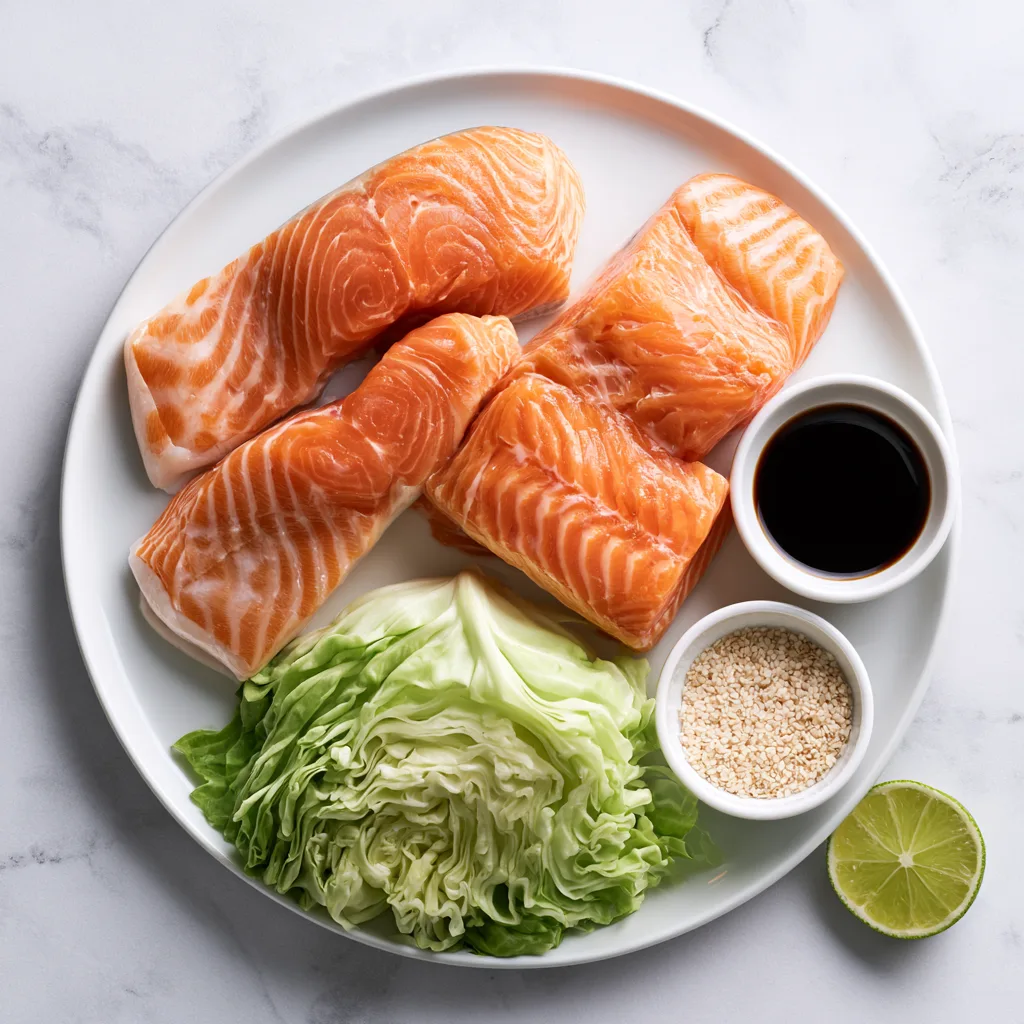
🍯 Sesame Soy Salmon and Cabbage Bowls Directions
Making these bowls is straightforward. Prepare the glaze first, cook the salmon until beautifully flaky, sauté the cabbage, and bring everything together while it is still warm.
Step 1: Prepare the Sesame Soy Glaze
In a small bowl, combine the soy sauce, honey or maple syrup, rice vinegar, minced garlic, grated ginger, and 1 teaspoon sesame oil.
Whisk everything thoroughly until the honey has dissolved into the liquid and the mixture looks smooth.
Taste the glaze. It should have a pleasing balance of salty, sweet, tangy, and nutty flavors. Set it aside while you prepare the salmon.
Step 2: Prepare the Salmon
Pat the salmon fillets dry with paper towels. Removing excess surface moisture helps the fish develop better color in the skillet.
Heat a large nonstick or well-seasoned skillet over medium-high heat. Add 1 tablespoon sesame oil and allow it to become hot but not smoking.
Place the salmon in the skillet. If your fillets have skin, begin with the skin side facing down.
Cook for approximately 3–4 minutes, without moving the fillets unnecessarily. The bottom should develop a lovely golden color.
Step 3: Glaze and Finish the Salmon
Carefully flip each salmon fillet.
Spoon some of the prepared sesame-soy mixture over the salmon, reserving enough glaze for the cabbage.
Reduce the heat to medium and cook for another 3–5 minutes, depending on the thickness of your fillets.
As the salmon cooks, spoon a little of the sauce from the pan over the top. The glaze will begin to thicken and cling beautifully to the fish.
Cook salmon to your preferred doneness; for food safety, the USDA recommends an internal temperature of 145°F (63°C) for fish.
Transfer the finished salmon to a clean plate and keep it warm.
Step 4: Sauté the Cabbage
Return the skillet to medium heat. Add the remaining 1 tablespoon sesame oil.
Add the thinly sliced cabbage and a small pinch of salt. Toss gently so the cabbage becomes coated in the oil.
Cook for approximately 5–7 minutes, stirring regularly.
You are looking for cabbage that has softened and developed a few lightly browned edges while still retaining some texture. Avoid cooking it until completely limp.
Step 5: Season the Cabbage
Pour the reserved sesame-soy glaze over the cabbage.
Toss continuously for another 1–2 minutes, allowing the sauce to coat the cabbage evenly.
The cabbage should become glossy, fragrant, and lightly caramelized as it absorbs the garlic, ginger, sesame, and soy flavors.
Step 6: Assemble the Bowls
If using rice, divide the warm cooked rice among four serving bowls.
Spoon a generous portion of sautéed cabbage into each bowl.
Place one glazed salmon fillet over the cabbage, then spoon any flavorful sauce remaining in the skillet over the top.
Sprinkle each serving with toasted sesame seeds.
Finish with a fresh lime wedge and serve immediately. 🍋🟩
That final squeeze of lime is small but important—it provides a bright contrast to the rich salmon and savory glaze.
📝 Sesame Soy Salmon and Cabbage Bowls Notes
For the best results, choose salmon fillets of approximately equal thickness. This makes it much easier to cook all four portions evenly.
Do not overcrowd your skillet. If your pan cannot comfortably hold four fillets without touching, cook the salmon in two batches. Crowding can trap steam and prevent proper browning.
Keep the Cabbage Crisp
One of the pleasures of this dish is the contrast between buttery salmon and slightly crisp cabbage. Cook the cabbage just until it becomes tender around the edges.
Thinly slicing the cabbage also helps it cook quickly and evenly.
Adjust the Sweetness
Honey creates a slightly richer glaze, while maple syrup contributes a gentle caramel-like sweetness. Either works beautifully.
If you prefer a less-sweet dinner, reduce the honey or maple syrup to 1 tablespoon.
Add Some Heat 🌶️
For a spicy version, add crushed red pepper flakes, chili-garlic sauce, or a little sriracha to the finished bowl.
Keep the heat optional when serving a family so everyone can customize their portion.
Make It Gluten-Free
Traditional soy sauce commonly contains wheat. To make these bowls gluten-free, use certified gluten-free tamari instead and check the labels of your other packaged ingredients.
Try Other Vegetables
Green cabbage is inexpensive, sturdy, and delicious here, but you can adapt the bowl according to what is available.
Bok choy, napa cabbage, kale, broccoli, shredded Brussels sprouts, or a mixture of vegetables can all complement the sesame-soy flavors.
Make It Heartier
Serve the salmon and cabbage over jasmine rice, brown rice, quinoa, or another favorite grain.
For extra vegetables and protein, add steamed edamame. Sliced cucumber or shredded carrots provide a refreshing contrast to the warm salmon.
Storing Leftovers
Allow leftovers to cool before transferring them to airtight containers.
Refrigerate promptly and enjoy within 3 days for the best quality.
If possible, store extra sauce separately so you can add a little moisture when reheating.
Reheating
Salmon can dry out when reheated too aggressively, so gentle heat is best.
Warm leftovers in a covered skillet over low heat with a small splash of water. You can also reheat individual portions in the microwave at reduced power in short intervals.
Stop heating as soon as the salmon is warmed through.
Meal-Prep Tip
These bowls make convenient lunches. Divide cooked rice and cabbage among individual containers and add one salmon portion to each.
Keep fresh garnishes such as lime wedges, cucumber, green onions, and sesame seeds separate until serving so they retain their best flavor and texture.
Sesame Soy Salmon and Cabbage Bowls
Easy glazed salmon with tender-crisp cabbage, ginger, garlic, and sesame.
These Sesame Soy Salmon and Cabbage Bowls combine flaky salmon, sautéed cabbage, garlic, ginger, and a savory-sweet sesame soy glaze. Serve them alone for a lighter dinner or spoon everything over warm rice for a satisfying meal.
Ingredients
- 4 salmon fillets, about 6 oz each
- 2 tablespoons sesame oil, divided
- 1 tablespoon toasted sesame seeds
- 1 lime, cut into wedges
- 1 small head green cabbage, thinly sliced
- Pinch of salt
- 3 tablespoons low-sodium soy sauce
- 2 tablespoons honey or pure maple syrup
- 1 tablespoon rice vinegar
- 2 cloves garlic, finely minced
- 1 teaspoon fresh ginger, finely grated
- 1 teaspoon sesame oil for the glaze
- 2 cups cooked jasmine or brown rice, optional
Instructions
- Whisk soy sauce, honey or maple syrup, rice vinegar, garlic, ginger, and 1 teaspoon sesame oil together.
- Pat the salmon dry. Heat 1 tablespoon sesame oil in a large skillet over medium-high heat. Cook the salmon for 3–4 minutes on the first side.
- Flip the salmon and spoon part of the sesame soy glaze over each fillet. Cook for another 3–5 minutes or until the salmon reaches your preferred doneness.
- Transfer the salmon to a plate. Add the remaining tablespoon of sesame oil and sliced cabbage to the skillet. Cook for 5–7 minutes, stirring regularly.
- Pour the reserved glaze over the cabbage. Toss and cook for another 1–2 minutes until glossy and tender-crisp.
- Divide rice between four bowls if using. Add the sautéed cabbage and one salmon fillet to each bowl. Finish with toasted sesame seeds and fresh lime.
🍽️ What to Serve With Sesame Soy Salmon Bowls
Although these bowls can easily stand on their own, simple side dishes can turn them into an even more generous meal.
A cucumber salad dressed with rice vinegar is particularly refreshing alongside the rich salmon. Steamed edamame sprinkled with a little salt is another easy choice.
For something more filling, jasmine rice is excellent because it absorbs the extra sesame-soy glaze. Brown rice offers a pleasantly chewy alternative, while quinoa works well when you want something different.
Lightly steamed broccoli, roasted green beans, or sautéed bok choy can also bring additional color to the table. 🥦
Keep the accompaniments simple. The salmon and cabbage already provide plenty of character, so the best sides are those that complement rather than overwhelm their flavors.
🥢 Why These Sesame Soy Salmon and Cabbage Bowls Work
The secret to this dish is balance.
Salmon naturally has a rich flavor and tender texture. Soy sauce brings saltiness and umami, while honey adds enough sweetness to round out those savory notes.
Rice vinegar cuts through the richness with acidity. Ginger and garlic provide aromatic warmth, and sesame oil contributes its unmistakably nutty fragrance.
Then there is the cabbage.
Instead of merely acting as a side dish, sautéed cabbage absorbs some of the glaze while retaining enough texture to contrast beautifully with the flaky fish.
Finally, lime provides freshness, and toasted sesame seeds add a delicate crunch.
Every component has a purpose, yet none requires complicated preparation. That is exactly what makes this recipe such a dependable choice for a home-cooked weeknight meal.
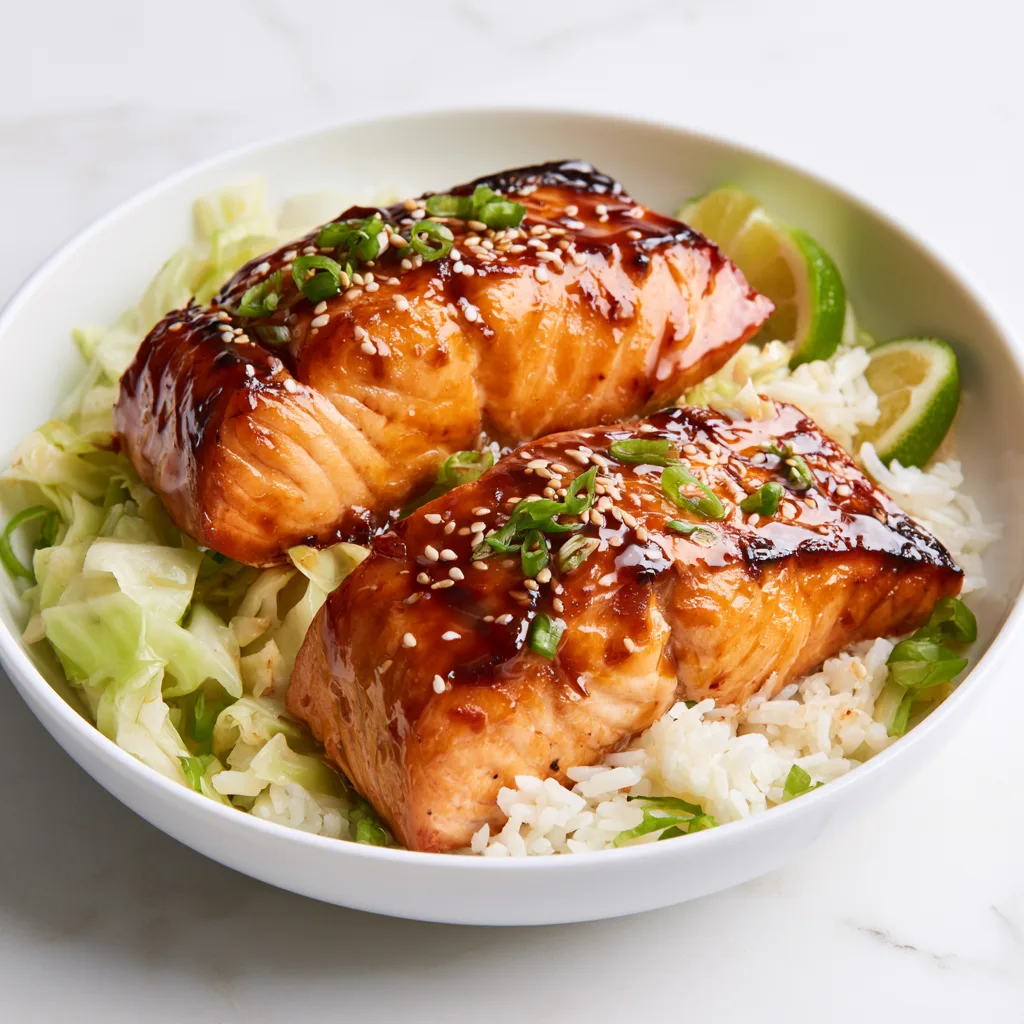
🥗 Sesame Soy Salmon and Cabbage Bowls Nutritional Information
Salmon is naturally rich in high-quality protein and provides omega-3 fatty acids. Cabbage contributes fiber, vitamin C, vitamin K, and other nutrients while adding plenty of volume to the meal.
A serving made without rice is approximately 430–480 calories, depending on the salmon portion, amount of glaze used, and exact ingredients.
Each serving can provide approximately 35–40 grams of protein, making this a satisfying protein-rich dinner.
The soy sauce contributes a significant amount of sodium, so using a low-sodium version is an easy way to reduce the overall sodium content.
Adding rice, quinoa, avocado, edamame, or additional toppings will increase the calorie and nutrient totals.
Nutritional values are estimates and will vary according to brands, portion sizes, substitutions, and optional additions.
⏰ Prep Time: 15 minutes | 🔥 Cooking Time: 20 minutes | ⏳ Total Time: 35 minutes
⚡ Calories per serving: Approximately 430–480 | 🍽️ Servings: 4
There you have it—a colorful bowl filled with flaky salmon, savory-sweet sesame glaze, tender-crisp cabbage, aromatic ginger and garlic, and a bright finish of fresh lime. 🐟🥬
Serve it straight from the skillet on a busy evening, dress it up with rice and vegetables for the family table, or portion it ahead for convenient lunches. However you enjoy it, these Sesame Soy Salmon and Cabbage Bowls are proof that a simple dinner can still feel wonderfully satisfying.
#SesameSoySalmon #SalmonBowls #CabbageBowls #HealthyDinner #EasySalmonRecipe #WeeknightDinner #HomemadeDinner #SalmonRecipe #HealthyBowls #EasyDinner
Bon appétit and happy cooking!
You might also like these recipes
Crispy Ground Beef Bowls with Hot Honey Lime Slaw
Honey Sriracha Chicken and Pineapple Rice Bowls
Hot Honey Garlic Beef Meatballs with Roasted Broccoli